Why Face ID Not Working After Repair
Beginning with its introduction on the iPhone X, this facial recognition technology, known as Face ID, has since been incorporated into subsequent iPhone models.The initial implementation of Face ID was on the iPhone X.This technology has expanded to encompass more recent iPhone releases, such as theiPhone XS, theXS Max, and theXR.The Face ID feature enables device unlocking through a facial scan and verification process, functioning even when the user is wearing headwear, eyewear, or in low-light conditions.
Step 1 | Face ID System
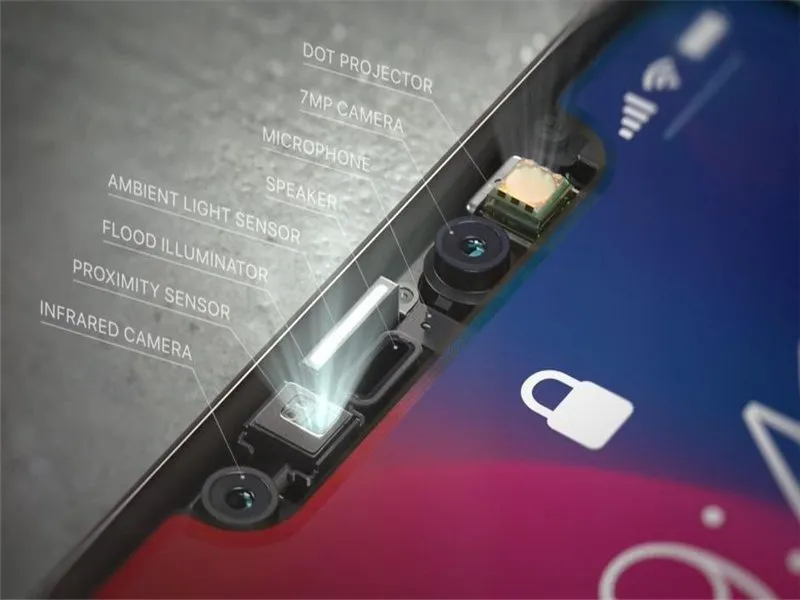
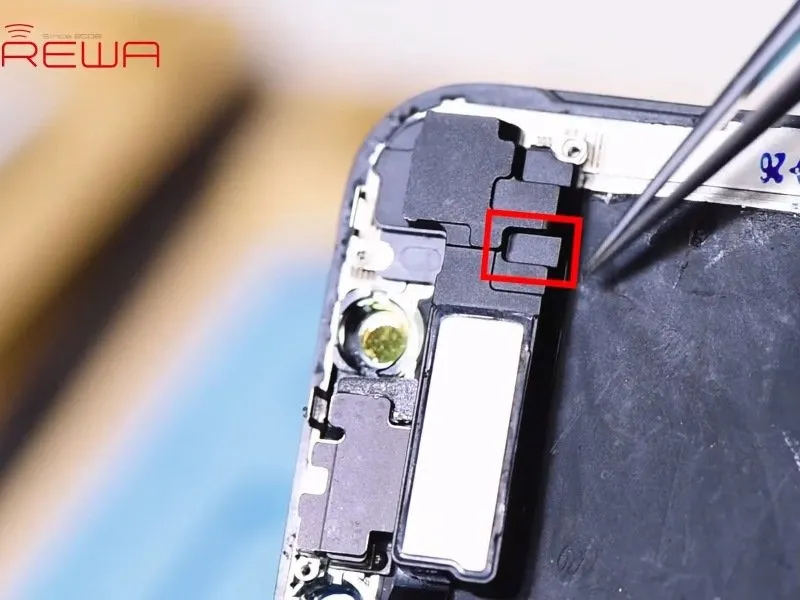
- Within the front section of the device, eight distinct parts are assembled:
- Infrared Camera
- Flood Illuminator
- Proximity Sensor
- Ambient Light Sensor
- Speaker
- Microphone
- Front Camera
- . Dot Projector
- Exercise caution during disassembly or repair procedures; any component damage will lead to a malfunction of the Face ID system.
- It is important to observe that a dedicated slot exists on the display assembly; during reassembly, ensure the speaker flex cable's fold aligns correctly within this slot to avoid cable breakage, which would also cause Face ID failure.
Step 2 | Disassemble The Flood Illuminator Module

- A visual inspection reveals a substantial number of apertures on the flood illuminator, organized in an 11 by 11 grid formation.
- Precious metal gold wires establish the electrical connection between the chip and the printed circuit board.
- Exposure to water can obstruct these apertures, subsequently leading to a malfunction of the Face ID system.
Step 3 | Chips On The Flood Illuminator Module

- The unencrypted nature of Chip 1 is a notable characteristic.
- Chip 2's function is to provide flood illumination, while Chip 3 and Chip 4 operate as proximity sensors, fulfilling the roles of reception and transmission, respectively.
- Each of the three chips functions autonomously and is critically important to the system's overall operation.
Step 4 | Disassemble The Dot Projector
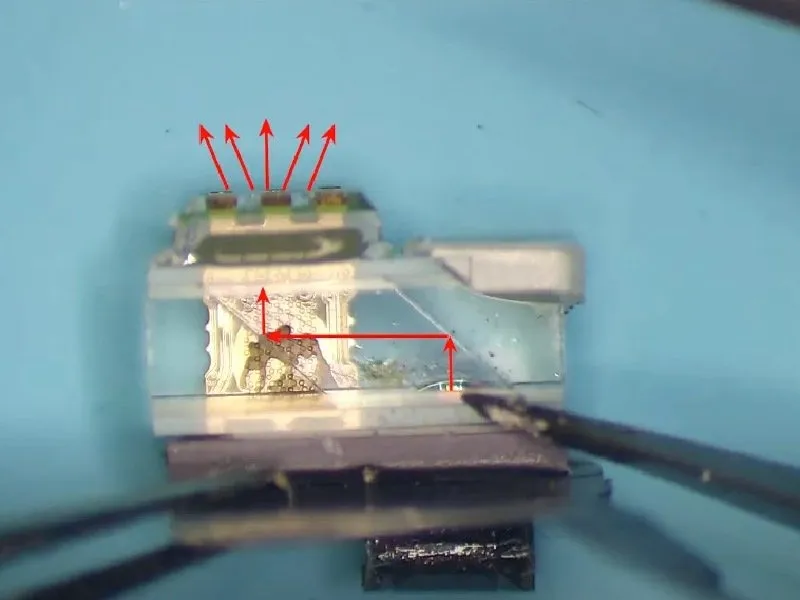
- The outermost shell of the dot projector is secured using a resin sealant and reinforced with metal welding processes.
- Carefully observe these welded areas, as they are susceptible to separation following a device drop, and subsequent repair is impossible.
- Upon removal of the dot projector, a crystalline component, visually resembling a diamond lens, becomes visible.
- Infrared radiation originates from this location, subsequently reflected by the crystal, with the final projection distance dictated by the lens's properties.
Step 5 | Internal Structure Of The Dot Projector

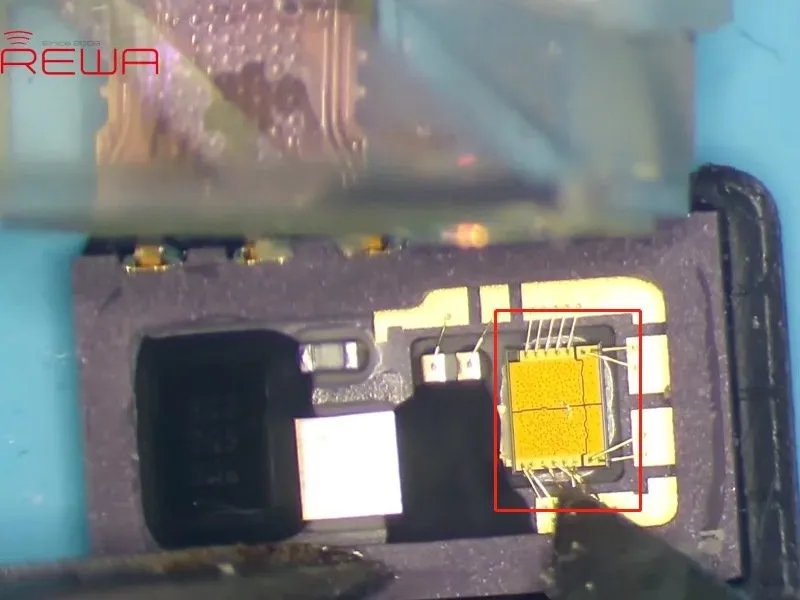
- The left-side component functions as data storage, while the component on the right serves as a projector.
- A multitude of tiny points are visibly organized in this area, from which infrared light originates.
- The projector chip requires a stable power source for proper operation; therefore, water damage frequently leads to shorts in these circuits, potentially causing Face ID malfunctions.
- It is crucial to understand that this chip lacks a protective black adhesive seal, rendering it vulnerable to damage from water ingress or physical impacts, and irreparable once compromised.
Step 6 | The Crystal Part Of The Dot Projector

Examination reveals the presence of both a concave lens and a convex lens affixed to the crystal component, both fabricated from glass material. Physical impact, such as a drop, may also compromise the functionality of Face ID.
Step 7 | Face ID Fault-finding
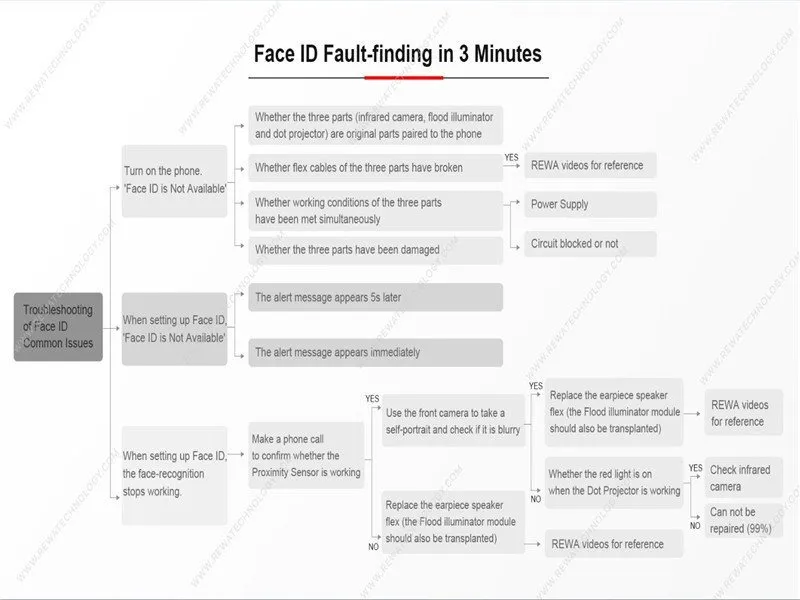
- Based on observations made during the disassembly process, the primary electrical pathways within the Face ID system are vulnerable. Exposure to liquids, even moderately moist conditions, can potentially cause electrical current leakage or short circuits, ultimately leading to Face ID malfunctions.
- Furthermore, the majority of Face ID components are fabricated from glass. Consequently, a fall is highly probable to render Face ID inoperable.
Step 8

To conclude, the Face ID system is susceptible to damage and difficult to recover, necessitating careful handling during everyday use; safeguarding the device from water exposure and impacts is crucial.
Service personnel should proceed with meticulous care when working on the main circuit board or substituting the display component.