iPhone X Logic Board (Motherboard) Replacement
The main circuit board, frequently referred to as the motherboard, incorporates the central processing unit and a significant portion of the integrated circuits responsible for managing the phone's functions.Repairing iPhone X logic boards presents a significant challenge due to their complex design.These boards are constructed with two separate units joined together through soldering, creating a unified component. Addressing any component situated between these two boards necessitates their separation, which adds a further layer of difficulty to an already demanding repair process that necessitates advanced microsoldering skills.
The following instructions detail the procedure for replacing the logic board.
- To maintain the functionality of the Face ID system, the Earphone / Proximity Sensor assembly and the front-facing camera assembly, which are intrinsically linked to the logic board, must also be replaced.
- Should the absence of Face ID functionality be permissible, this guide can be utilized solely for logic board replacement.
Step 1 | SIM Card


Step 2
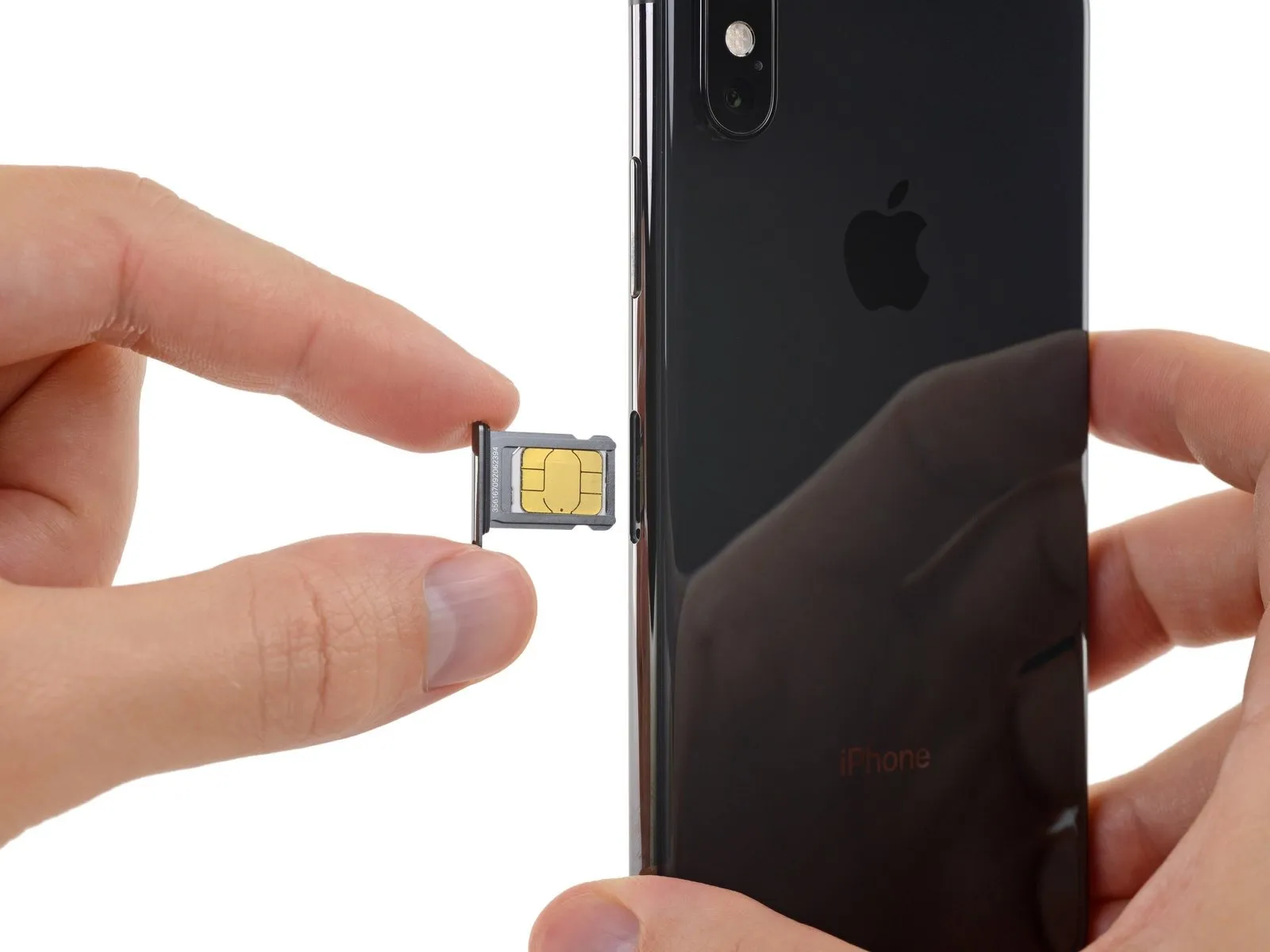

Step 3 | Pentalobe Screws
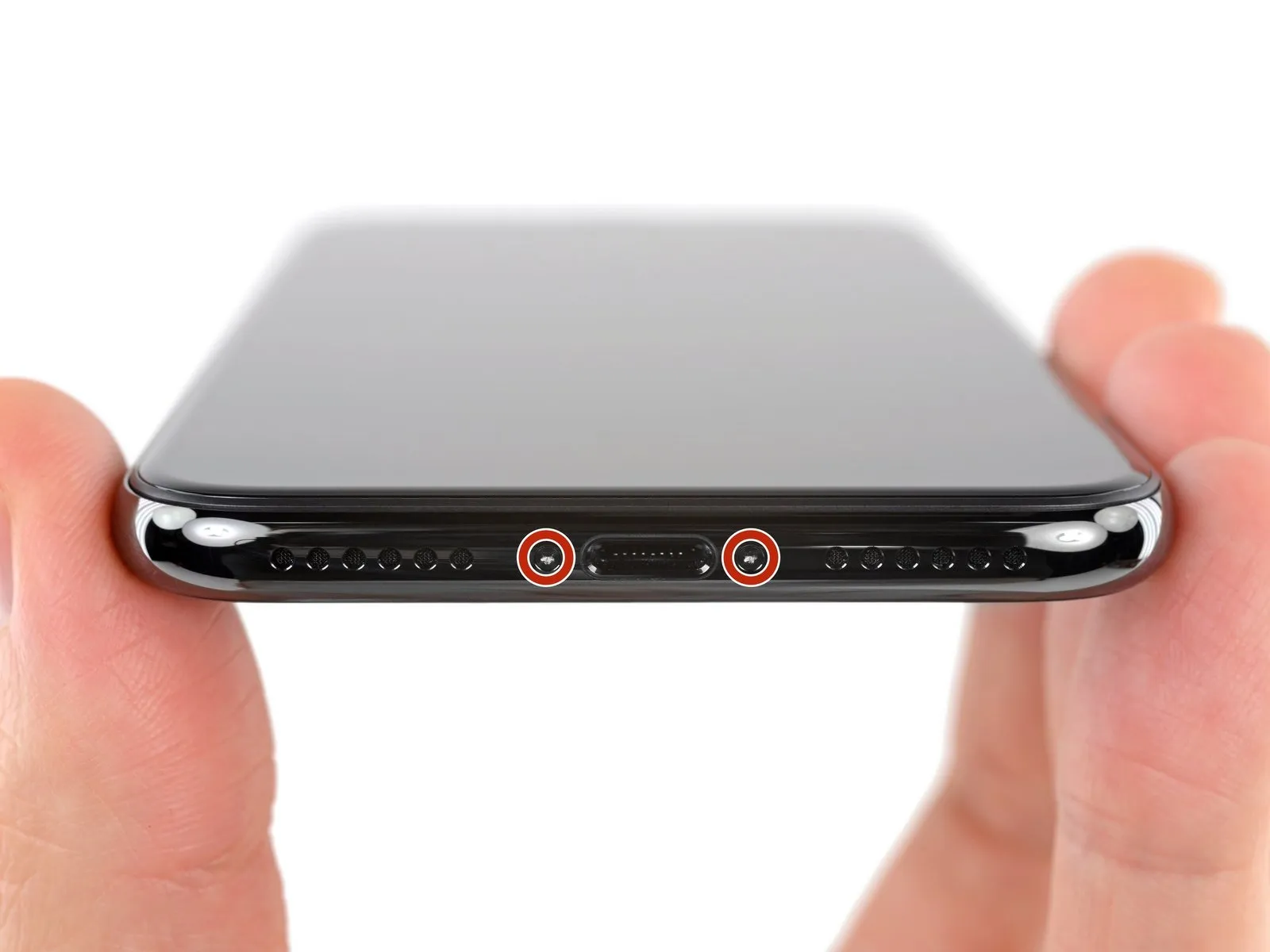
Step 4 | Mark your opening picks


- Utilize a permanent marker to indicate a point 3 millimeters from the tool's tip.
- For enhanced precision, consider marking the tool's other corners with varying measurements.
- As an alternative method, affix a coin to the tool's tip, positioning it 3 millimeters from the end.
Step 5 | Tape over any cracks


- Apply multiple layers of transparent packing tape across the iPhone's screen surface, ensuring complete coverage of the entire front face.
- Always utilize safety eyewear to guard against glass shards that may become dislodged during the repair process.
- Should the suction cup fail to maintain adhesion during subsequent procedures, create a handle by folding a durable tape, like duct tape, and employ this to carefully separate the screen.
- As a last resort, secure the suction cup to the screen's surface using superglue.
Step 6 | Anti-Clamp instructions


- Detailed guidance regarding the Anti-Clamp's operation can be found in a separate, dedicated instructional document.
- To release the Anti-Clamp's gripping arms, draw the blue handle towards the rear.
- Position the arms across either the left or right side of your iPhone.
- Place the suction cups close to the lower edge of the iPhone, ensuring one is situated on the front surface and the other on the rear.
- Apply pressure by compressing the cups together to establish a secure suction hold on the intended area.
- Should the iPhone's surface prove excessively smooth, preventing adequate adhesion by the Anti-Clamp, applying adhesive tape can provide a more textured interface for improved grip.
Step 7


- Rotate the handle a full 360-degree circle, or continue turning until the suction cups exhibit signs of deformation.
- Maintain the parallel orientation of the suction cups; should misalignment occur, marginally reduce the suction cup's grip and reposition the arms.
Step 8


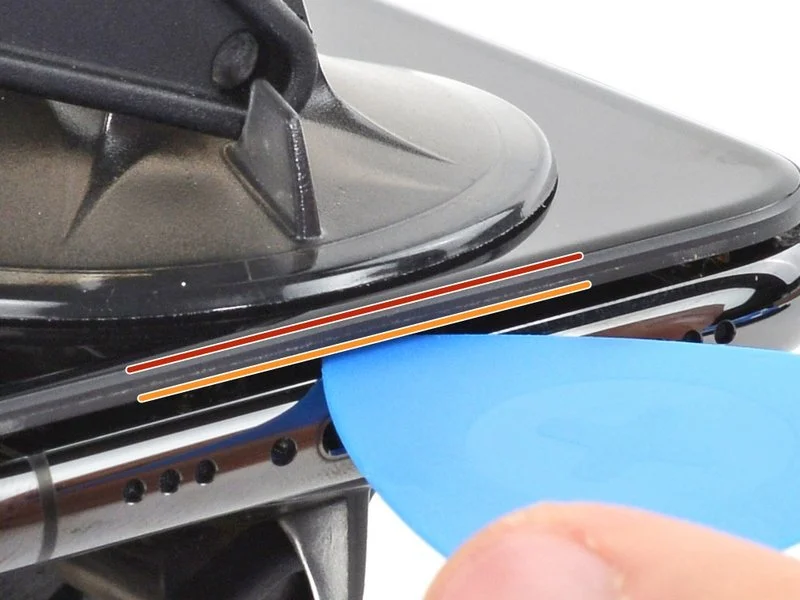
- Alternative heat sources, such as a hair dryer, heat gun, or hot plate, may be utilized; however, excessive heat poses a risk of damage to the display assembly and/or the internal battery, necessitating cautious operation.
- Position the iOpener so that it rests along the lower edge of the iPhone’s chassis.
- Allow a period of sixty seconds to elapse, enabling the adhesive to loosen and establish a separation.
- Introduce an opening pick beneath the display surface and the surrounding plastic bezel, ensuring it does not contact the screen directly.
- Should the Anti-Clamp fail to generate an adequate separation, increase the heat applied to the region and rotate the handle by ninety degrees.
- Avoid incremental rotations exceeding ninety degrees, and incorporate a sixty-second pause between each adjustment; allow the Anti-Clamp and time to facilitate the separation process.
Step 9
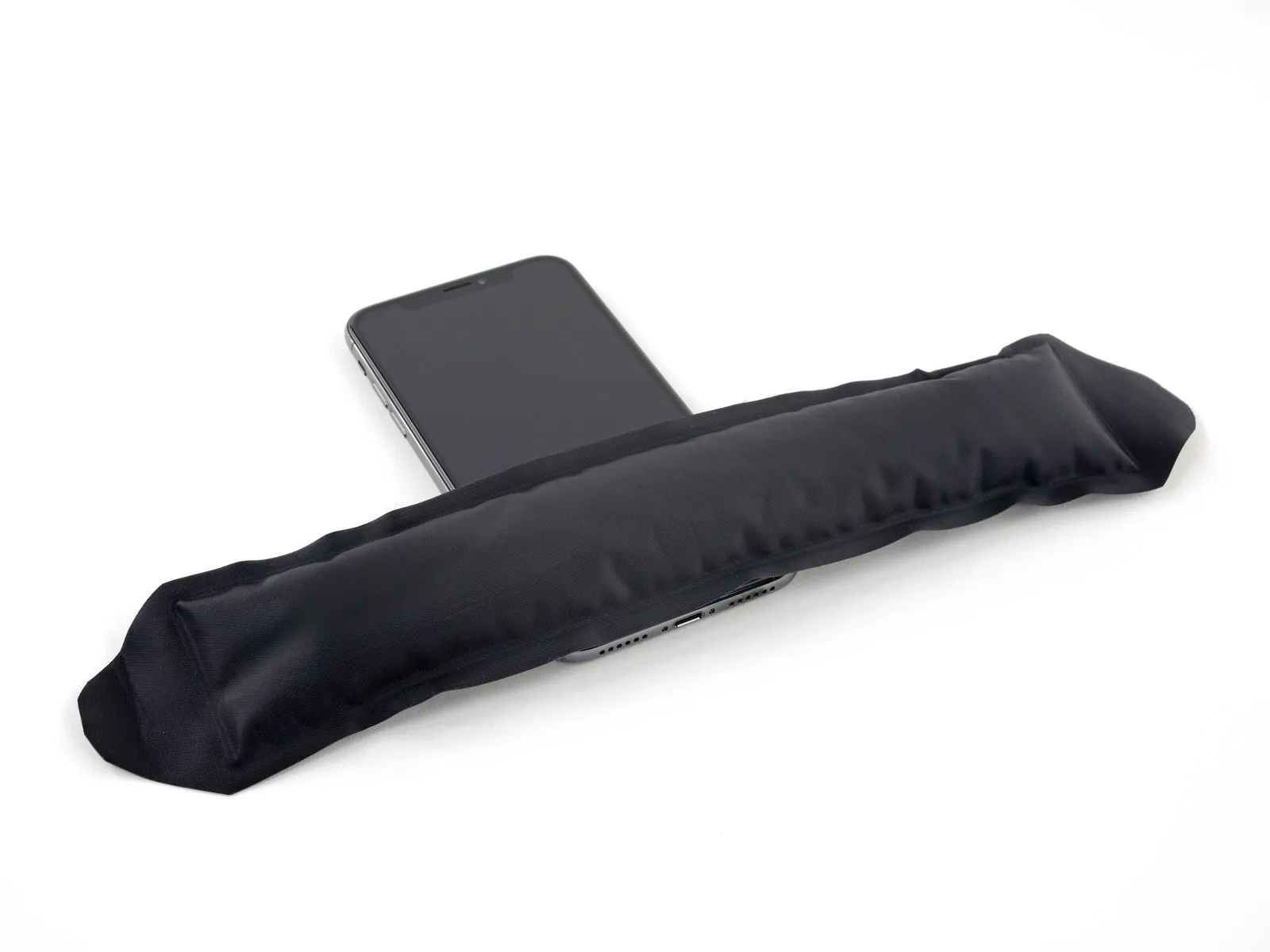
- Employ a hairdryer, heat gun, or iOpener, directing it towards the lower edge of the iPhone for approximately one minute to reduce the adhesive's tackiness.
- When utilizing a hairdryer or heat gun, avoid excessive heat application, as this could potentially harm the display.
Step 10
Step 11
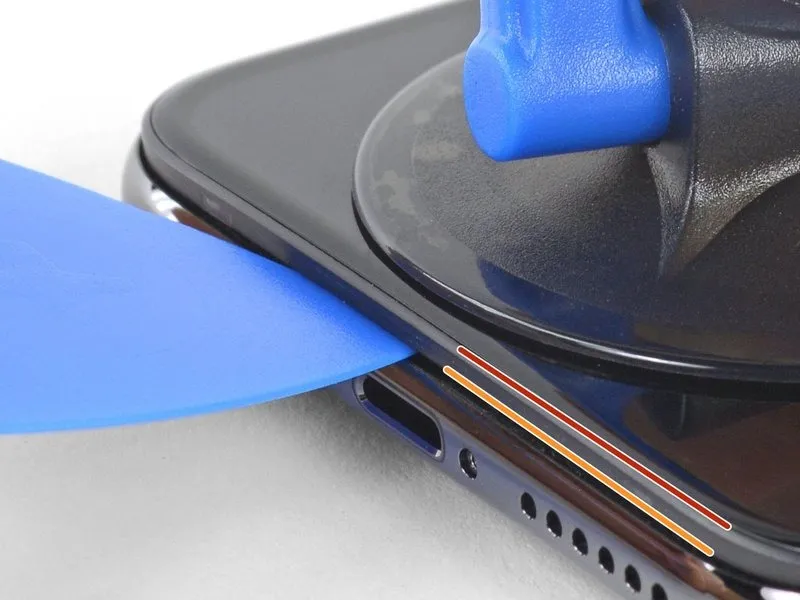
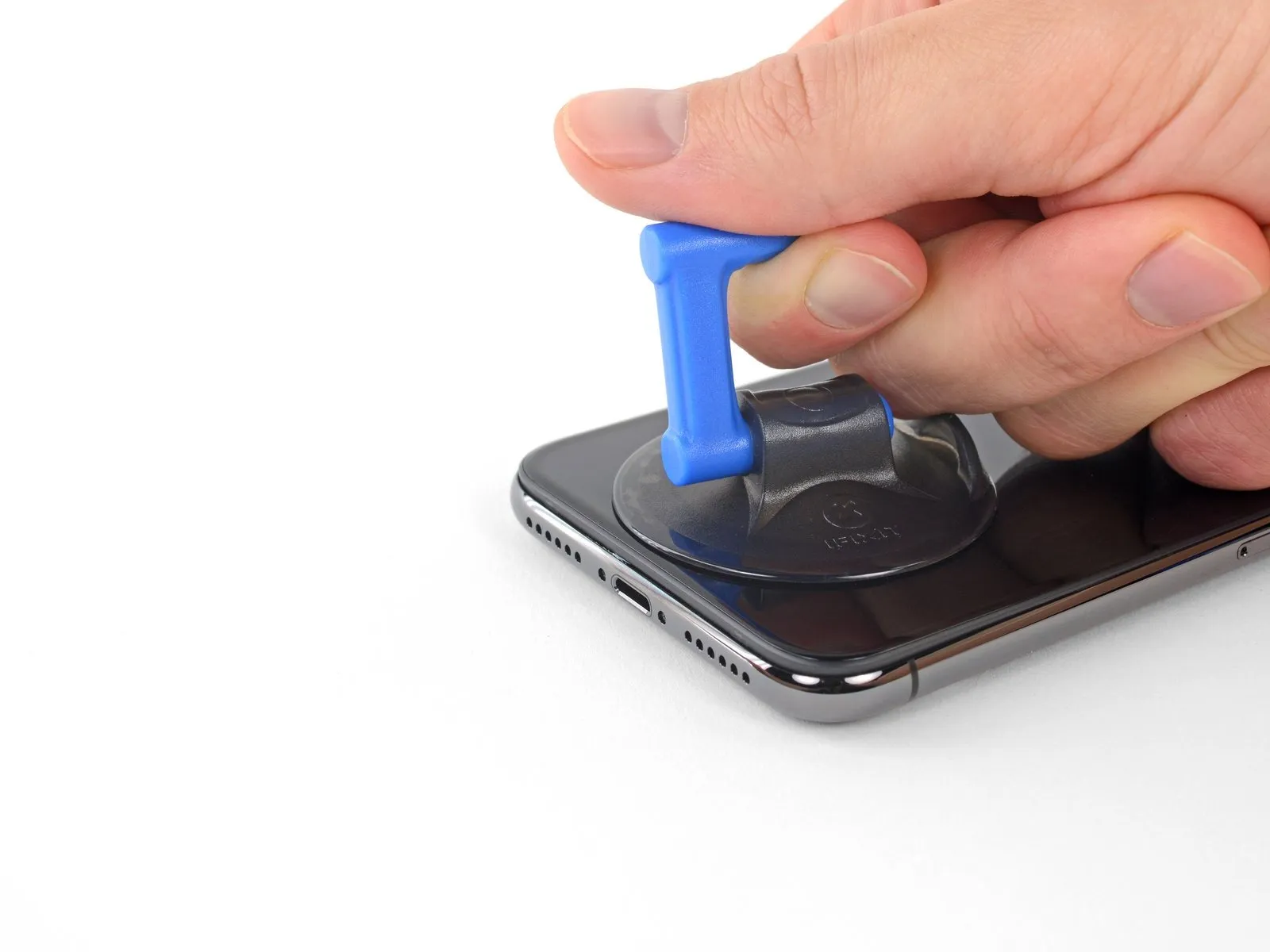
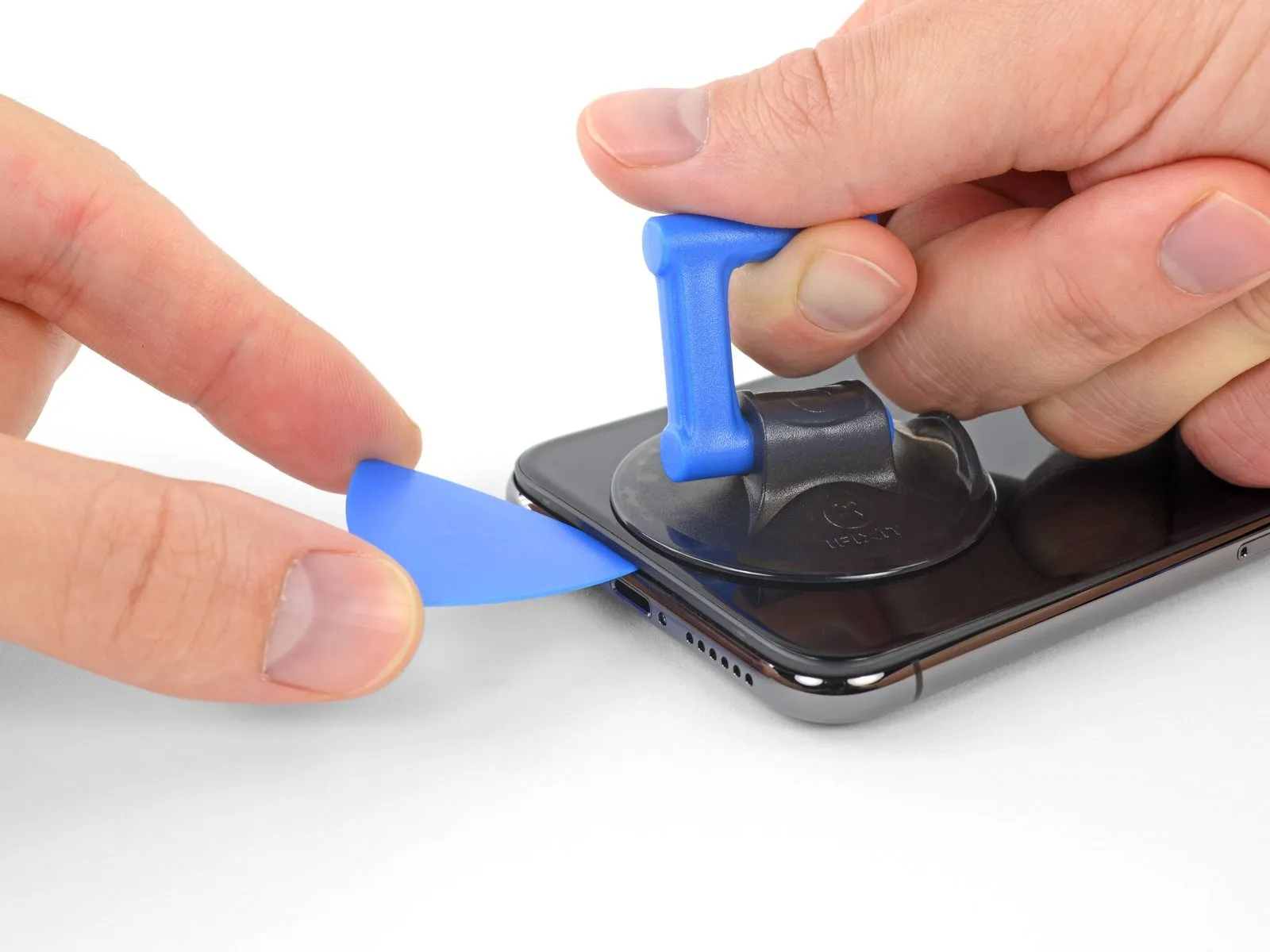
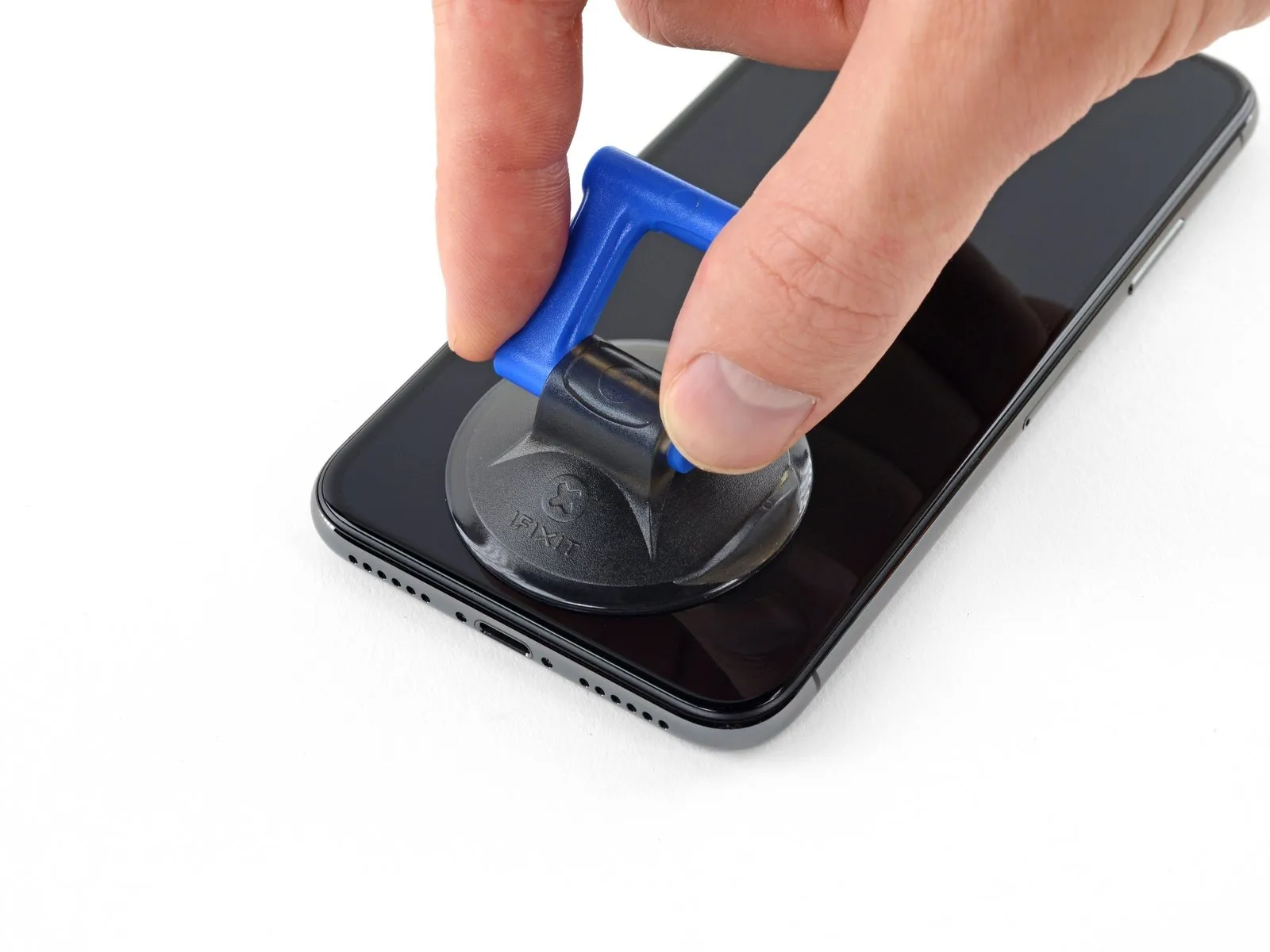
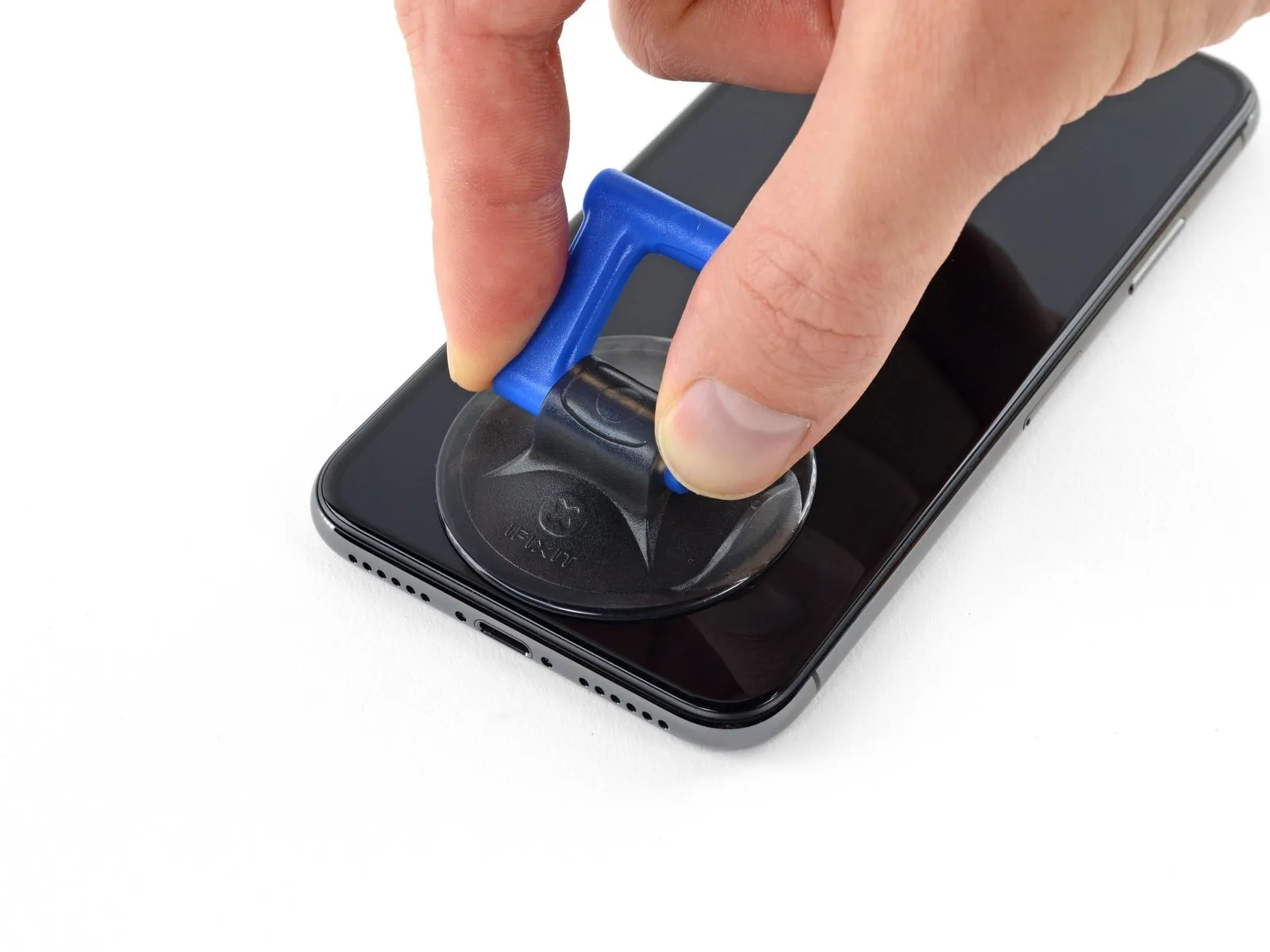
- Apply steady, consistent upward force to the suction cup to generate a small separation between the display assembly and the device's chassis.
- Carefully slide an opening tool into the space formed beneath the screen's decorative plastic trim, ensuring it does not contact the display surface itself.
- Due to the robust, waterproof sealant securing the screen, establishing this initial separation requires considerable effort; should you encounter difficulty, apply additional heat and gently oscillate the screen to reduce the adhesive's strength until a sufficient gap is achieved for tool insertion.
Step 12
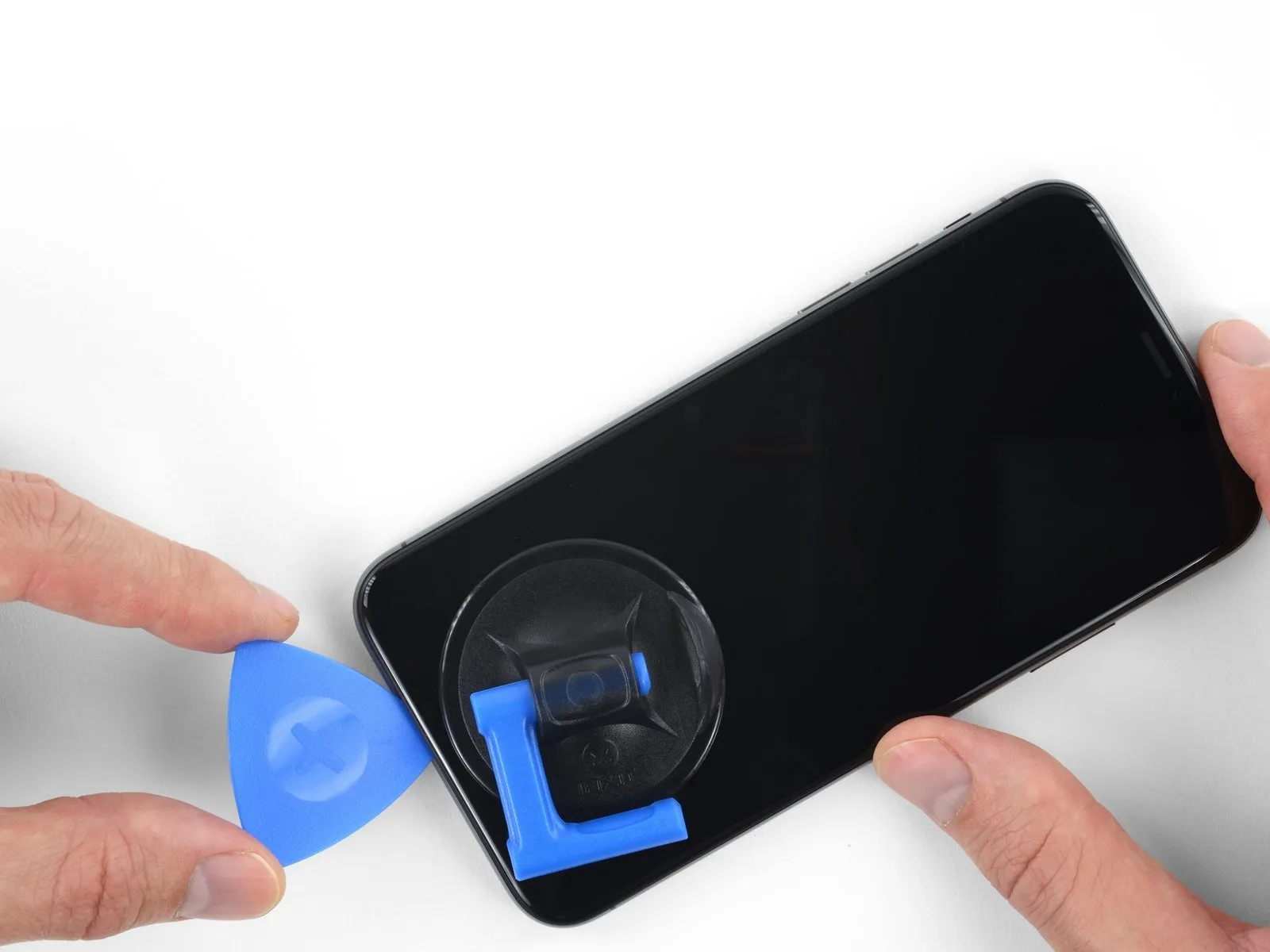
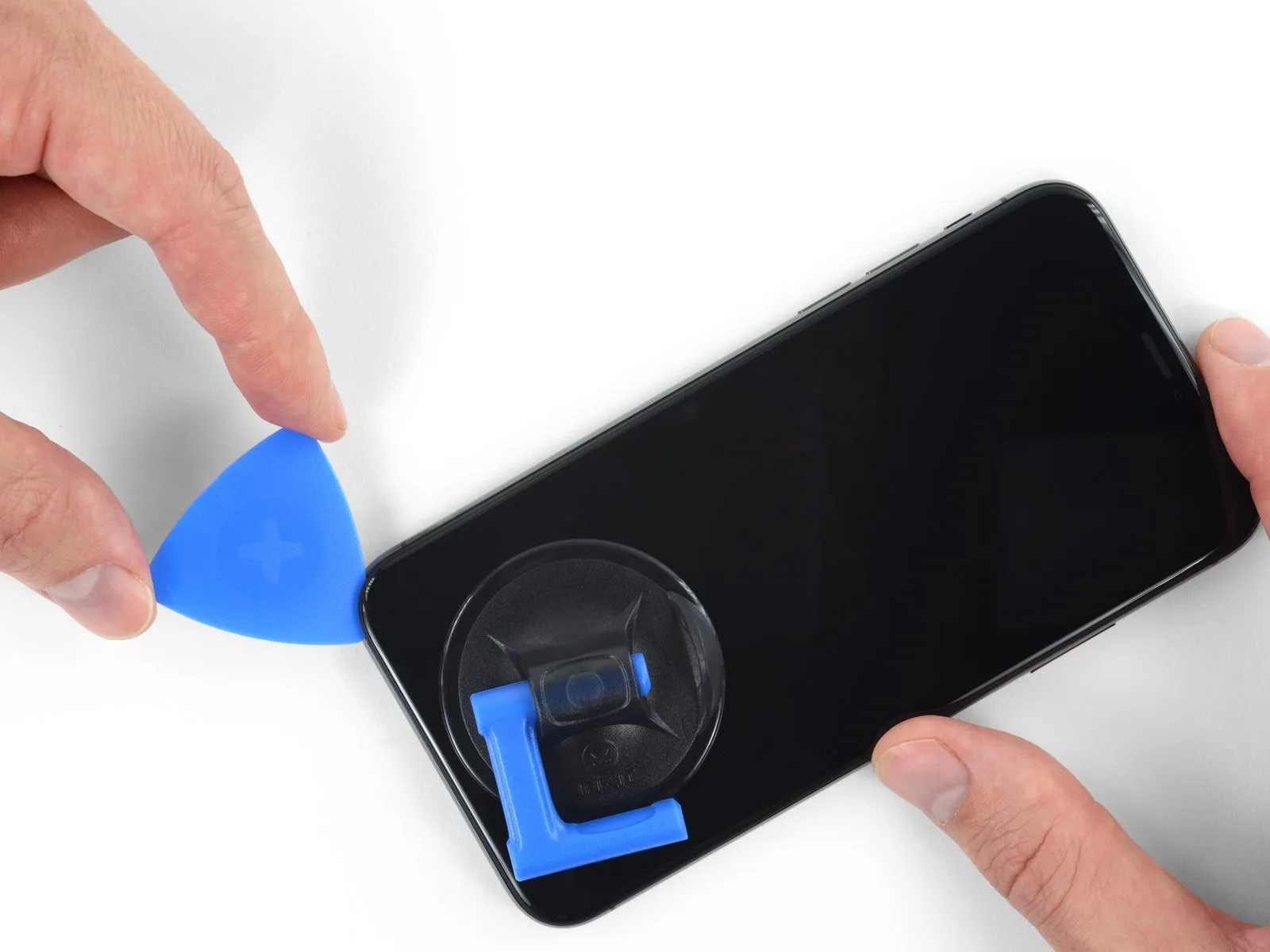
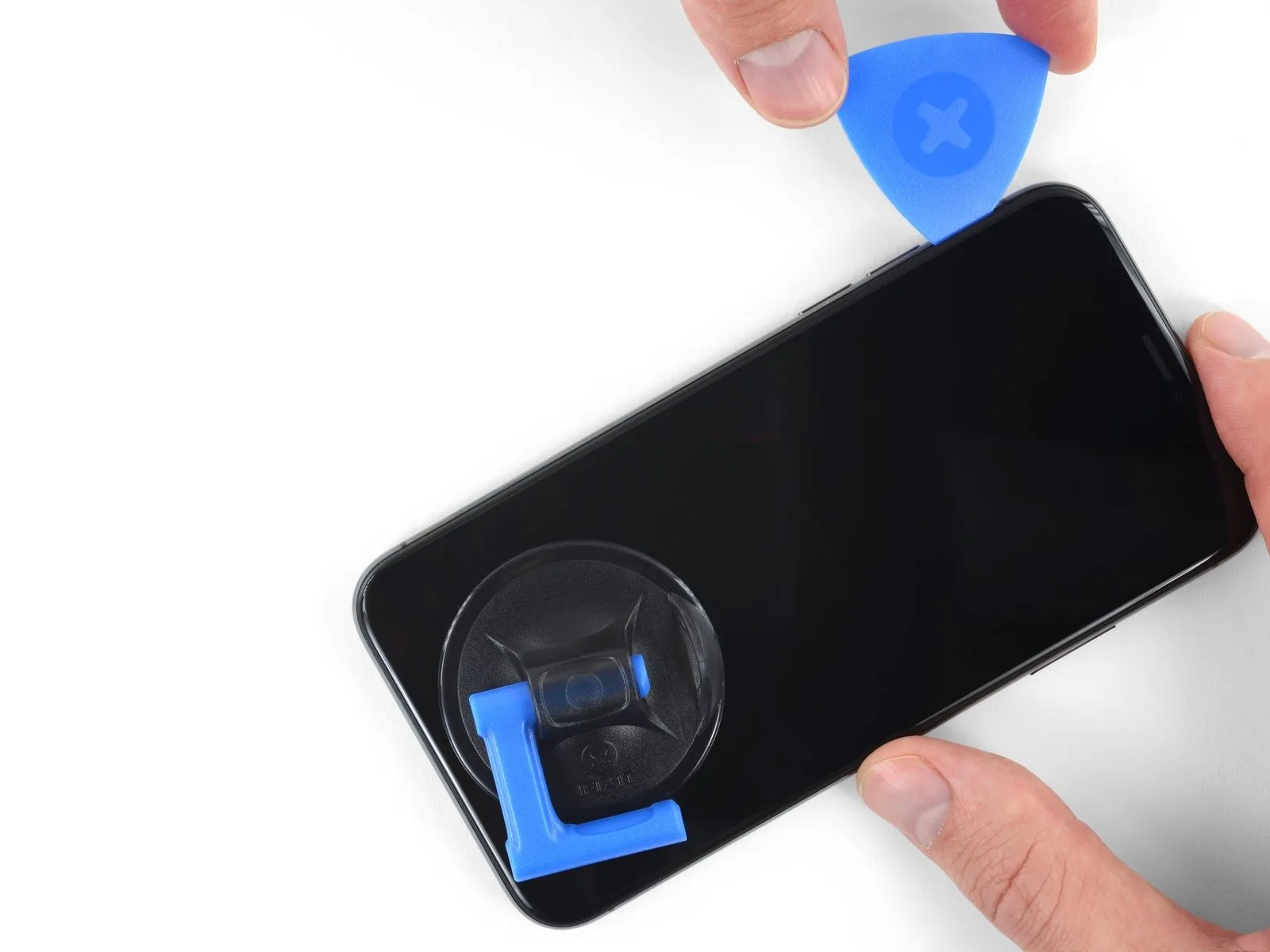
- Carefully maneuver the opening pick along the bottom-left periphery of the iPhone's display and vertically along the left side, severing the adhesive securing the display assembly.
- Ensure the pick's insertion depth remains under 3 millimeters to prevent potential harm to the internal components.
Step 13 | Screen information
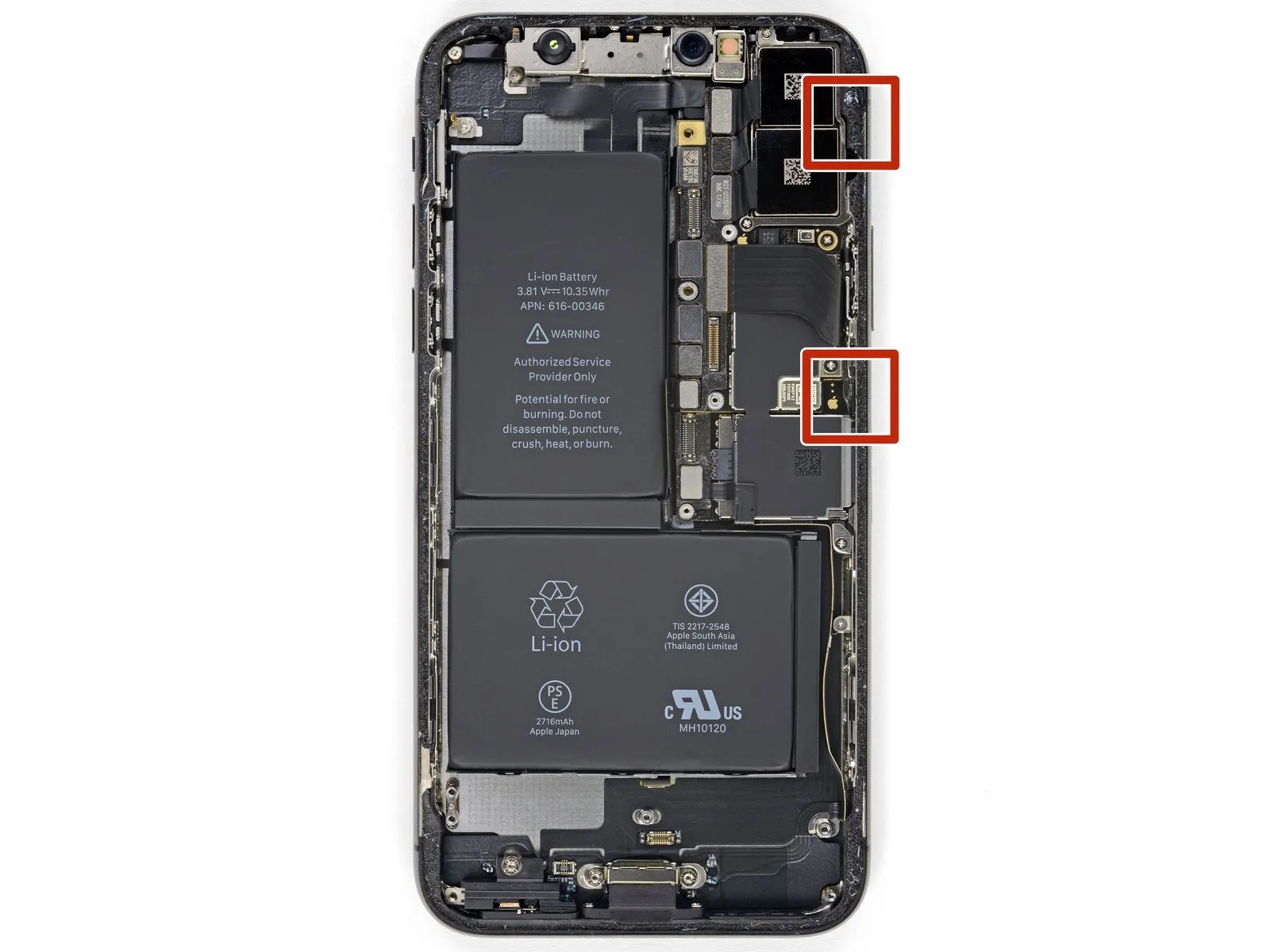
- Fragile wiring is situated along the right-hand side of the iPhone; avoid inserting any tools in this area to prevent potential cable damage.
Step 14
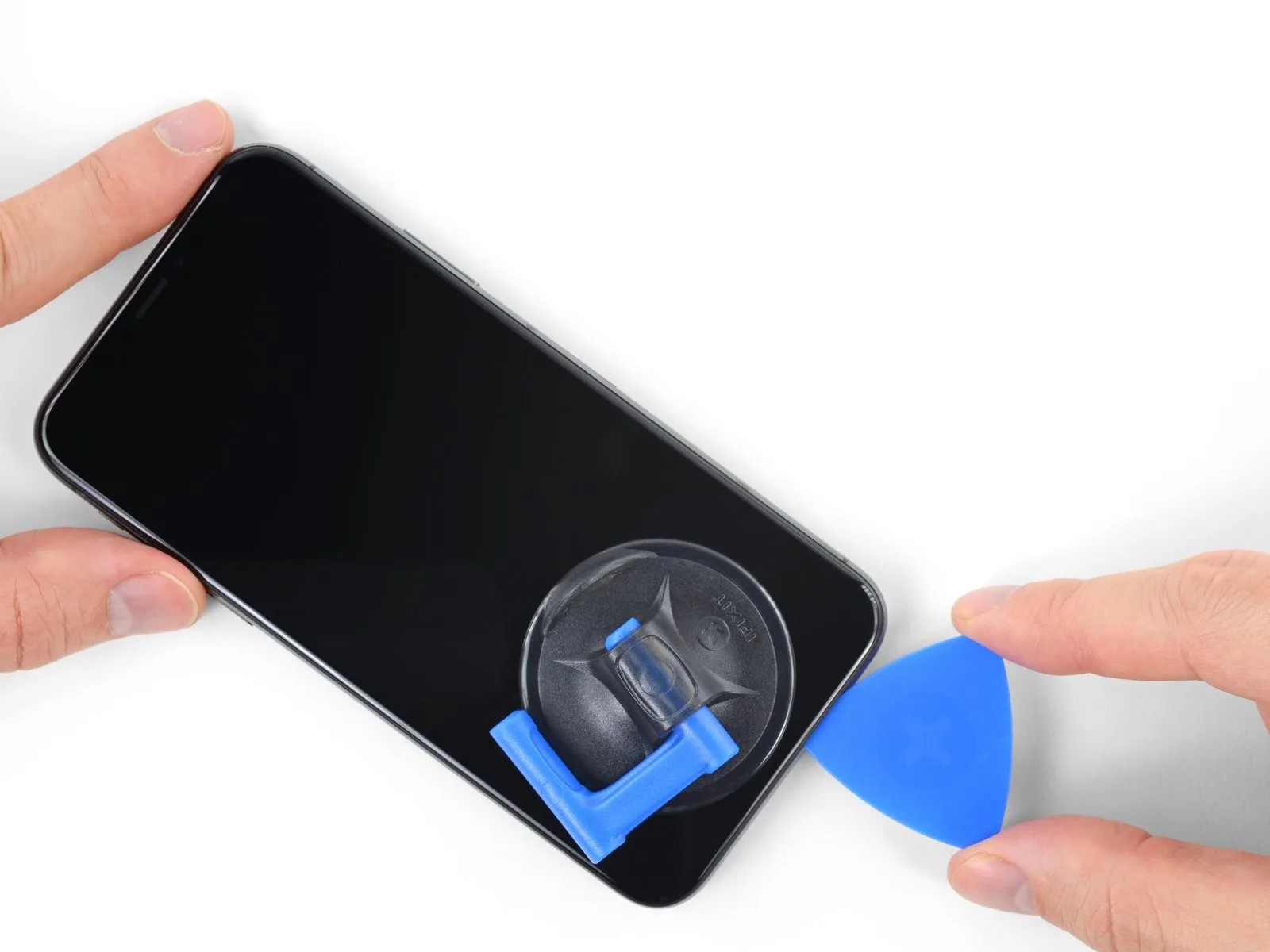
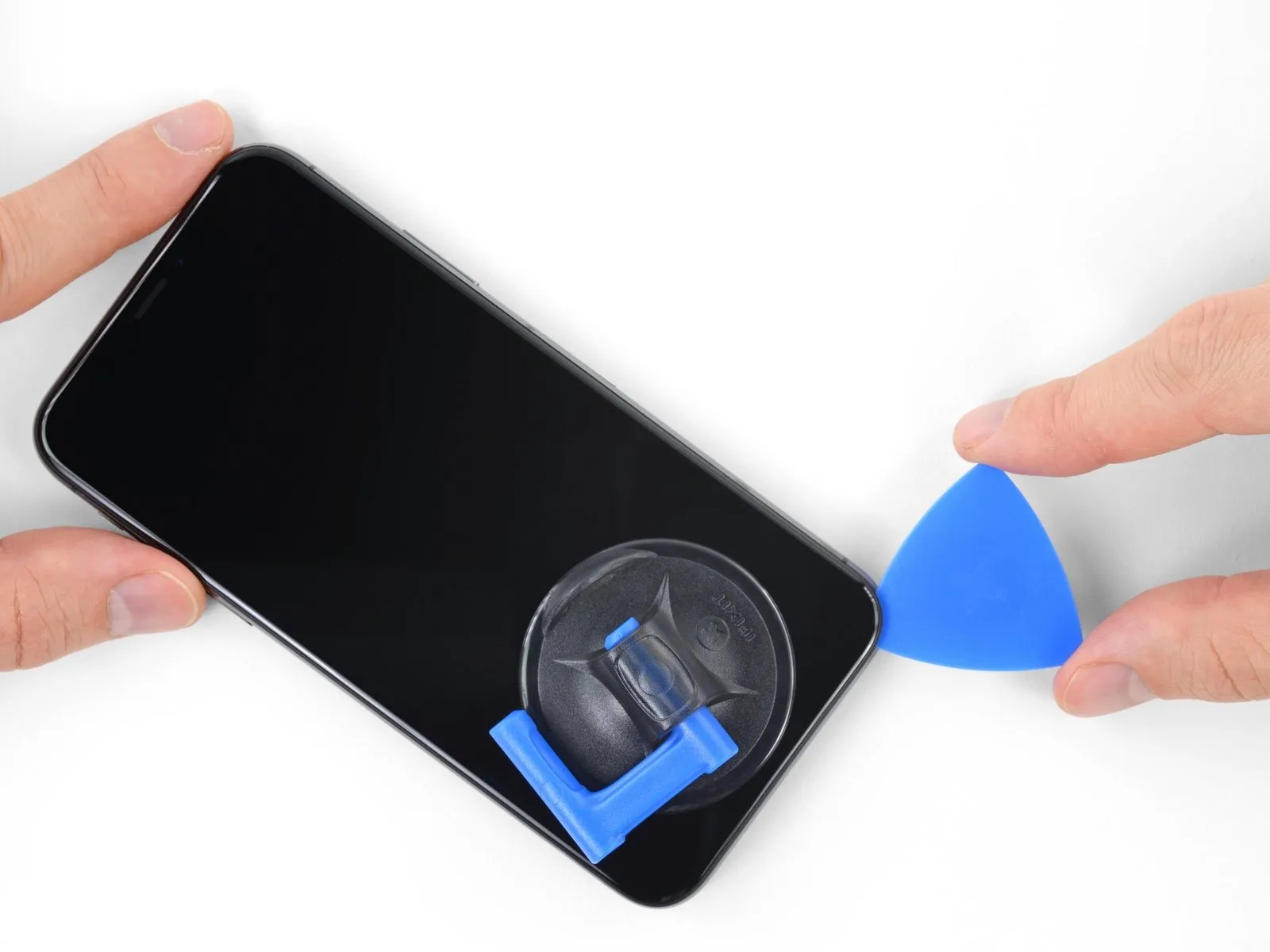
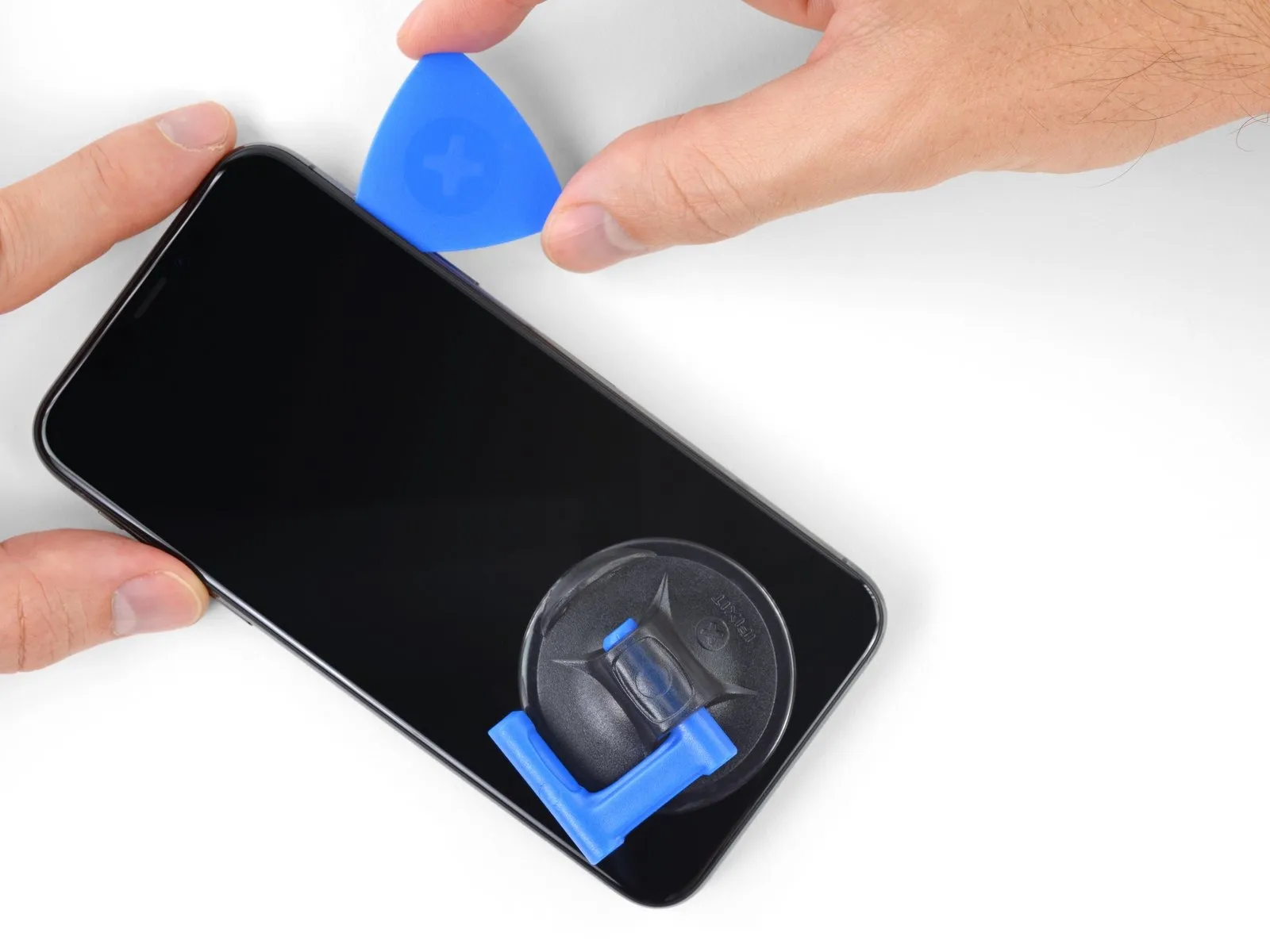
- To proceed with separating the adhesive, re-position your opening tool at the lower boundary of the iPhone's display and advance it upwards along the right-hand side.
Ensure the tool's insertion depth remains under 3 millimeters to prevent potential harm to the delicate display cable connections.
Step 15
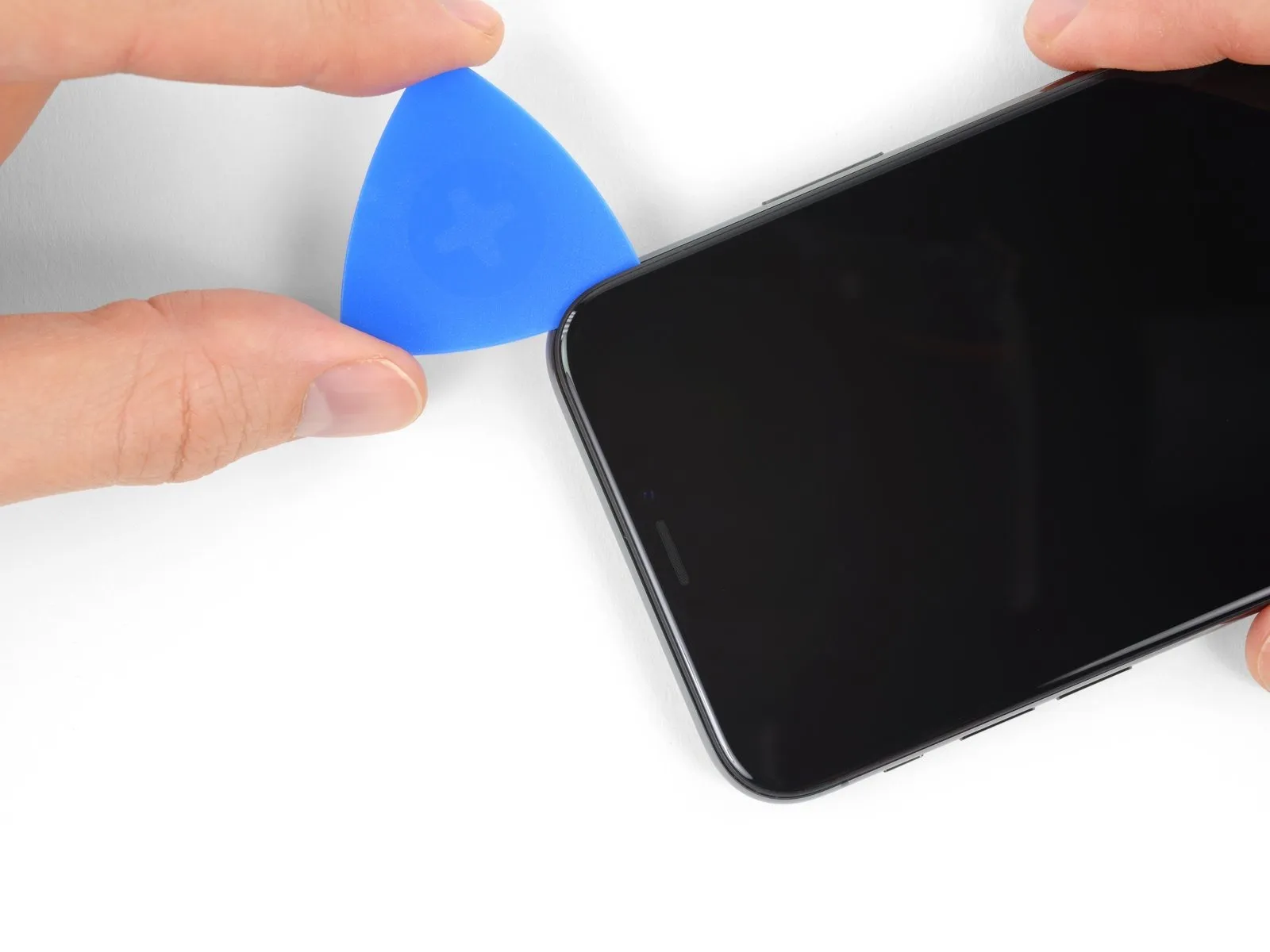
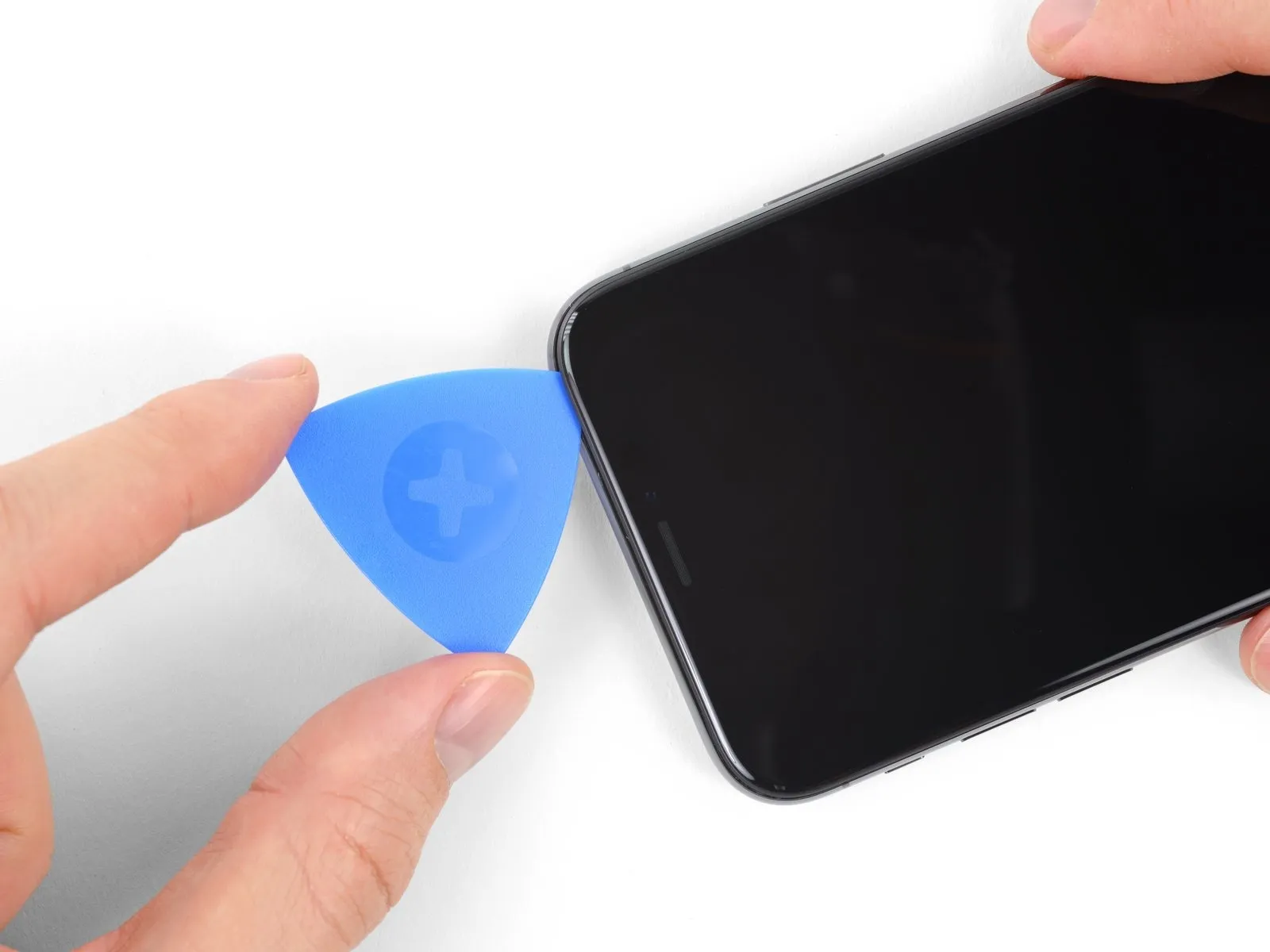
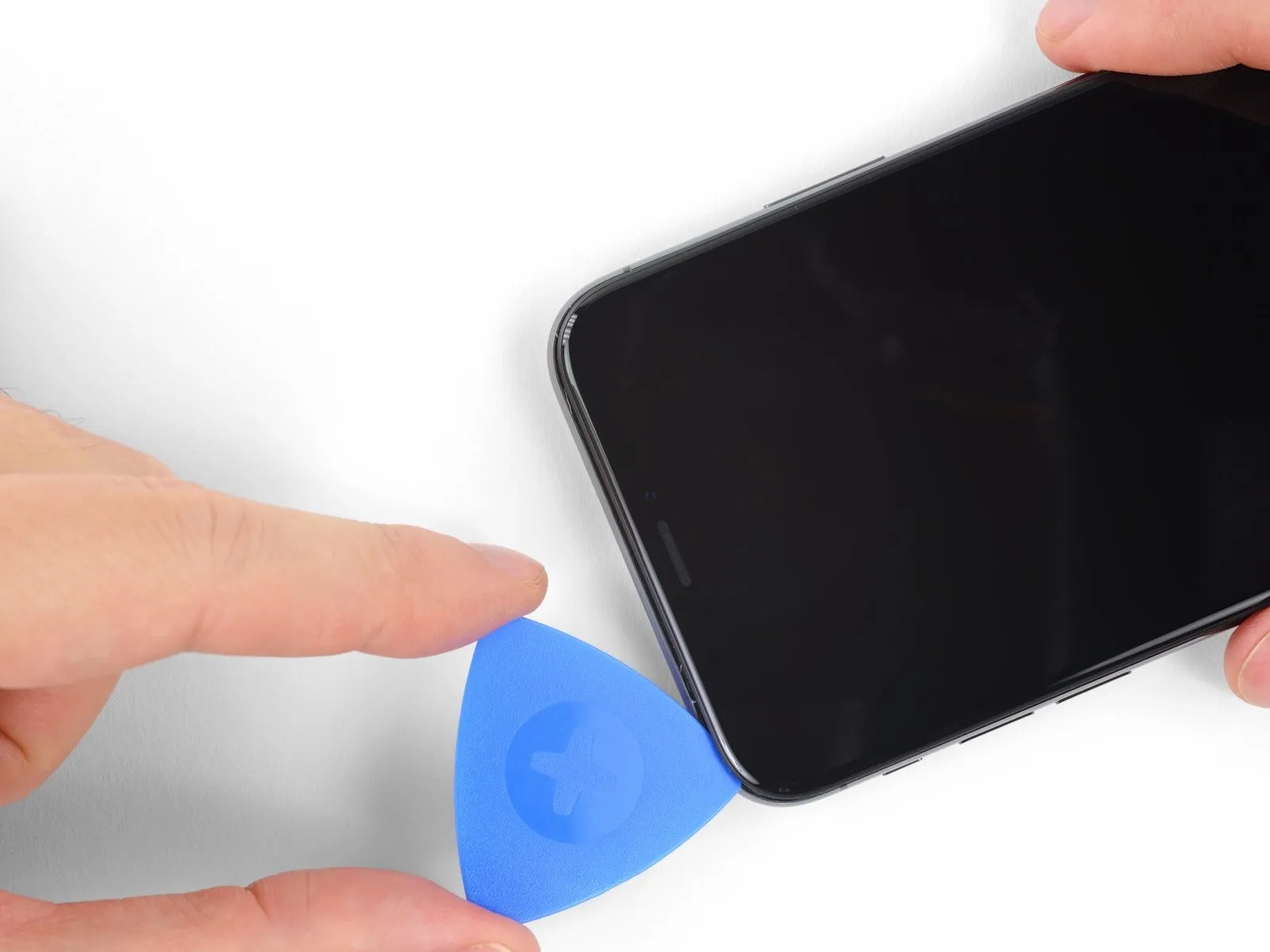
- Adhesive and retaining clips both fasten the uppermost border of the screen assembly.
Employ the opening tool to move along the upper corner of the display, applying slight downward pressure, guiding the screen towards the Lightning connector.
Excessive force will result in clip breakage; therefore, proceed with caution and allow ample time. - Limit pick insertion to a depth of 3 millimeters to prevent potential damage to the front panel sensor array.
Continue moving the tool to the opposing corner to sever any residual adhesive holding the display in place.
Step 16
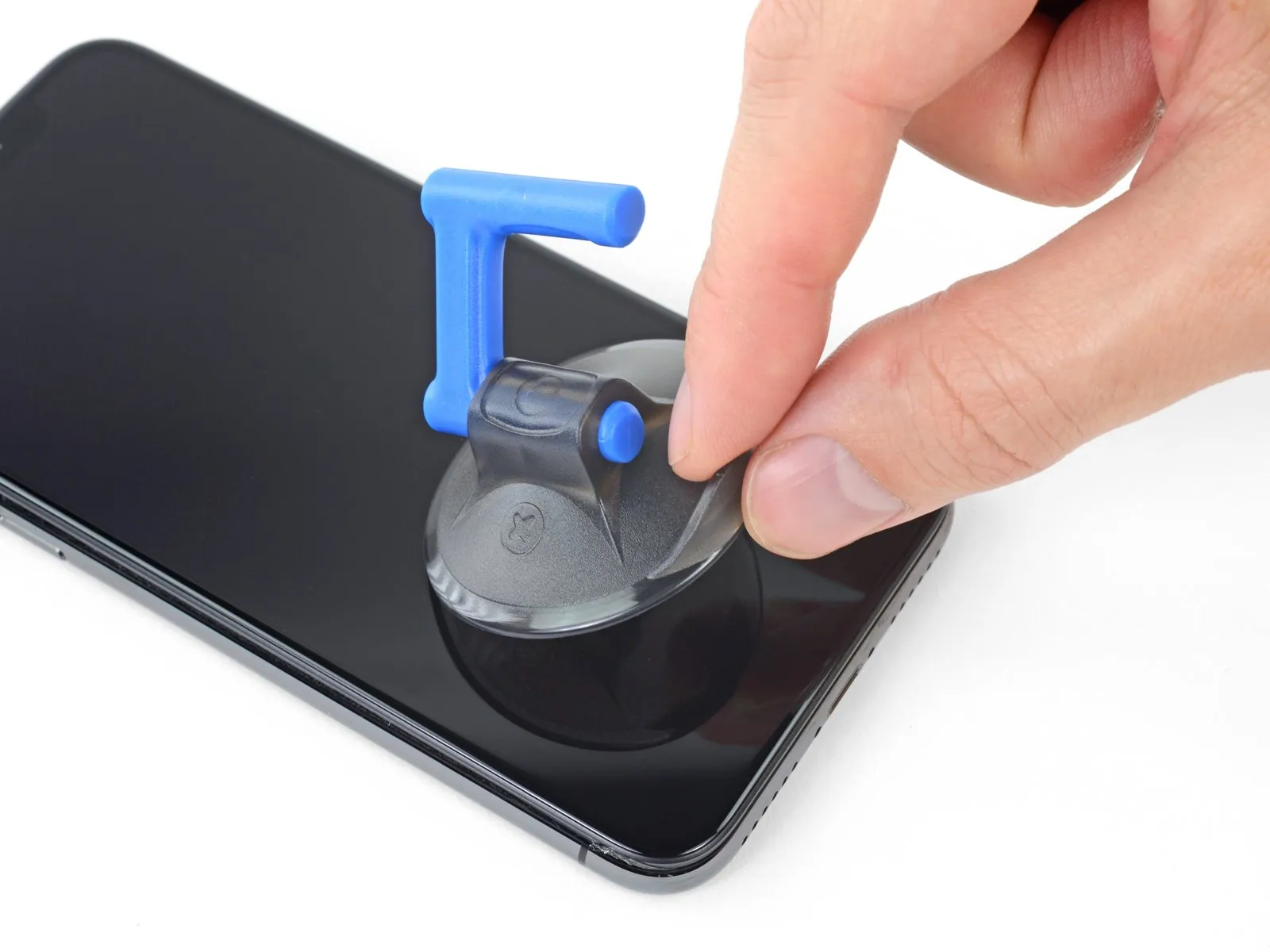
- To detach the suction cup from the front panel, grasp the diminutive projection located on its surface and exert a pulling force.
Step 17
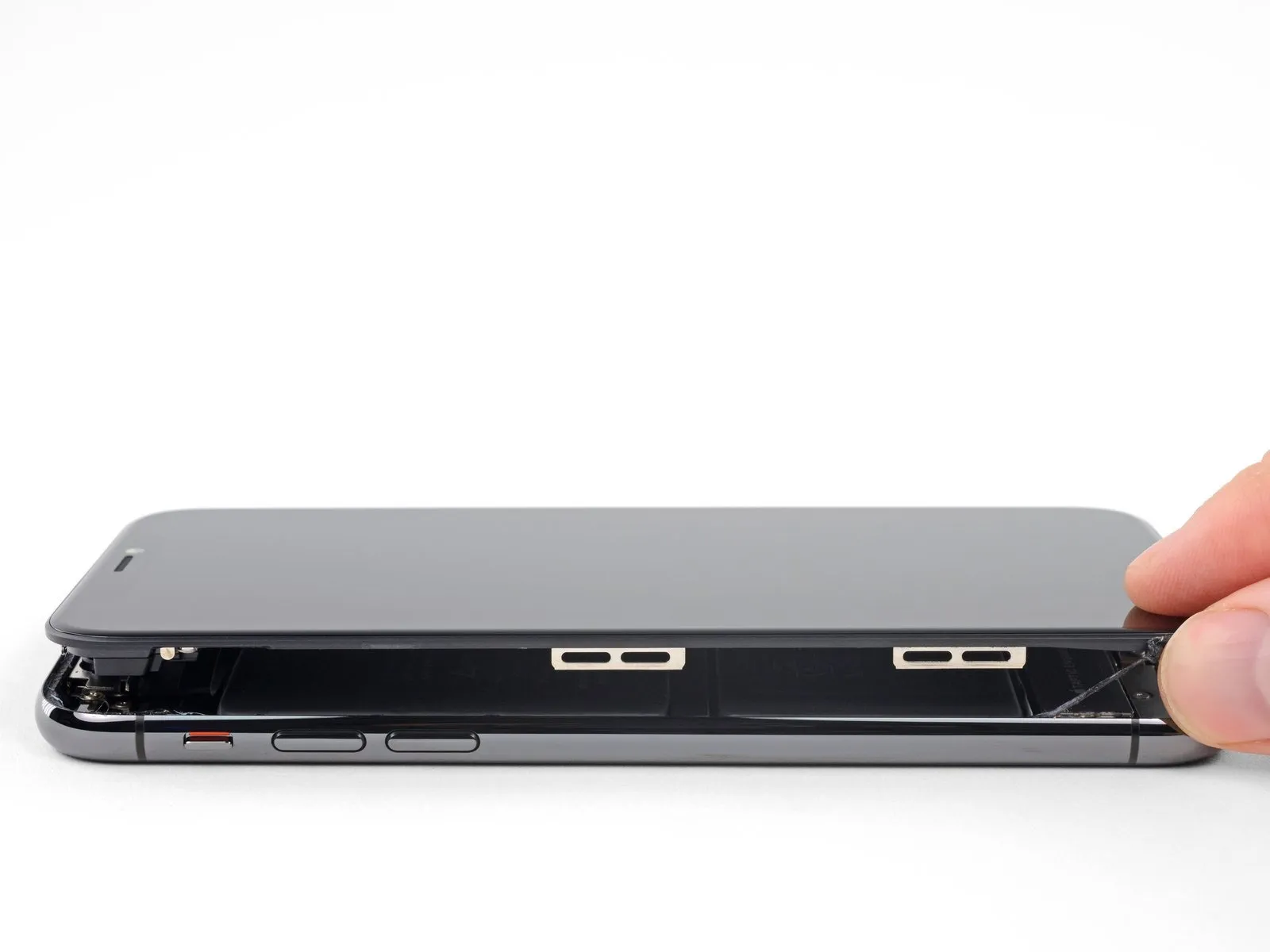
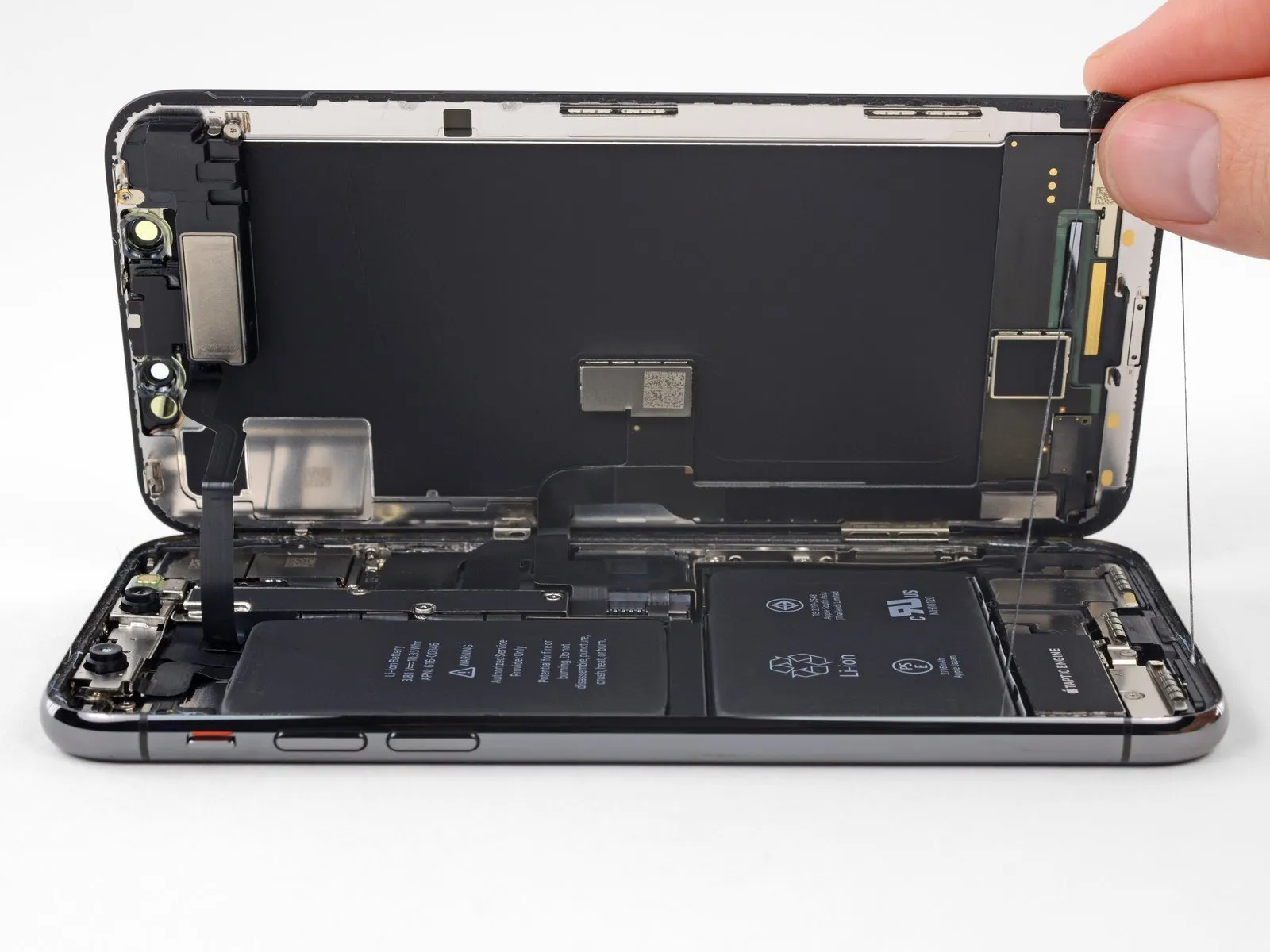
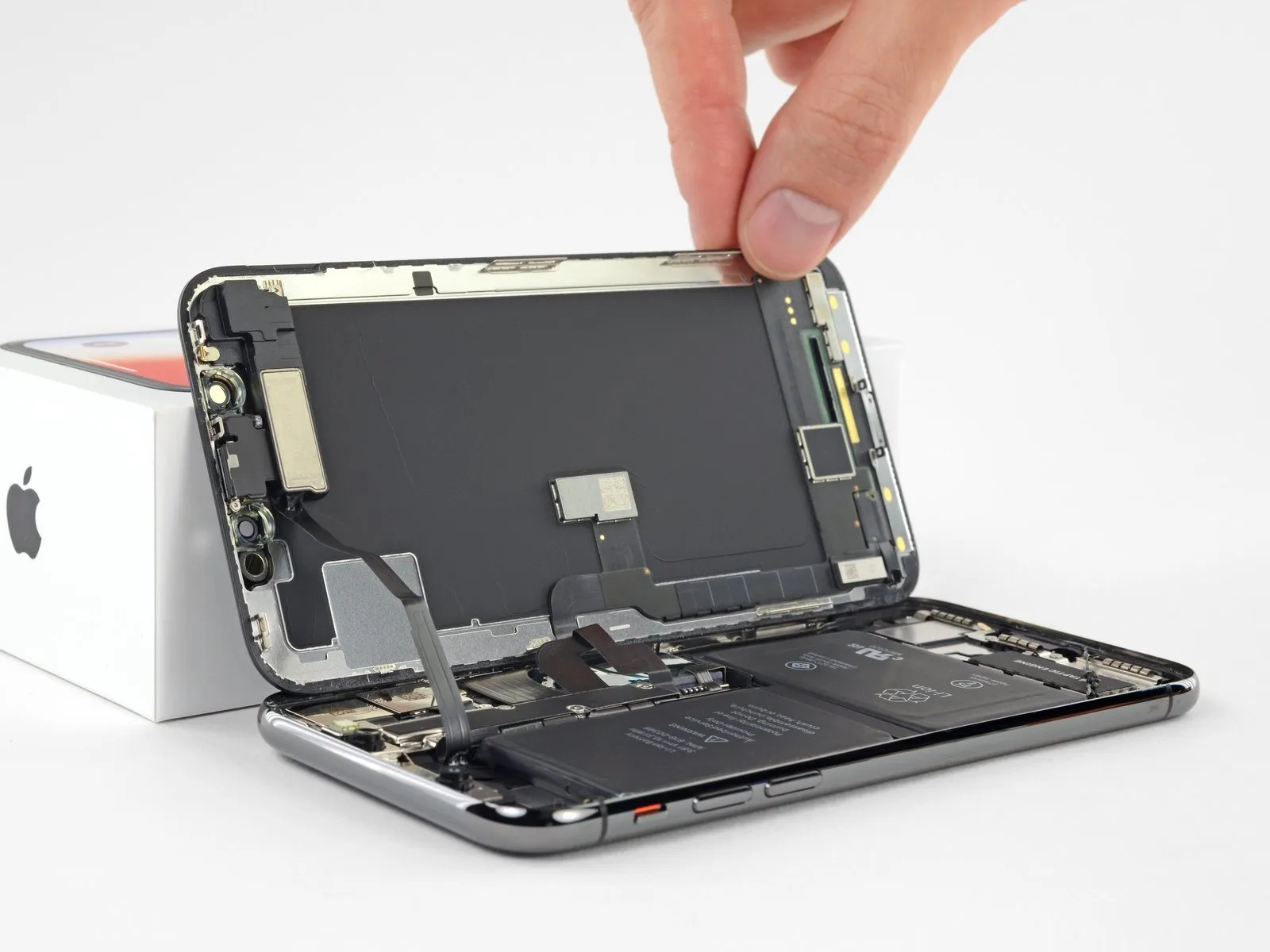
- To access the internal components, initiate the display opening process by pivoting the screen upwards from the left edge, mimicking the action of opening a book's cover.
- Refrain from completely disconnecting the display assembly at this stage, because multiple delicate ribbon cables remain attached to the iPhone's main circuit board.
- Confirm, as illustrated, that the frame lifts away from the device alongside the display, preventing it from becoming lodged inside.
- Secure the display in an upright position using a support to maintain access to the internal components during the repair process.
- When reassembling the device, position the display, ensuring proper alignment of the retaining clips on the top edge, and gradually apply pressure to the top edge before securing the remainder of the display. Should the display not readily engage, inspect the clips surrounding the display's perimeter for any signs of deformation and correct as needed.
Step 18 | Display Assembly
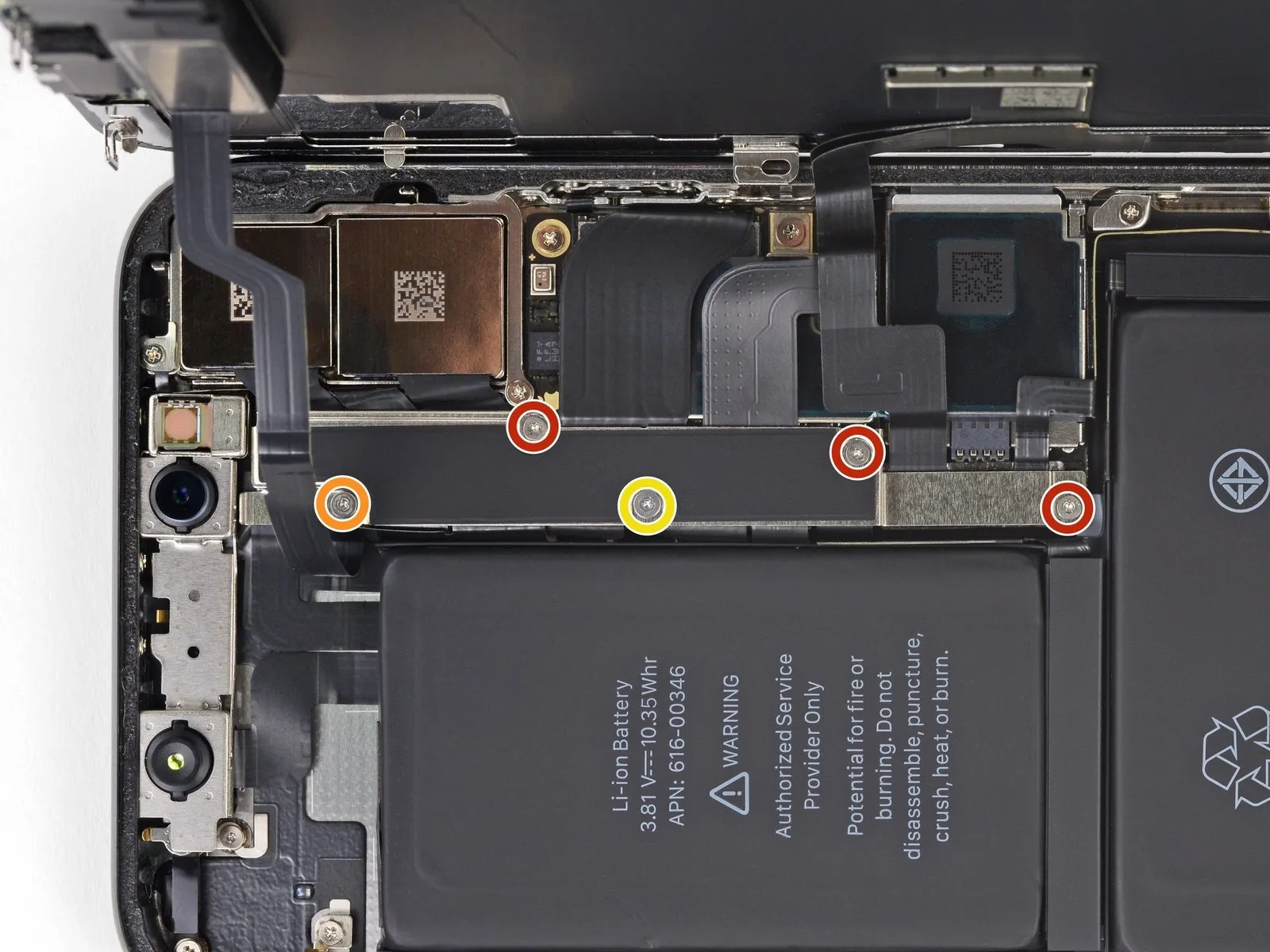
- To detach the logic board connector bracket, initially extract the five Y000 screws that hold it in place, noting the varying lengths of each.
Specifically, three screws measure 1.1 millimeters in length.
A single screw is 3.1 millimeters long.
Additionally, one screw has a length of 3.7 millimeters.
During the entire repair process, meticulously organize and document the location of each screw, ensuring correct reinstallation to prevent potential damage to your iPhone.
Step 19
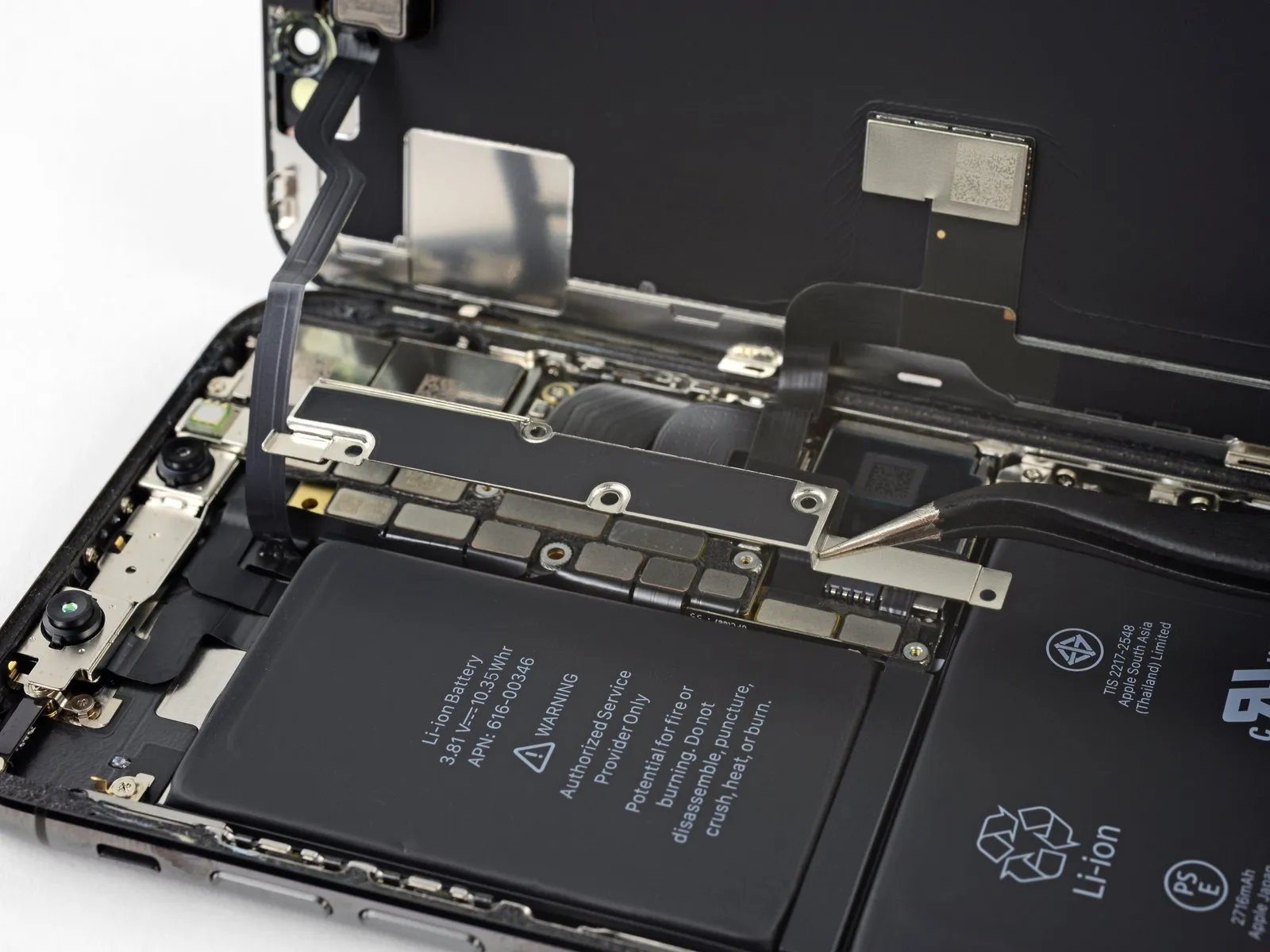
- Detach the bracket from the assembly.
The bracket could be subtly affixed; use a careful, yet decisive upward motion to disengage it.
As you put the iPhone back together, it's advisable to activate the device and verify all operational capabilities prior to securing the display. Ensure the iPhone is fully powered off before proceeding with further repairs.
Step 20
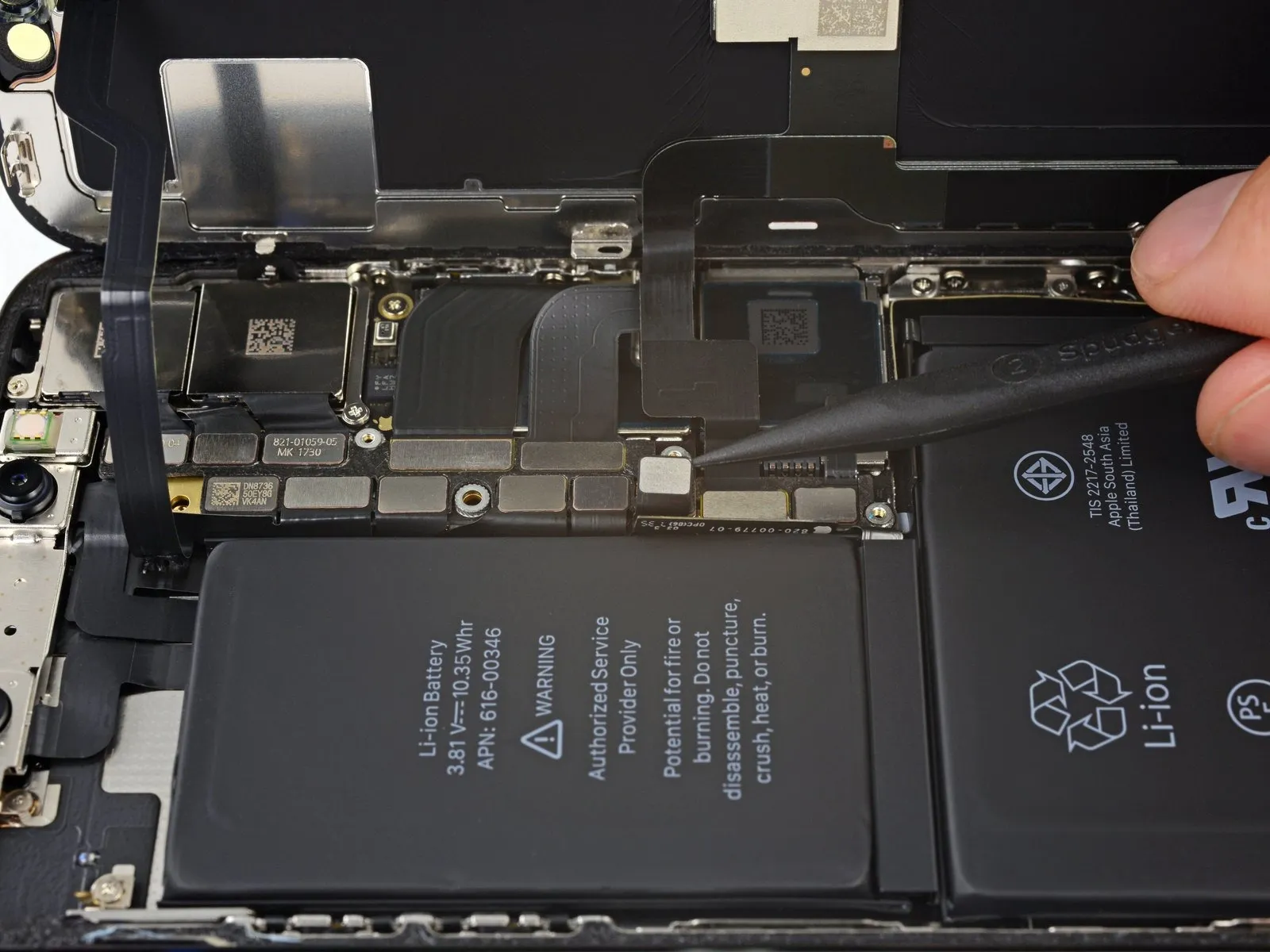
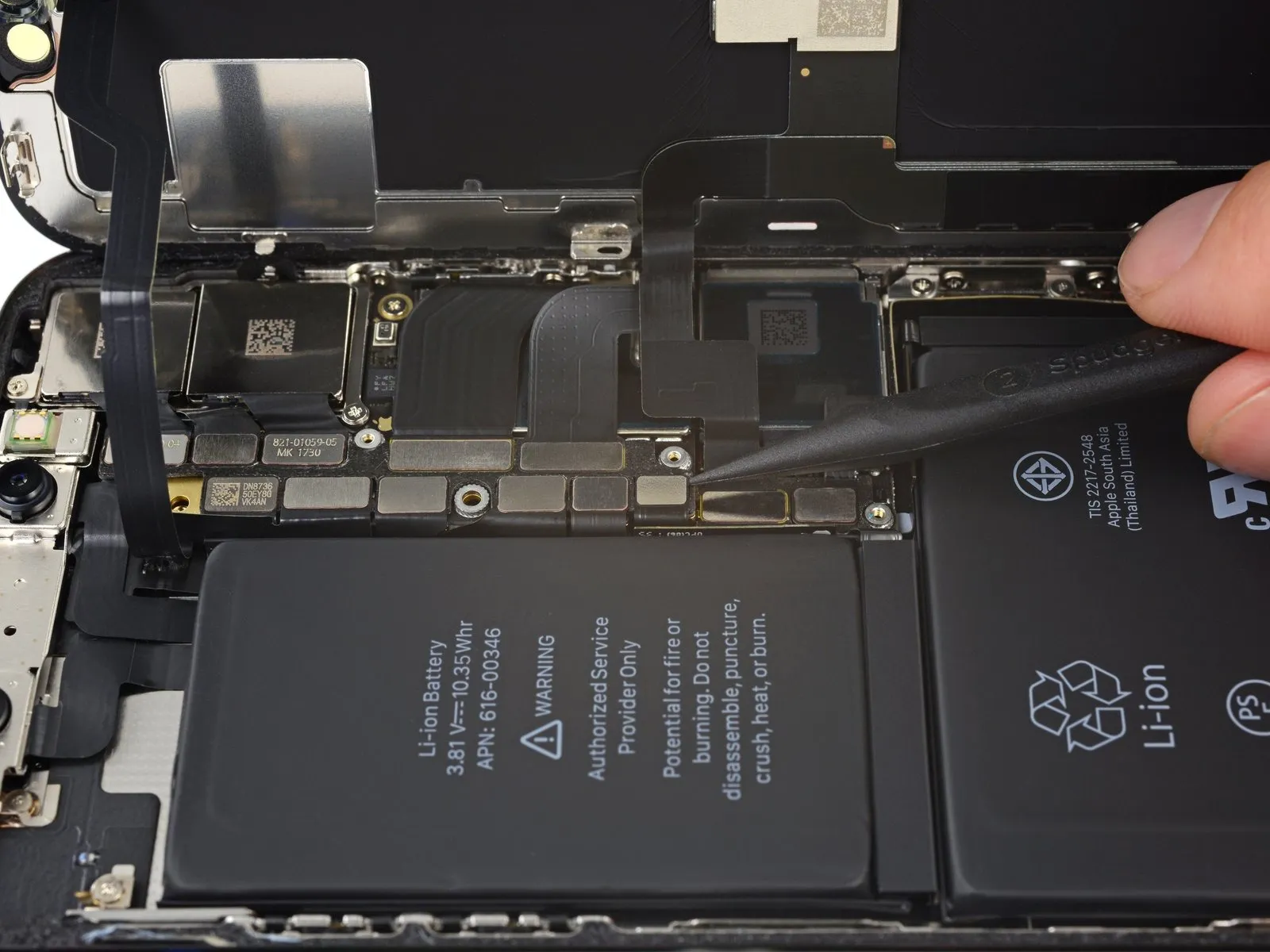
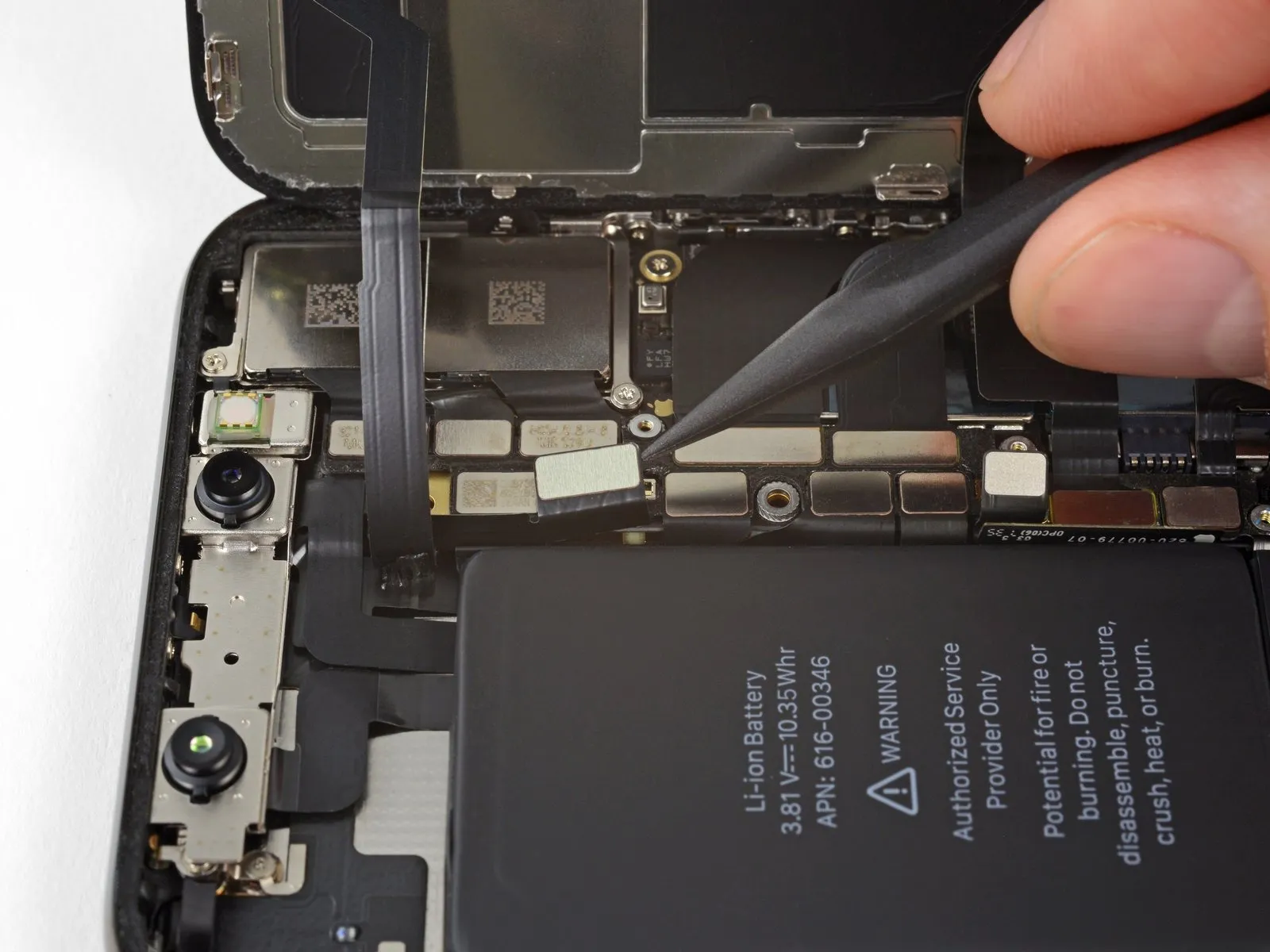
- Employing the tip of a spudger or a pristine fingernail, carefully lift the battery connector away from its corresponding receptacle on the logic board.
Exercise caution to avoid harming the black silicone seals that encircle this connector and others on the board, as these seals offer supplemental defense against water and dust penetration.
Slightly deflect the connector outward from the logic board to ensure it remains disconnected from the socket, thereby preventing unintended power delivery to the device during the repair process.
Step 21
Step 22
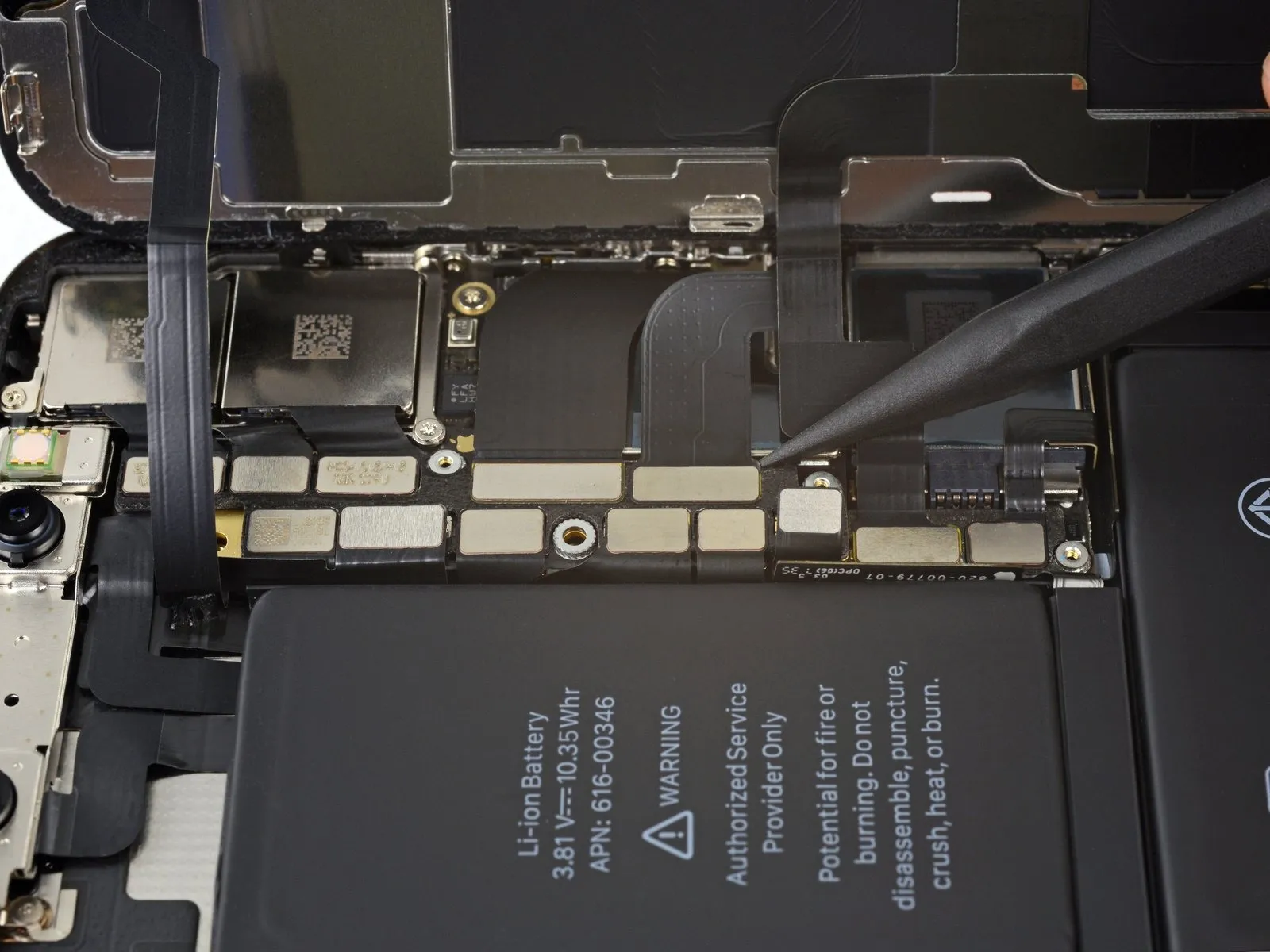
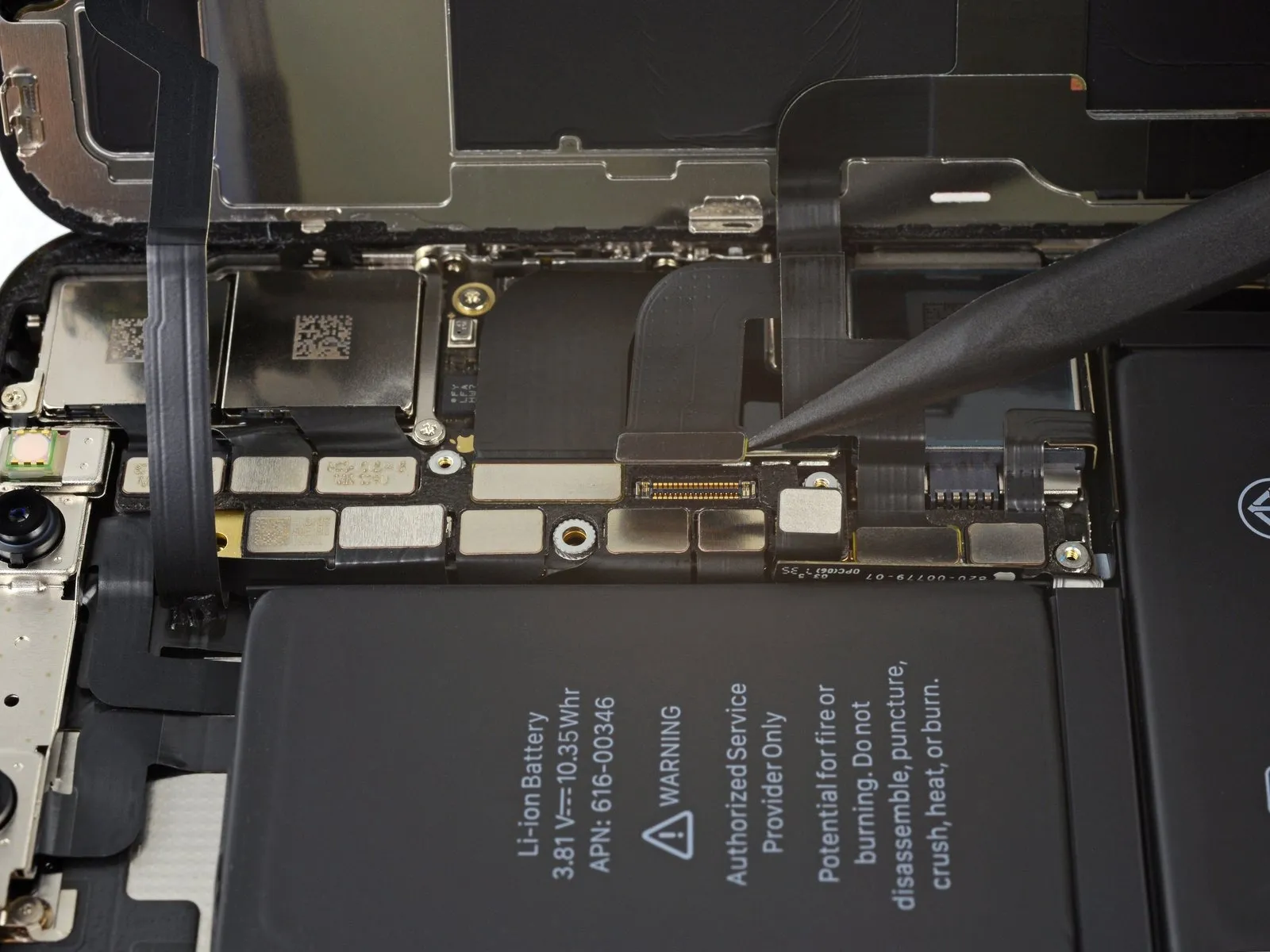
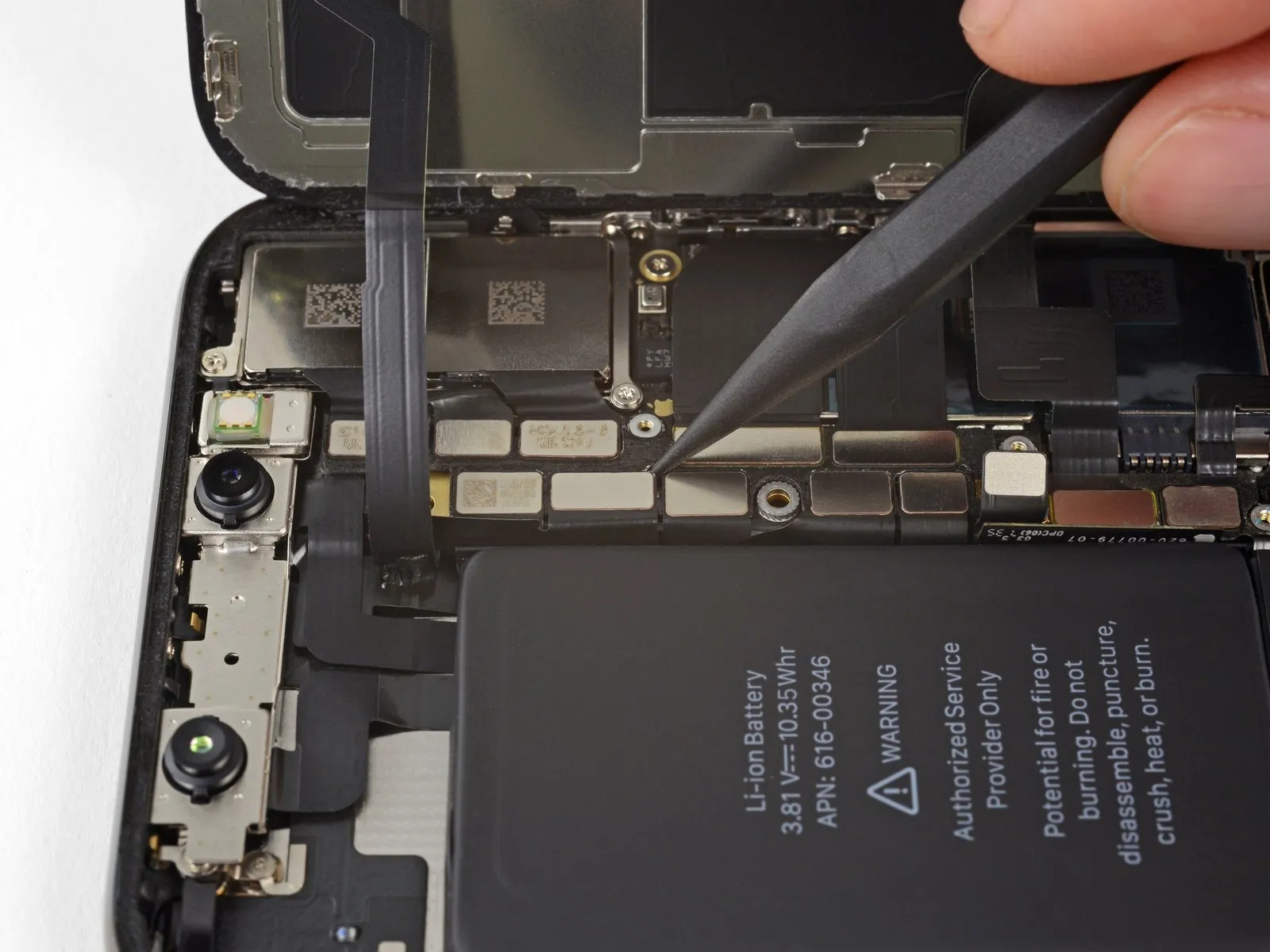
- Employ the tip of a spudgeror a fingernailfor separating the OLED panel cable connector.
- To secure the connector, apply pressure in this manner: initially, precisely position the connector and depress one edge until a distinct click is heard, subsequently repeating the process on the opposing side. Avoid applying pressure to the central portion; misalignment can result in pin deformation and irreversible damage.
Step 23
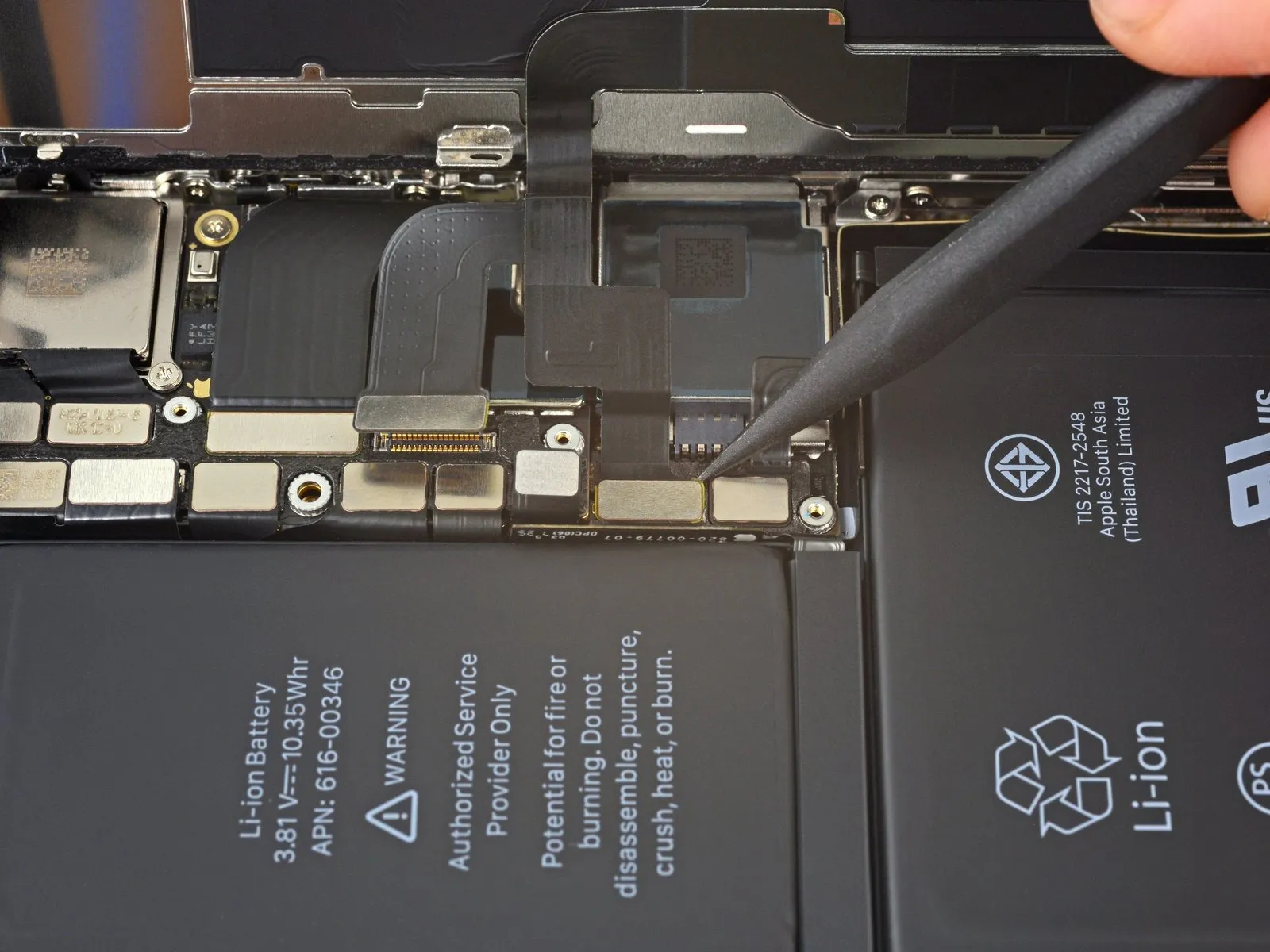
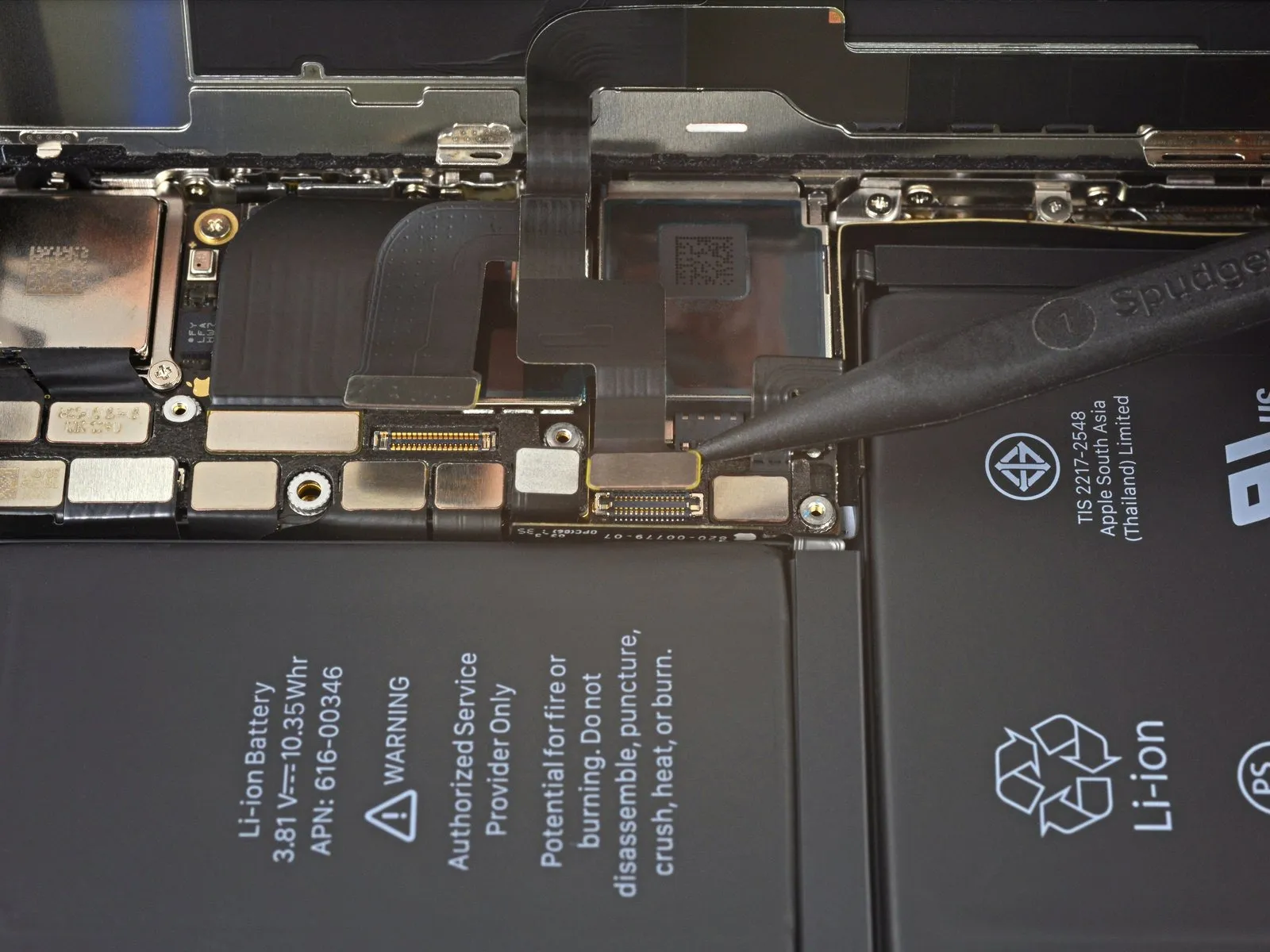
- Employ the tip of a spudgerto carefully lift the digitizer cable connector from its receptacle.
- Due to the connector's deeply situated design, reattachment can be challenging; proceed deliberately, ensuring precise alignment before applying gentle pressure with your fingertip to secure it – initially one side, then the other, until you hear a distinct clicking sound indicating proper engagement.
- Should any area of the screen exhibit a lack of touch responsiveness following the repair, first detach the battery, then carefully re-engage this connector, confirming a full click and verifying the absence of dust or any other impediment within the socket.
Step 24
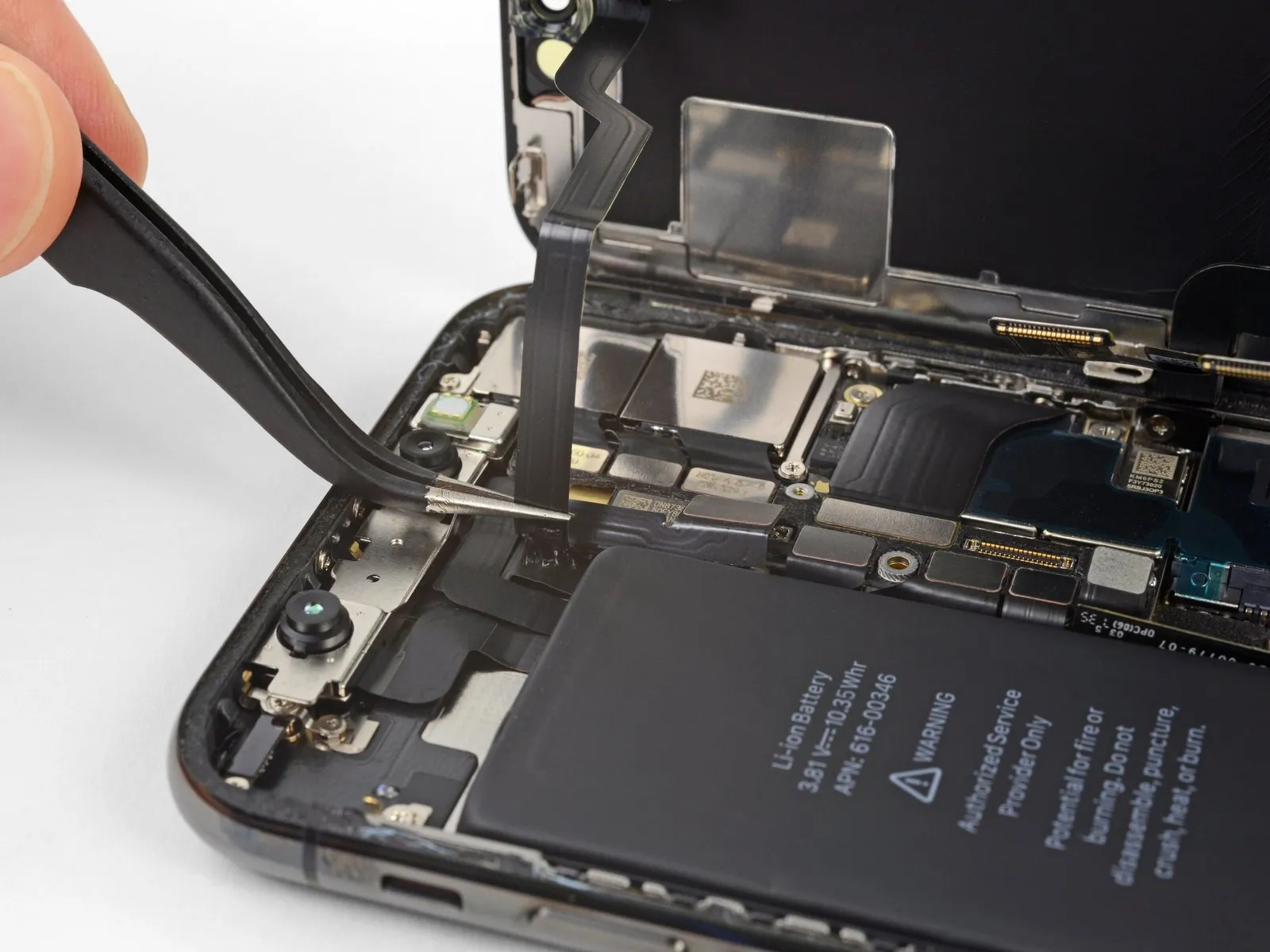
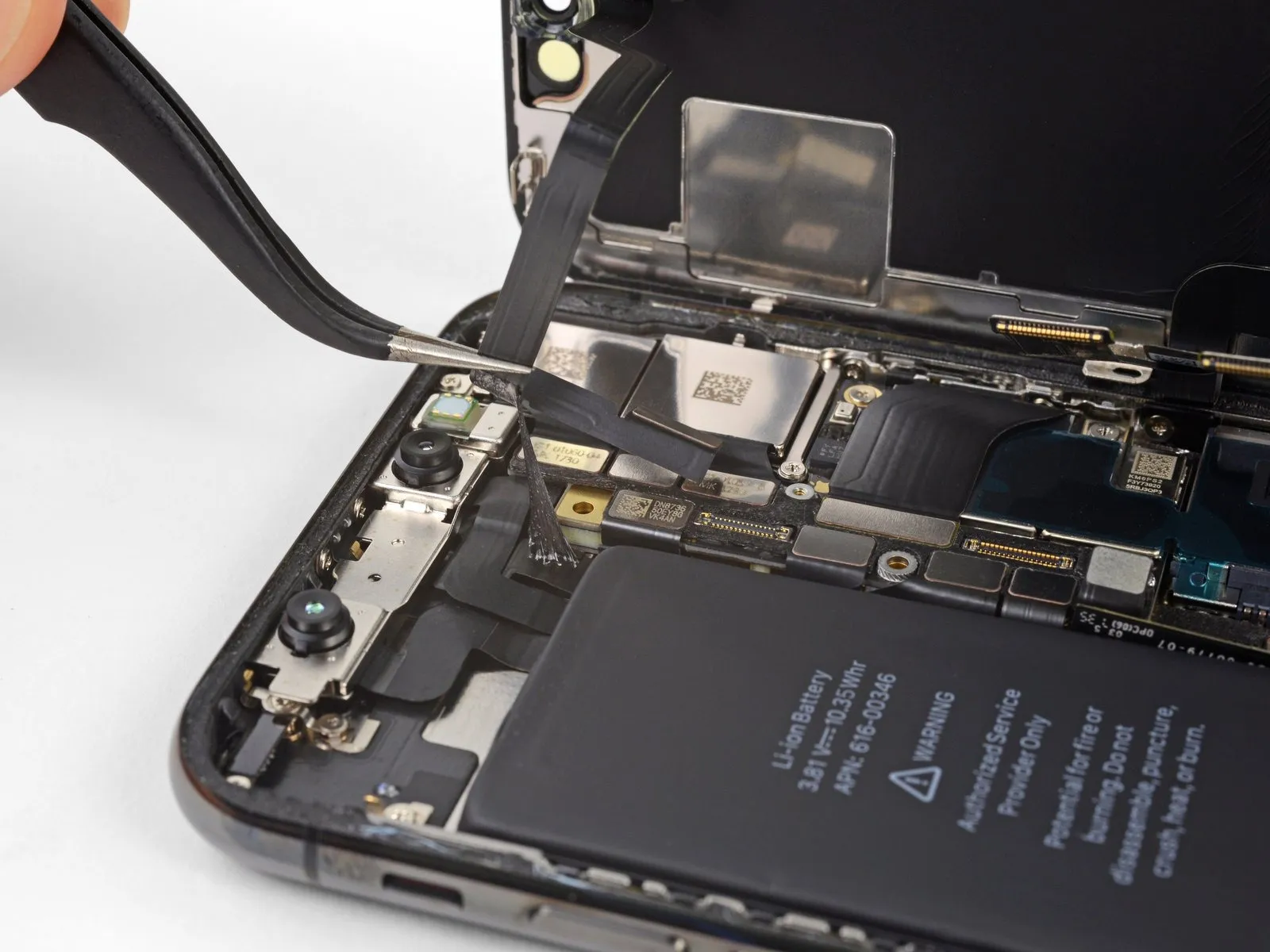
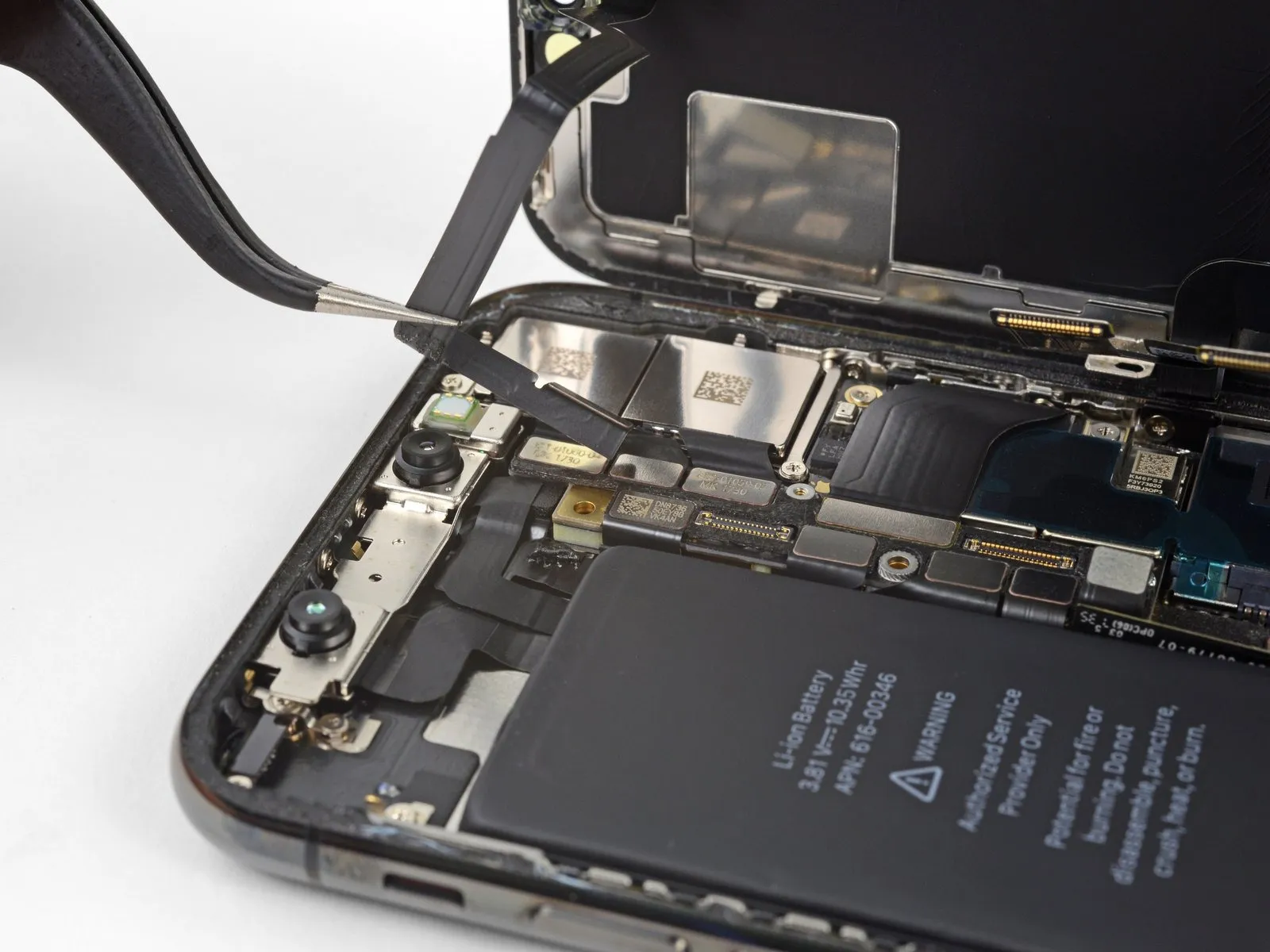
The assembly containing the front panel sensor is secured with a delicate adhesive along its flex cable.
Gently raise the cable, ensuring the adhesive bond releases without damage.
Step 25
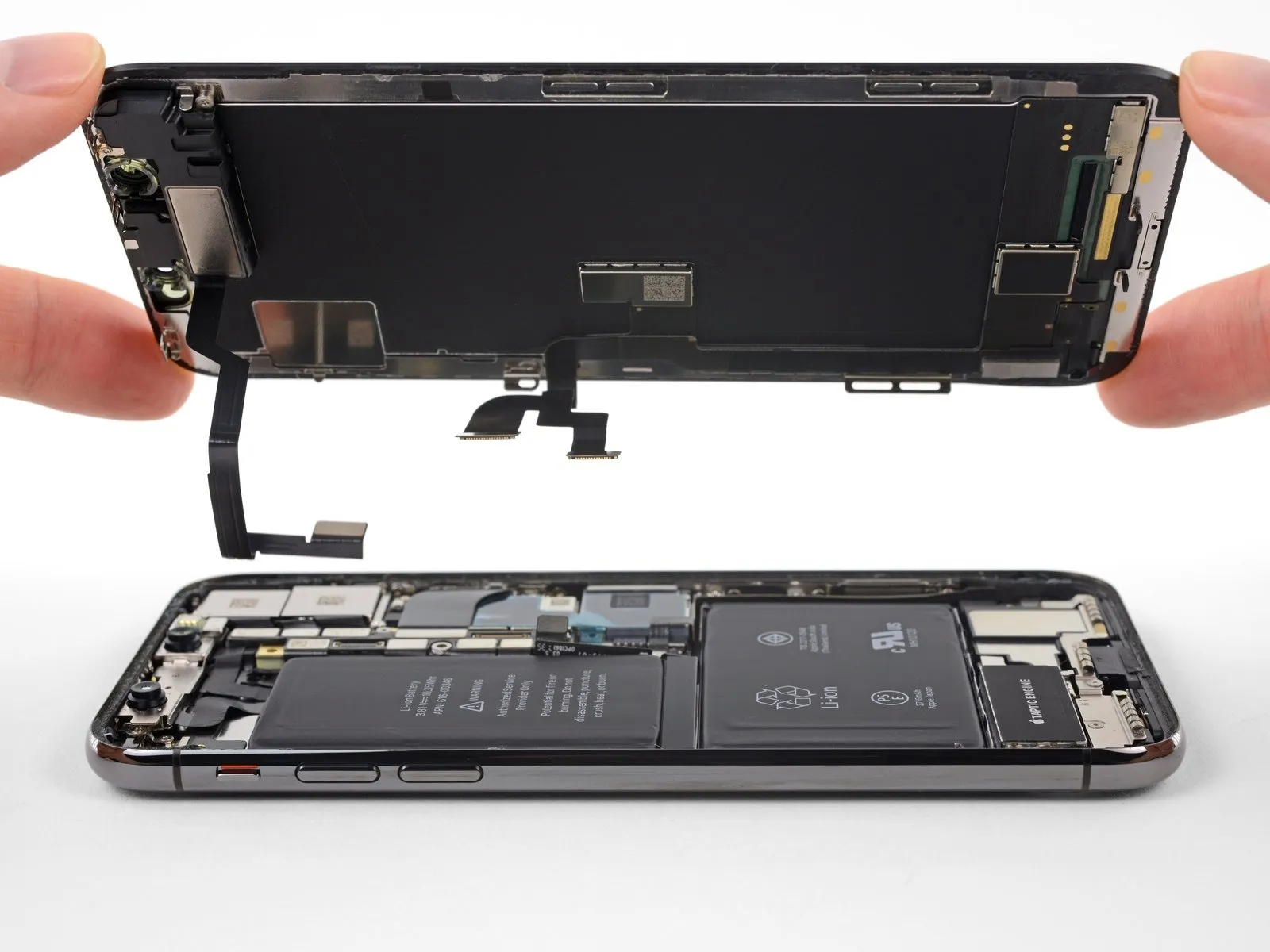
- Detach the display unit from the device.
- When putting the device back together, halt at this stage should you intend to substitute the water-resistant adhesive that seals the display's perimeter.
Step 26 | Lower Speaker
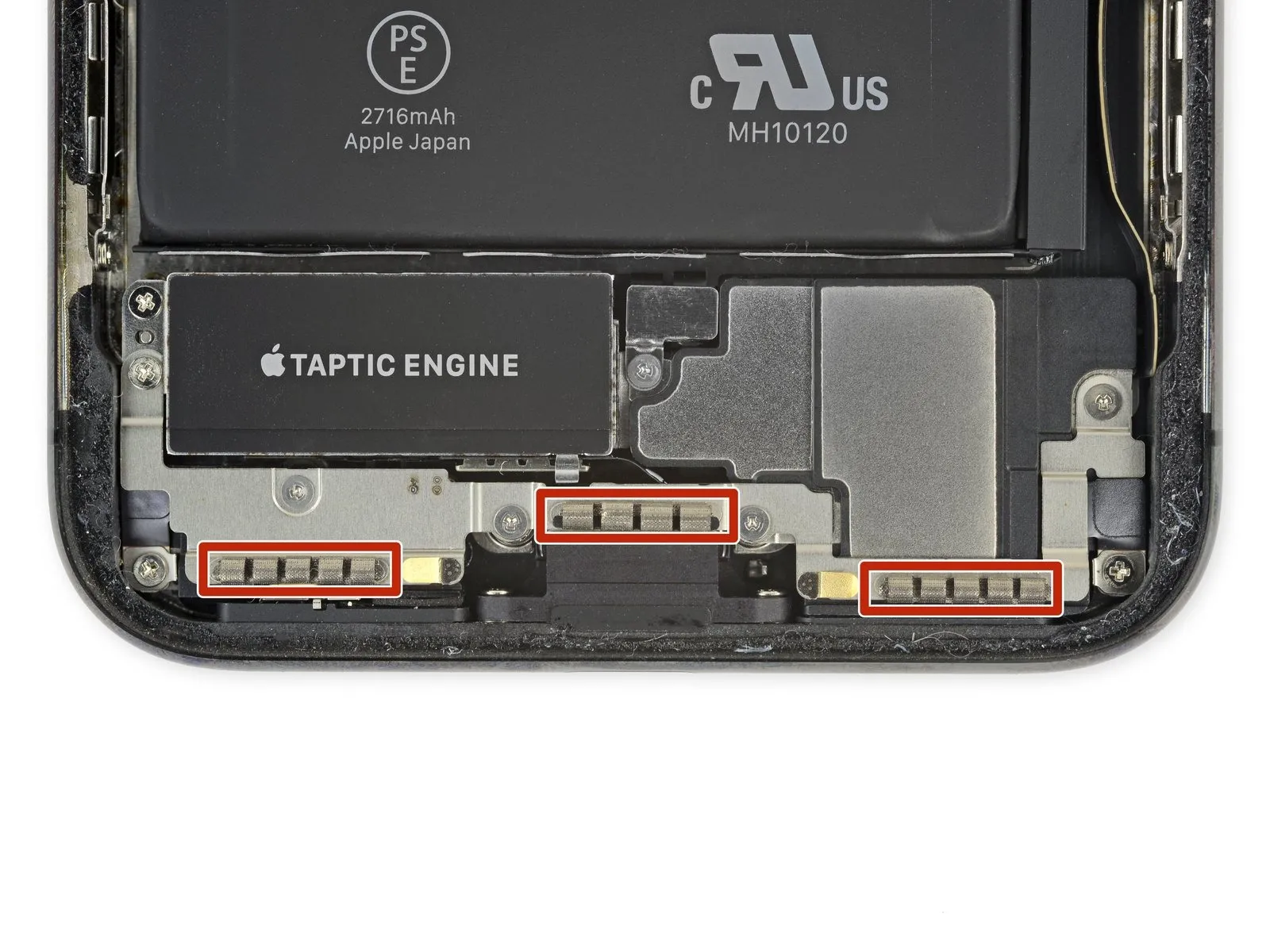
- Exercise caution to avoid contact with the three rows of grounding contact areas located close to the base of the iPhone.
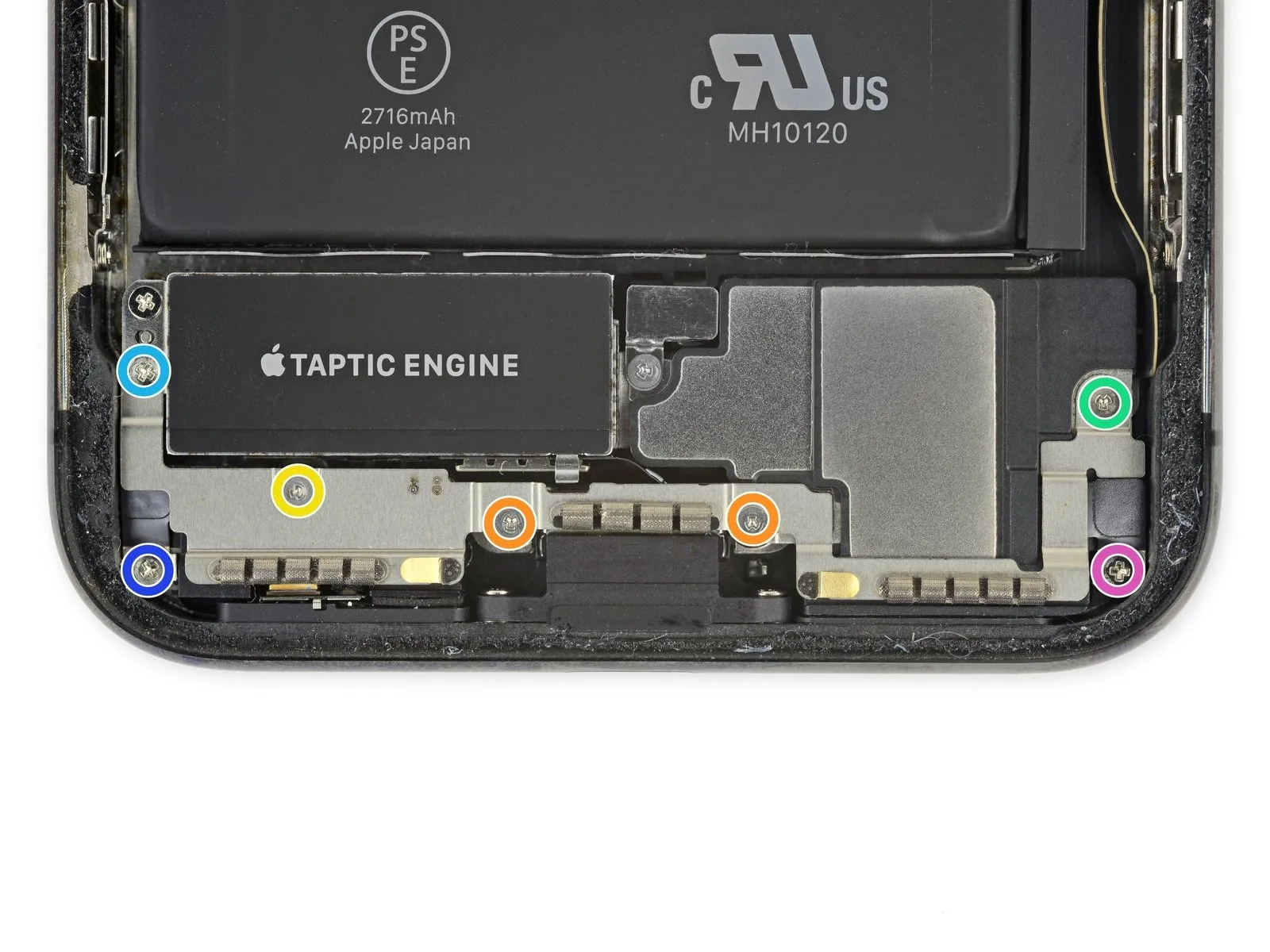
- Detach the bracket situated beneath the Taptic Engine and speaker by removing the seven screws that hold it in place.
- Two screws of the Y000 type, measuring 1.9 mm in length.
- A single Y000 screw with a length of 1.2 mm.
- A single Y000 screw, 1.6 mm in length.
- A single Phillips-head screw, 2.4 mm in diameter.
- A single Phillips-head screw, 1.7 mm in diameter.
- A single Phillips-head screw, 1.5 mm in diameter.
Step 27
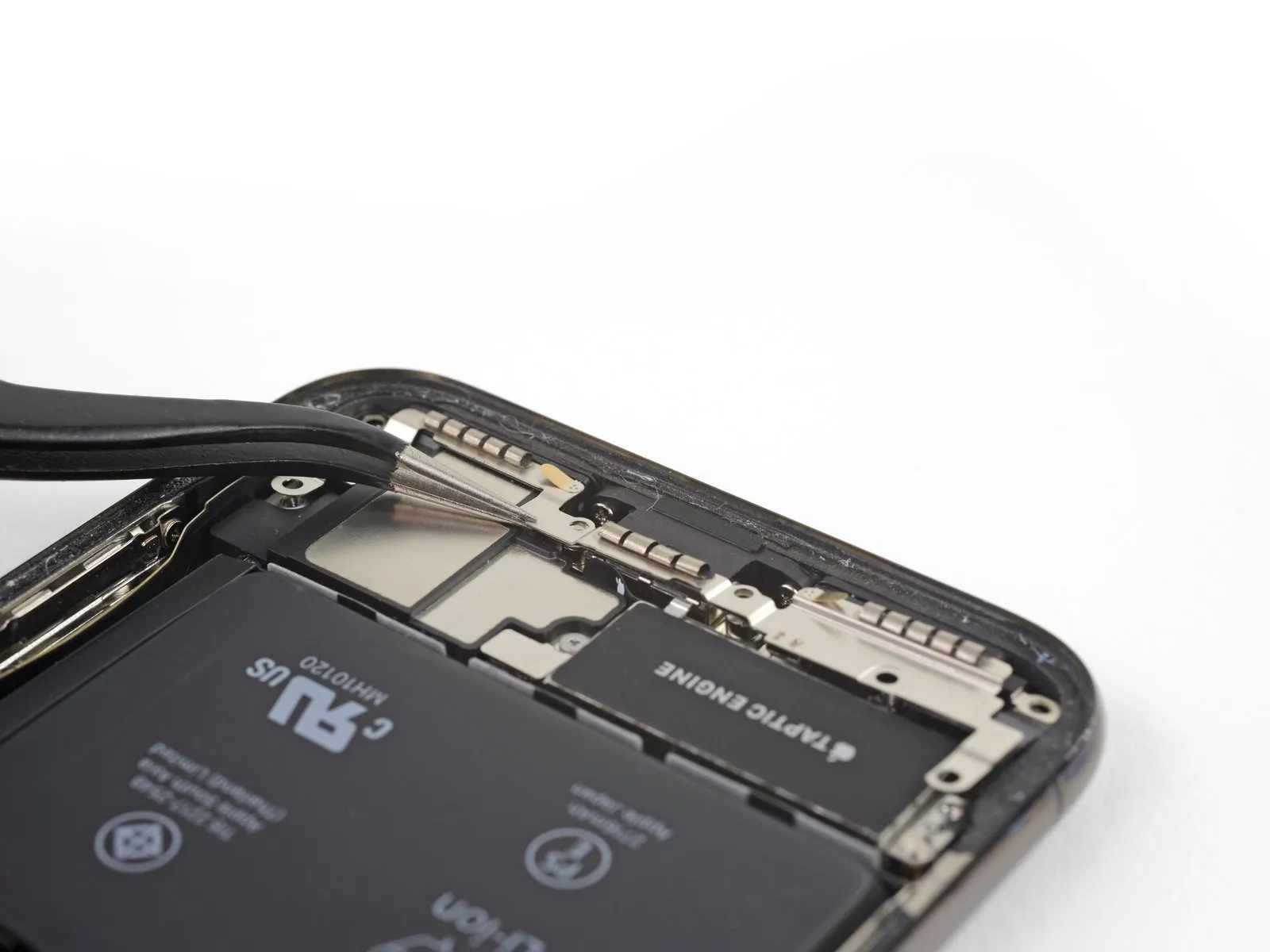
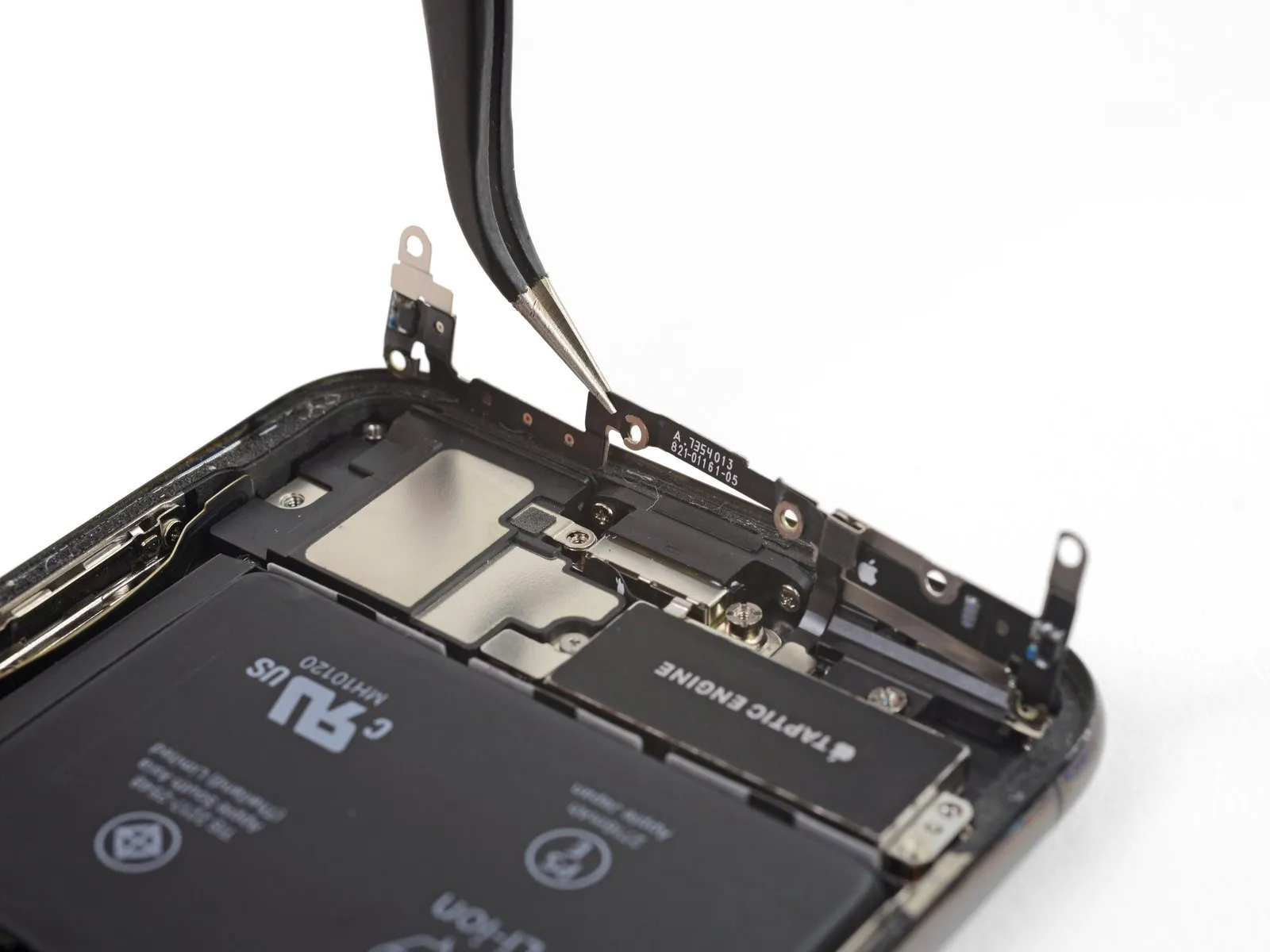
- To detach the component, elevate it starting from the side closest to the battery.
- Avoid complete removal at this stage, because a short, flexible cable maintains its connection.
Step 28
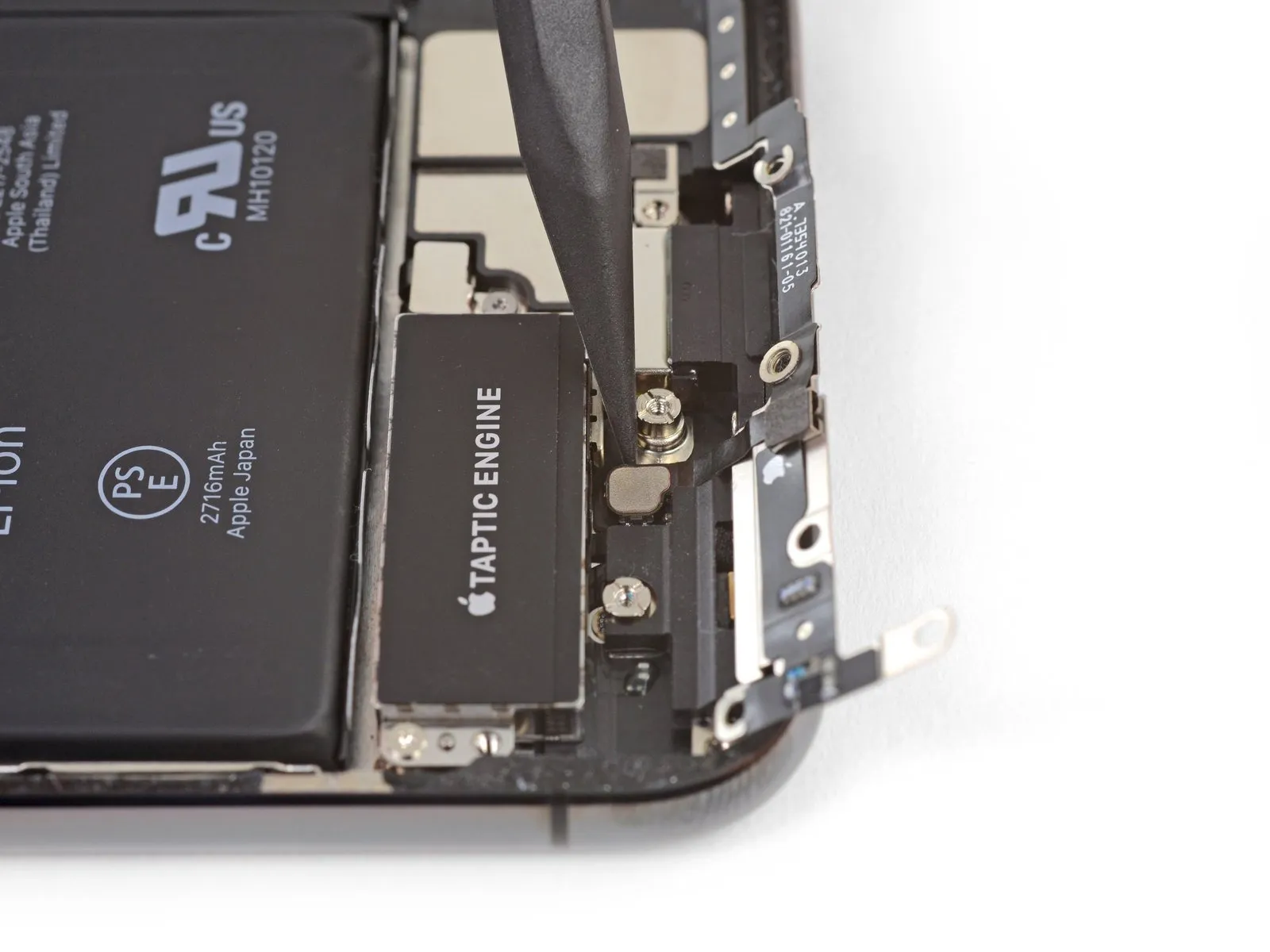
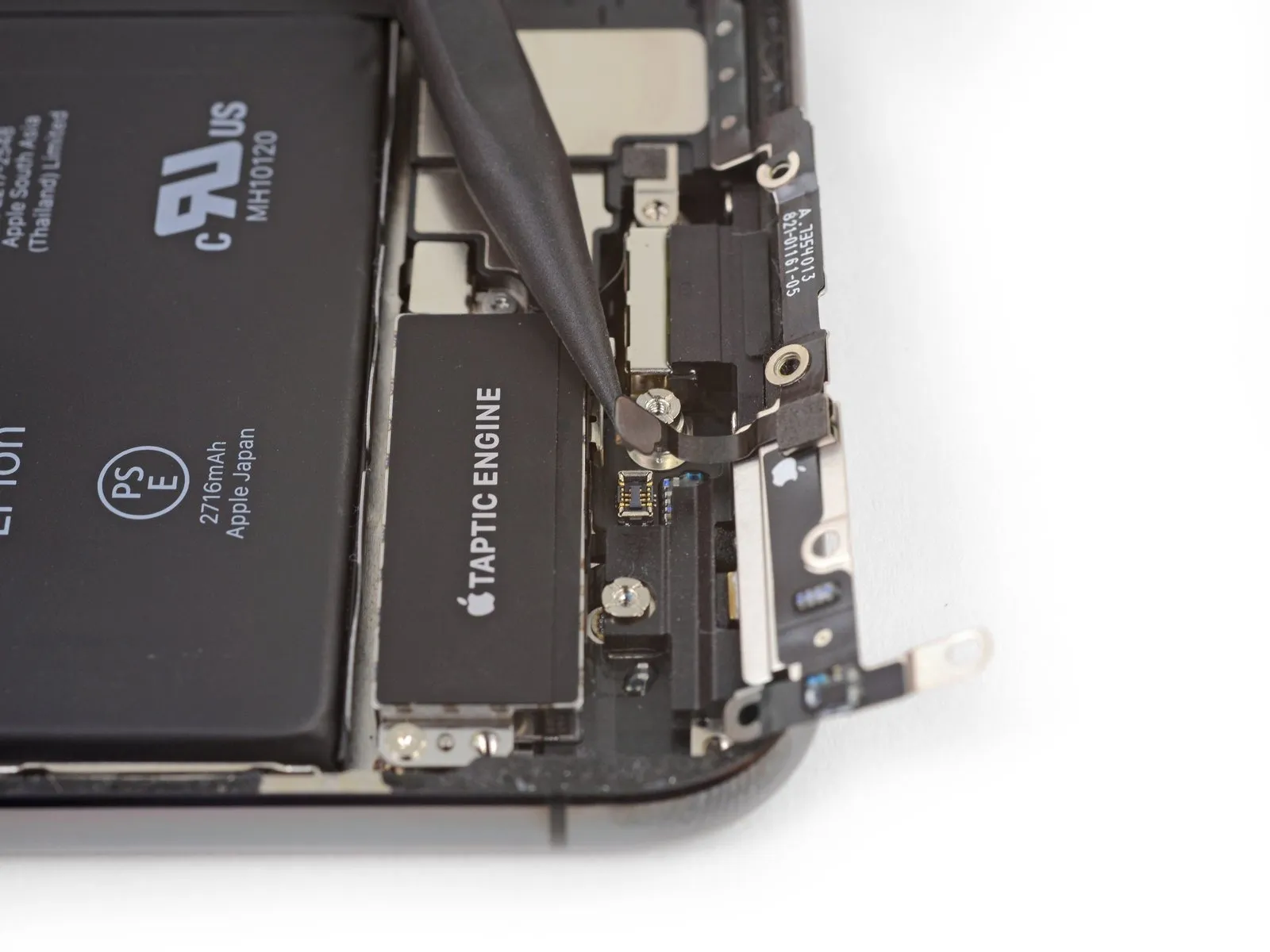
- To prevent interference from the bracket, secure it aside, then utilize the tip of a spudger to carefully lift and detach the flex cable located beneath.
Step 29
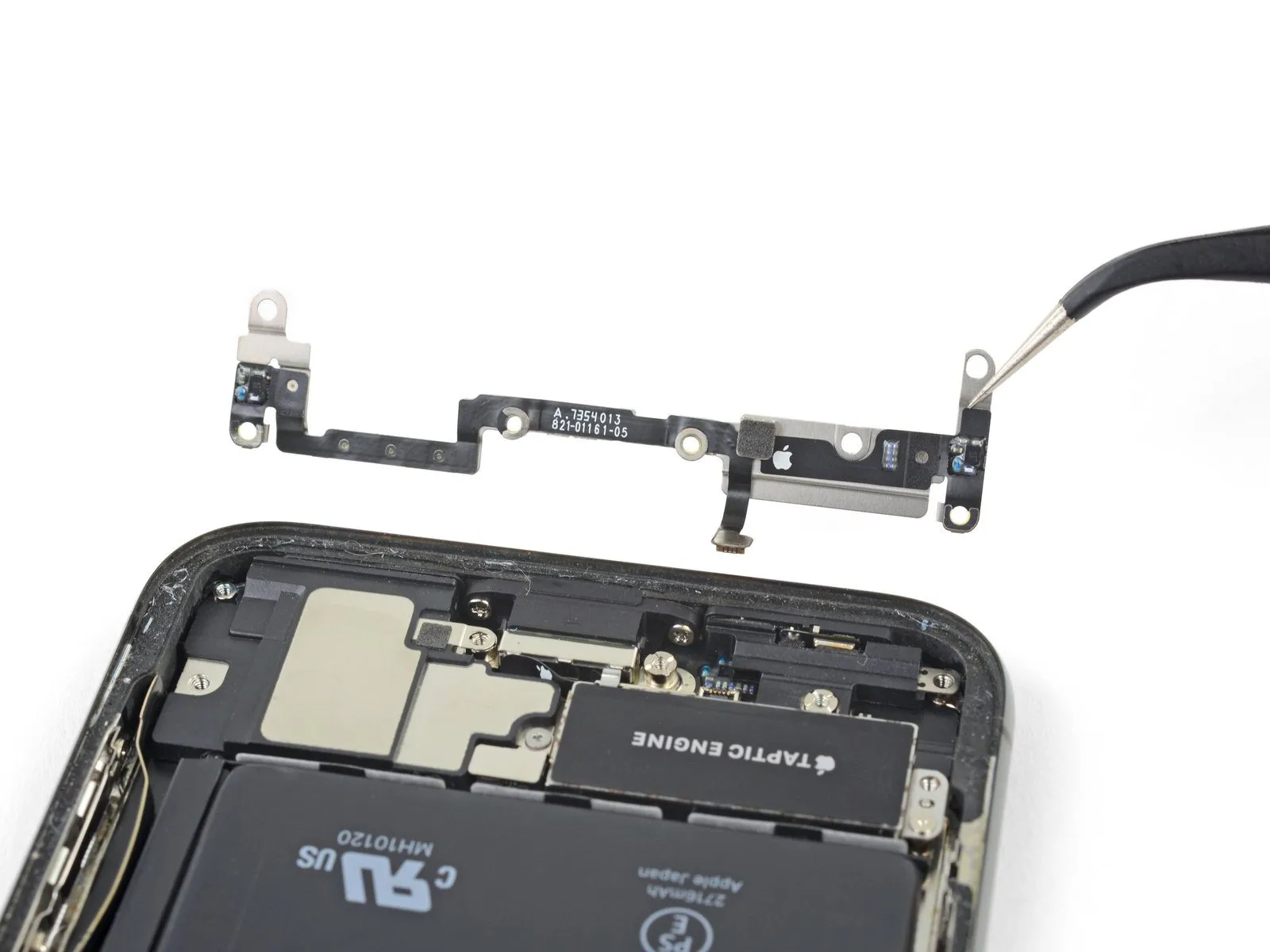
Detach the retaining clip.
Step 30
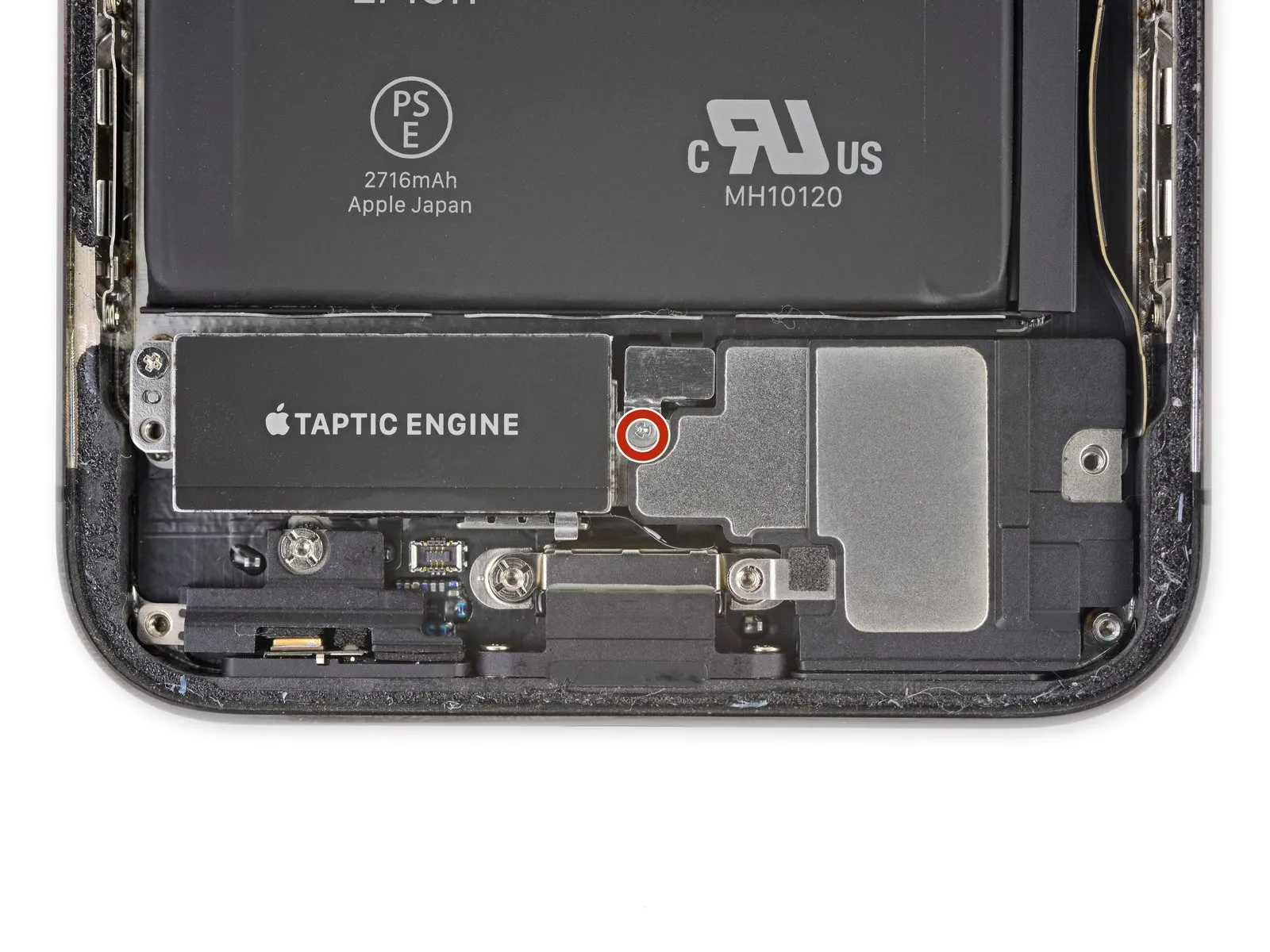
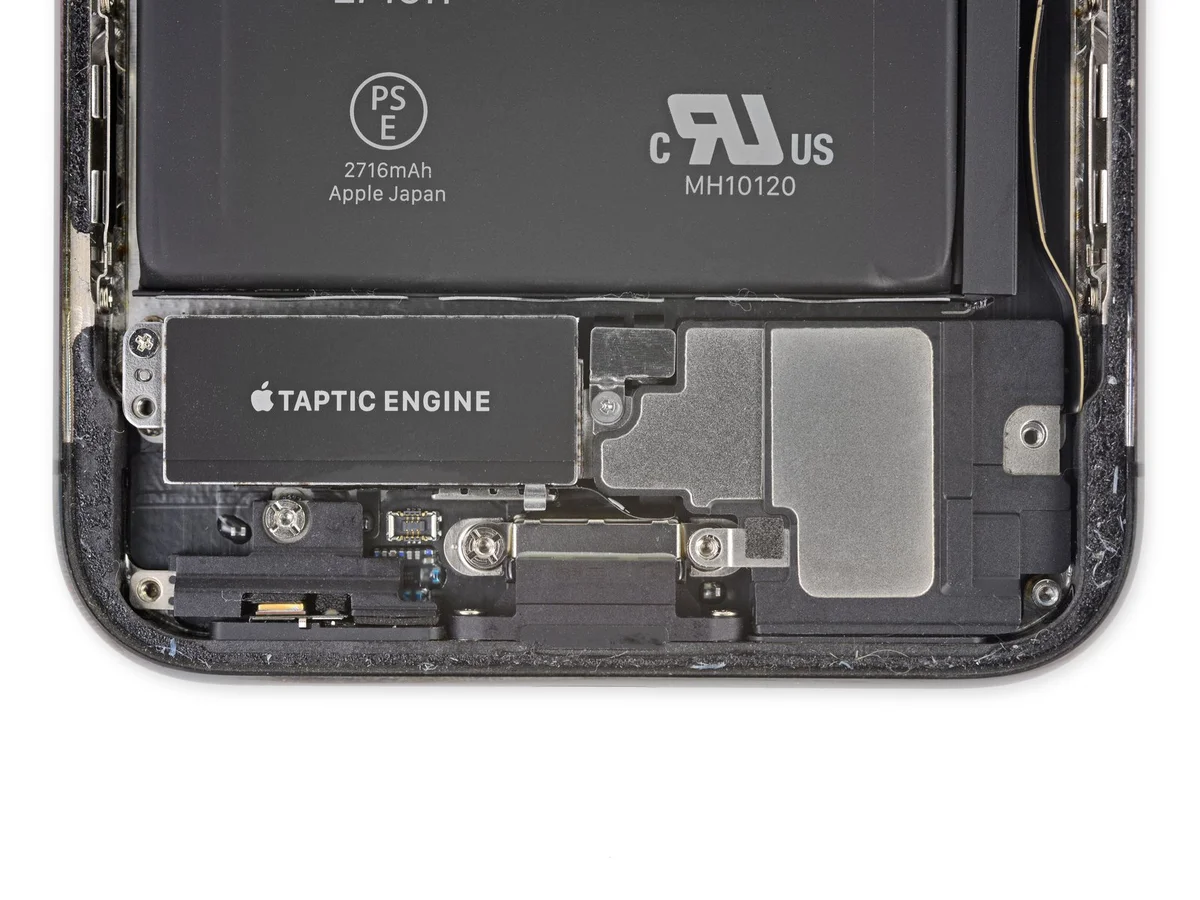
- Detach the2.1-millimeter Y000 screwthat fastens the speaker connector cover in place.
Step 31
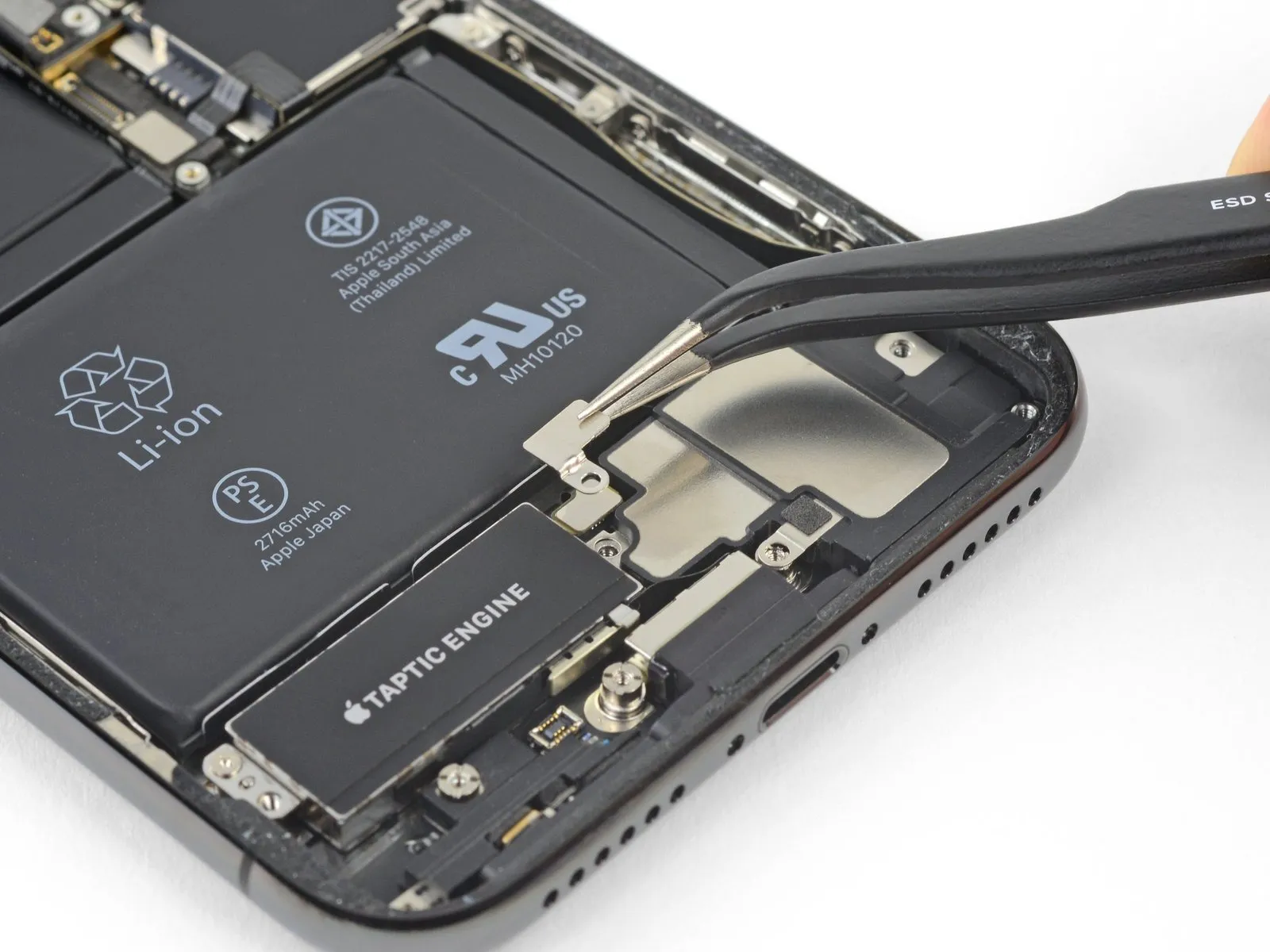
To access the speaker terminals, detach the protective cover.
Step 32
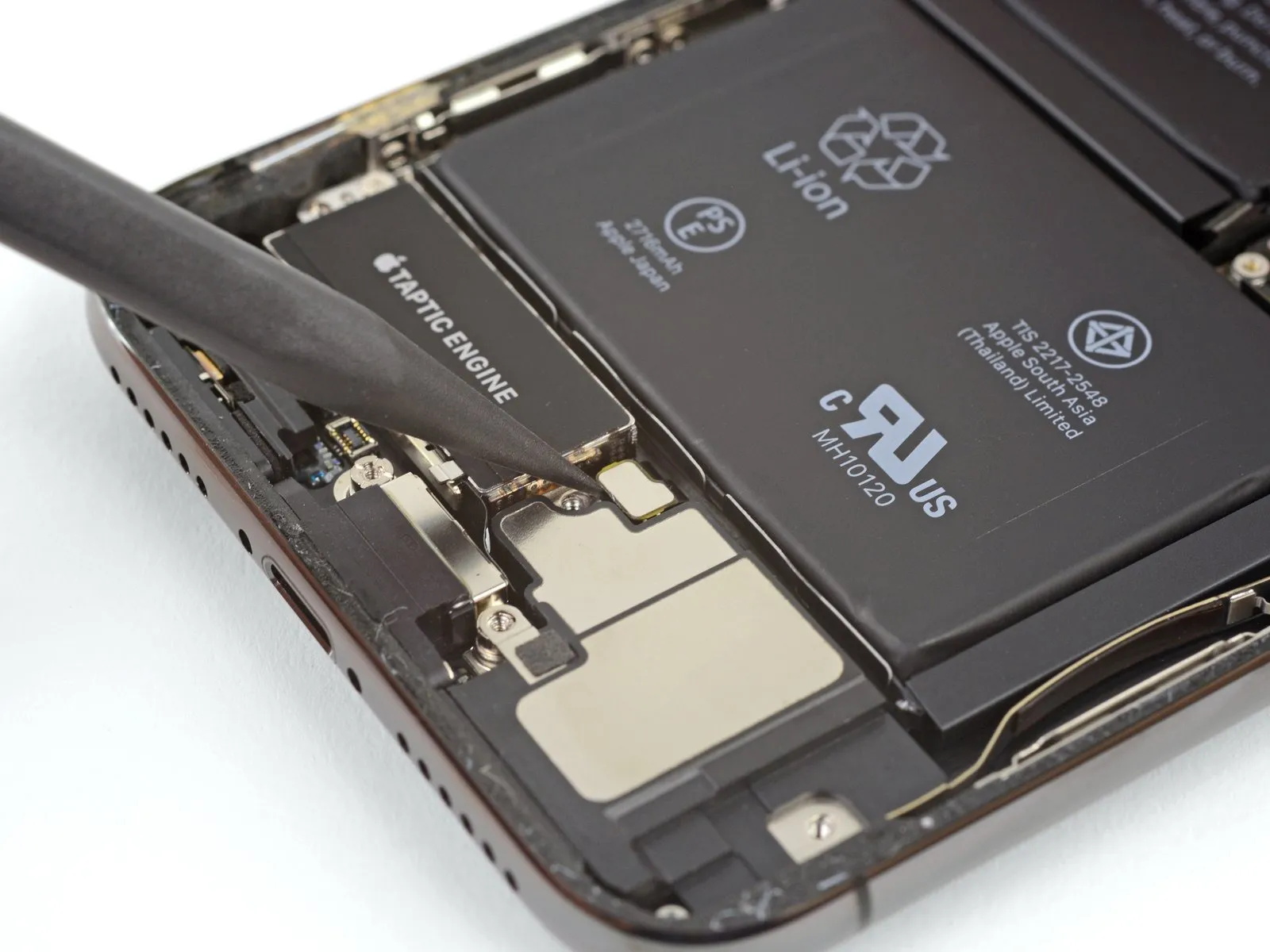
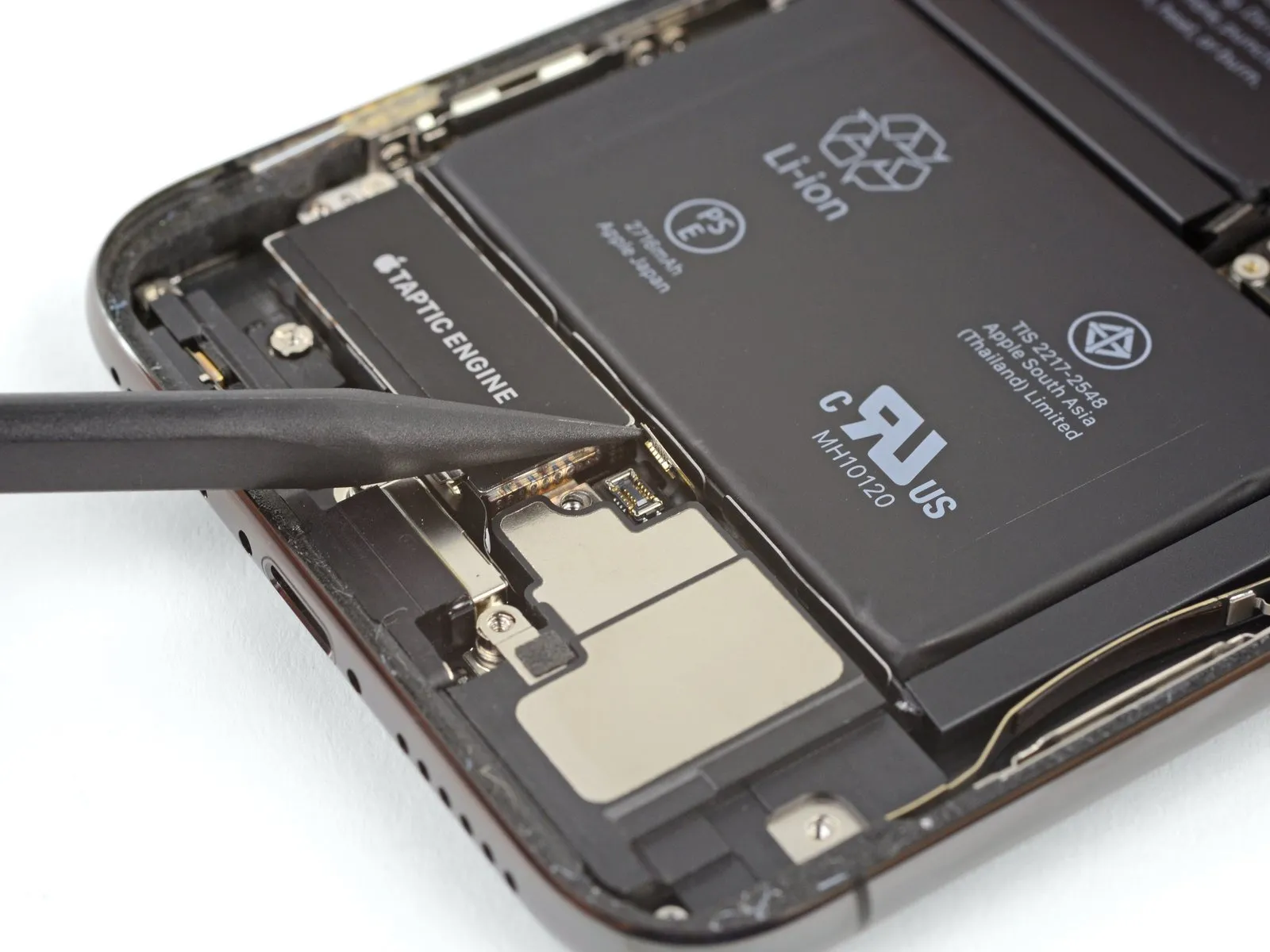
Employ the pointed end of a spudgerto carefully lift and detach the speaker's electrical connector.
Step 33
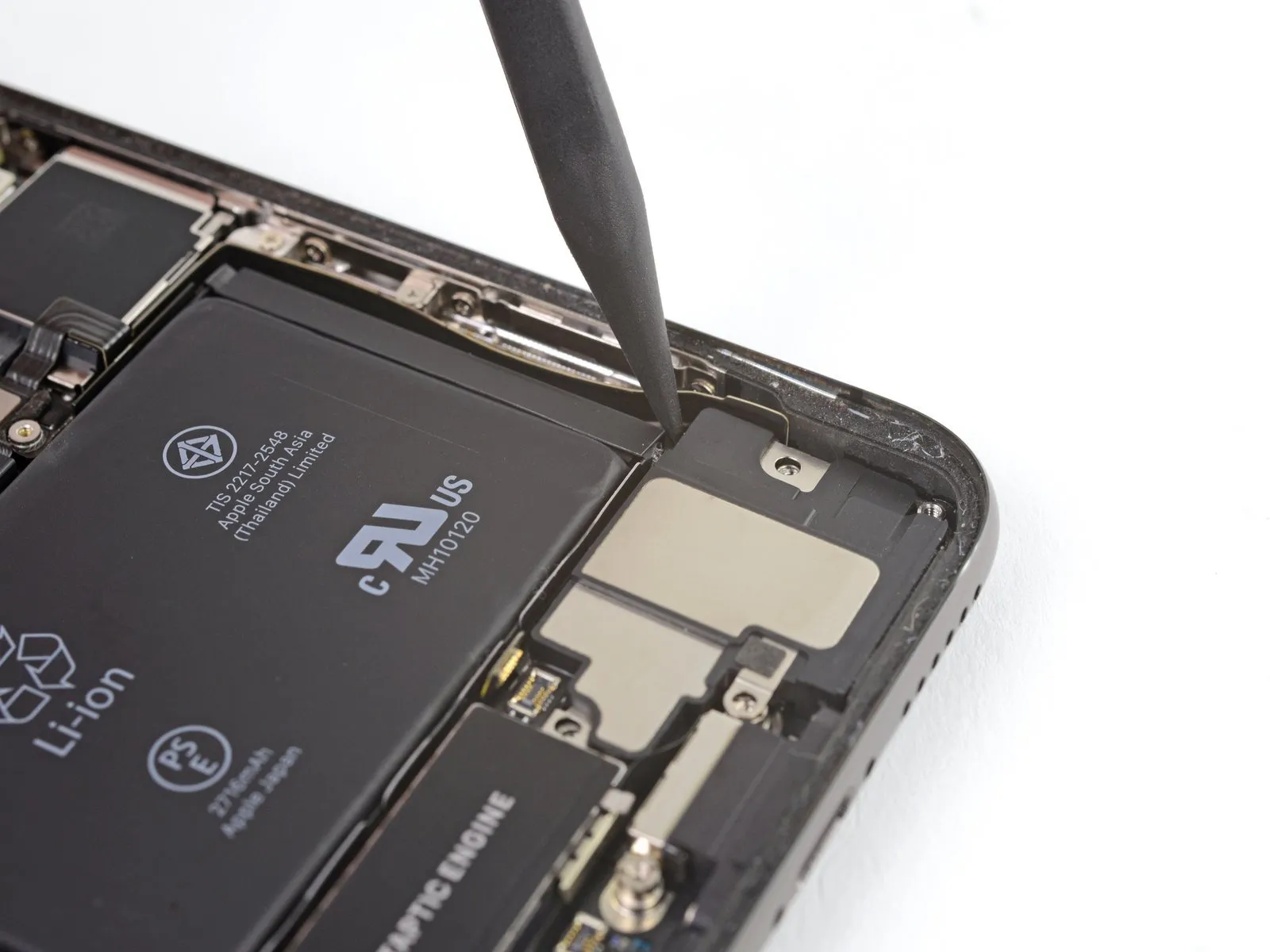
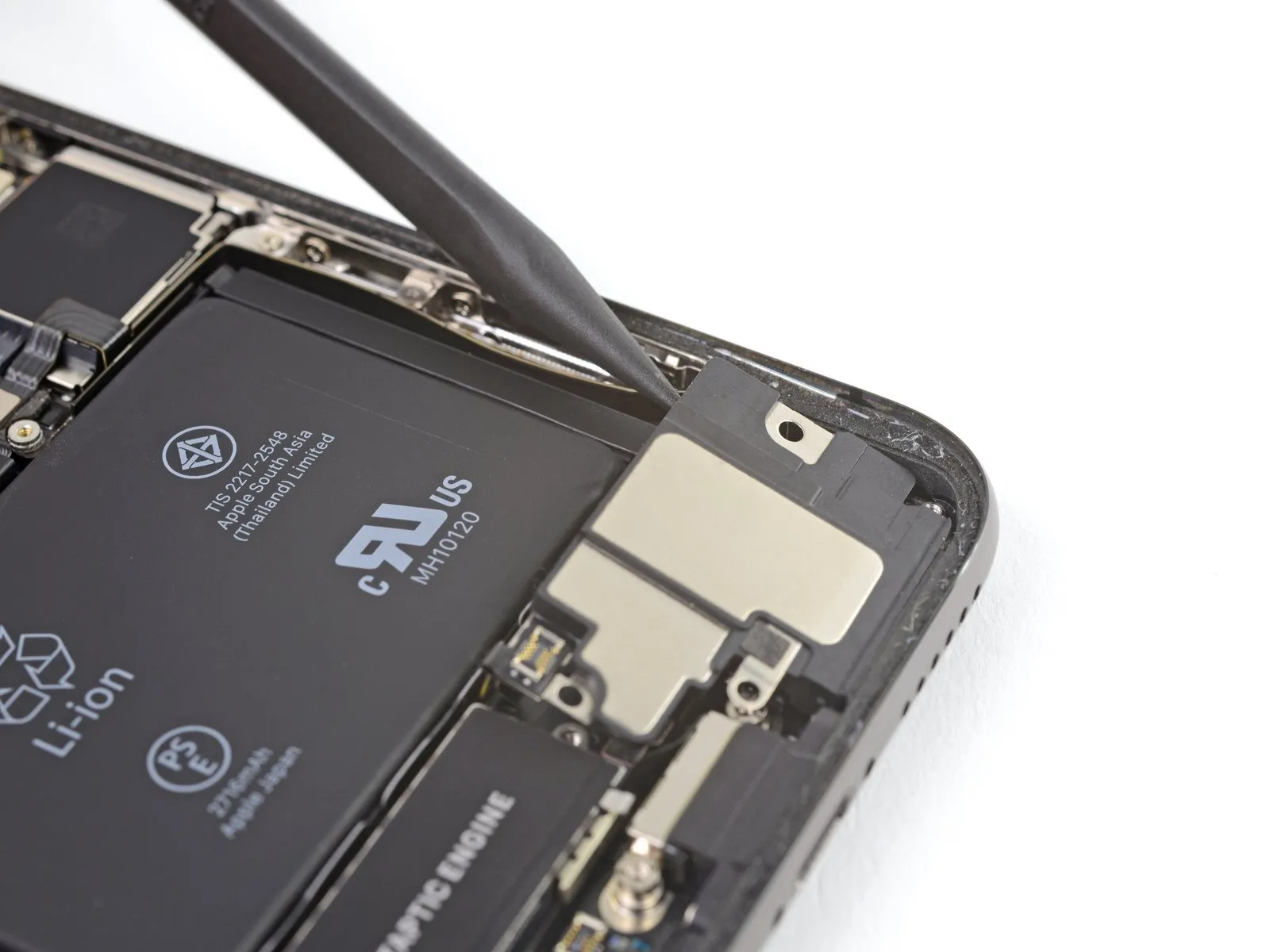
Exercise caution while separating the speaker from the device, preventing harm to the flex cable that was recently detached; if needed, secure the cable to the side to facilitate speaker removal.
- Position a spudger beneath the upper boundary of the speaker, located close to the iPhone's casing.
- Apply slight upward pressure and elevate the speaker's upper edge with care.
During the speaker's reinstallation, verify the flex cable's alignment and confirm it remains free from entrapment beneath the speaker.
Step 34
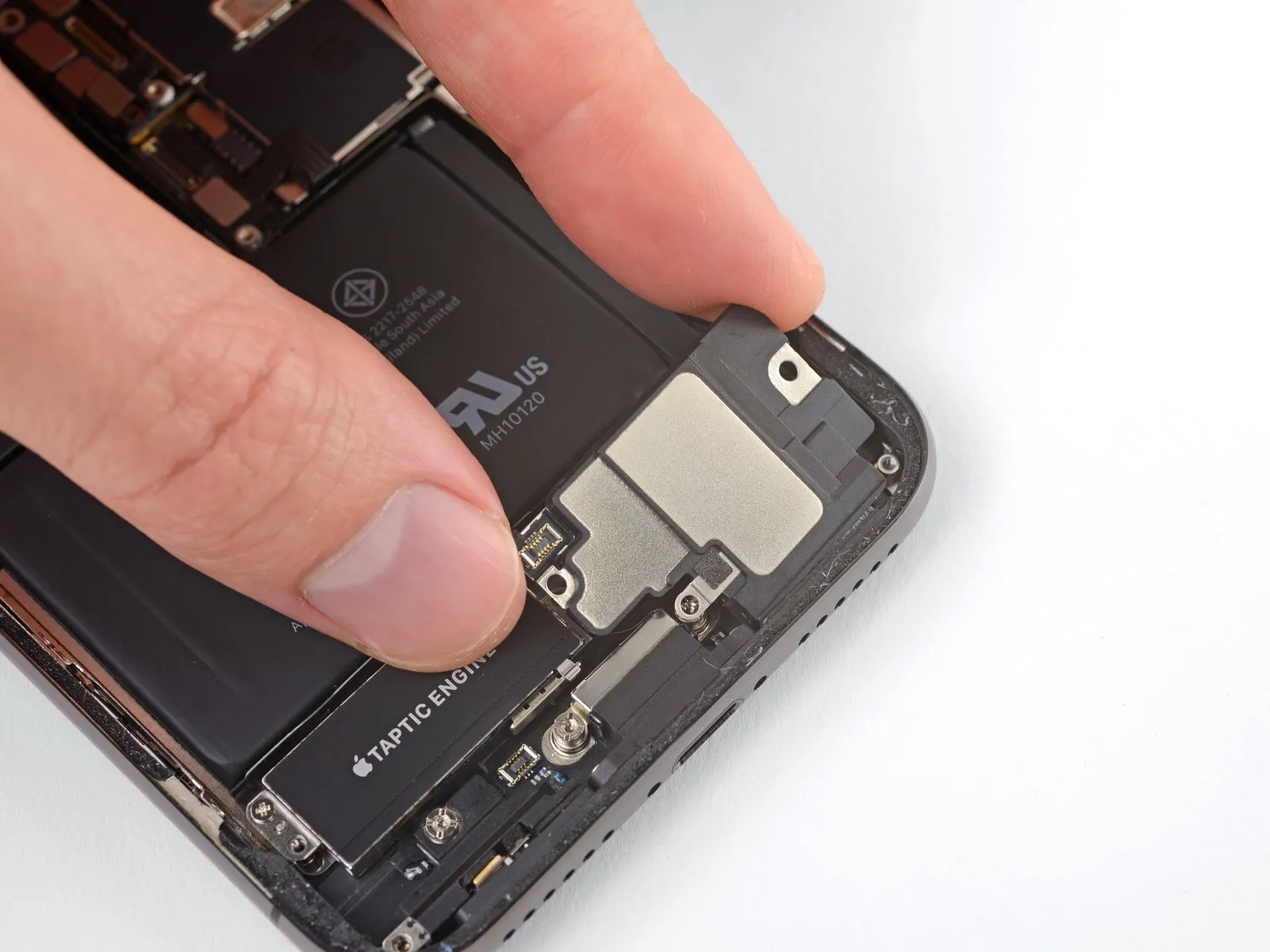
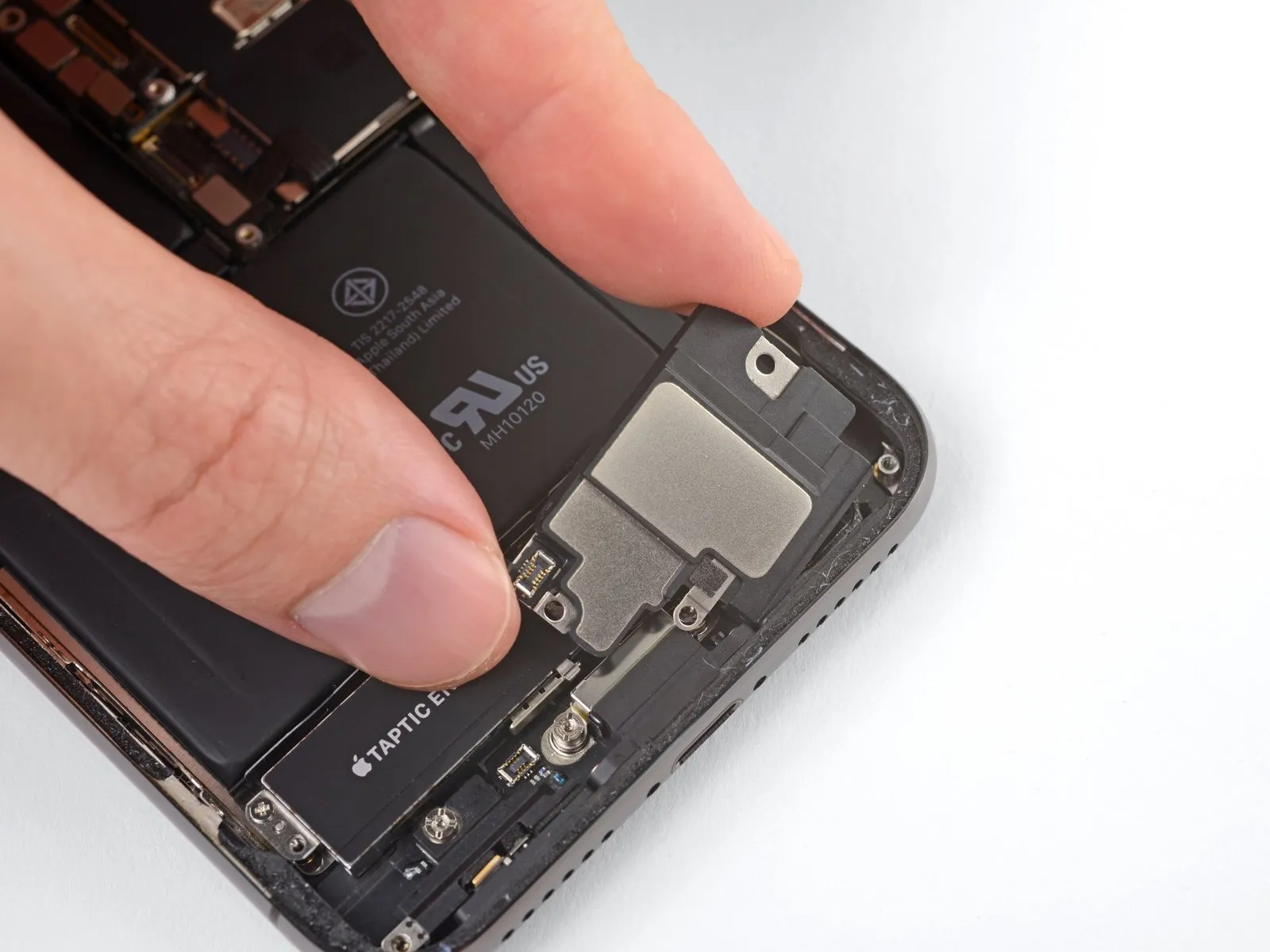
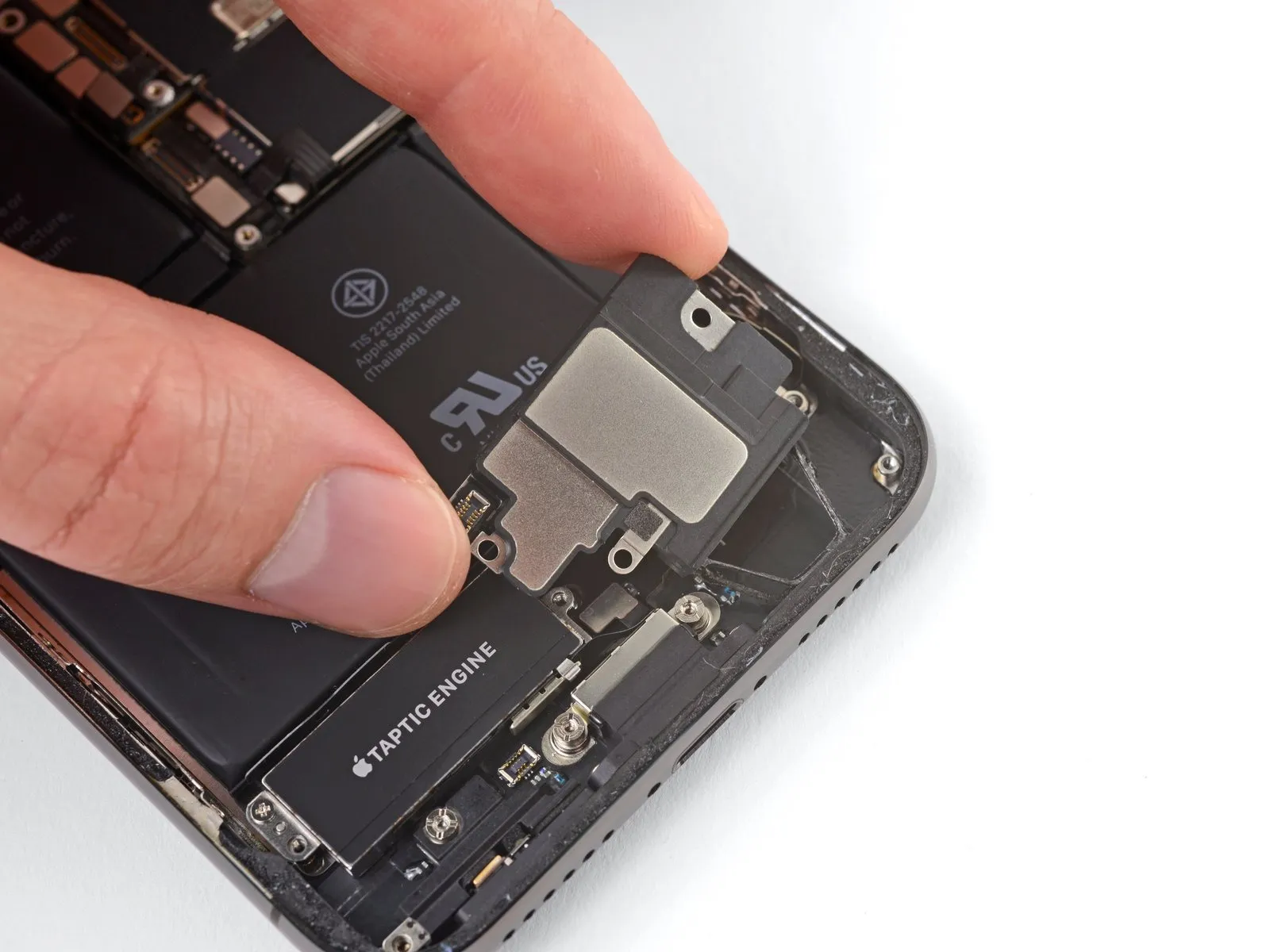
Grasp the speaker firmly along its lateral borders, gently oscillating it to disengage the adhesive that bonds it to the iPhone's lower rim.
- Continue moving the speaker outward from the iPhone's base until the adhesive gasket releases its hold.
Step 35
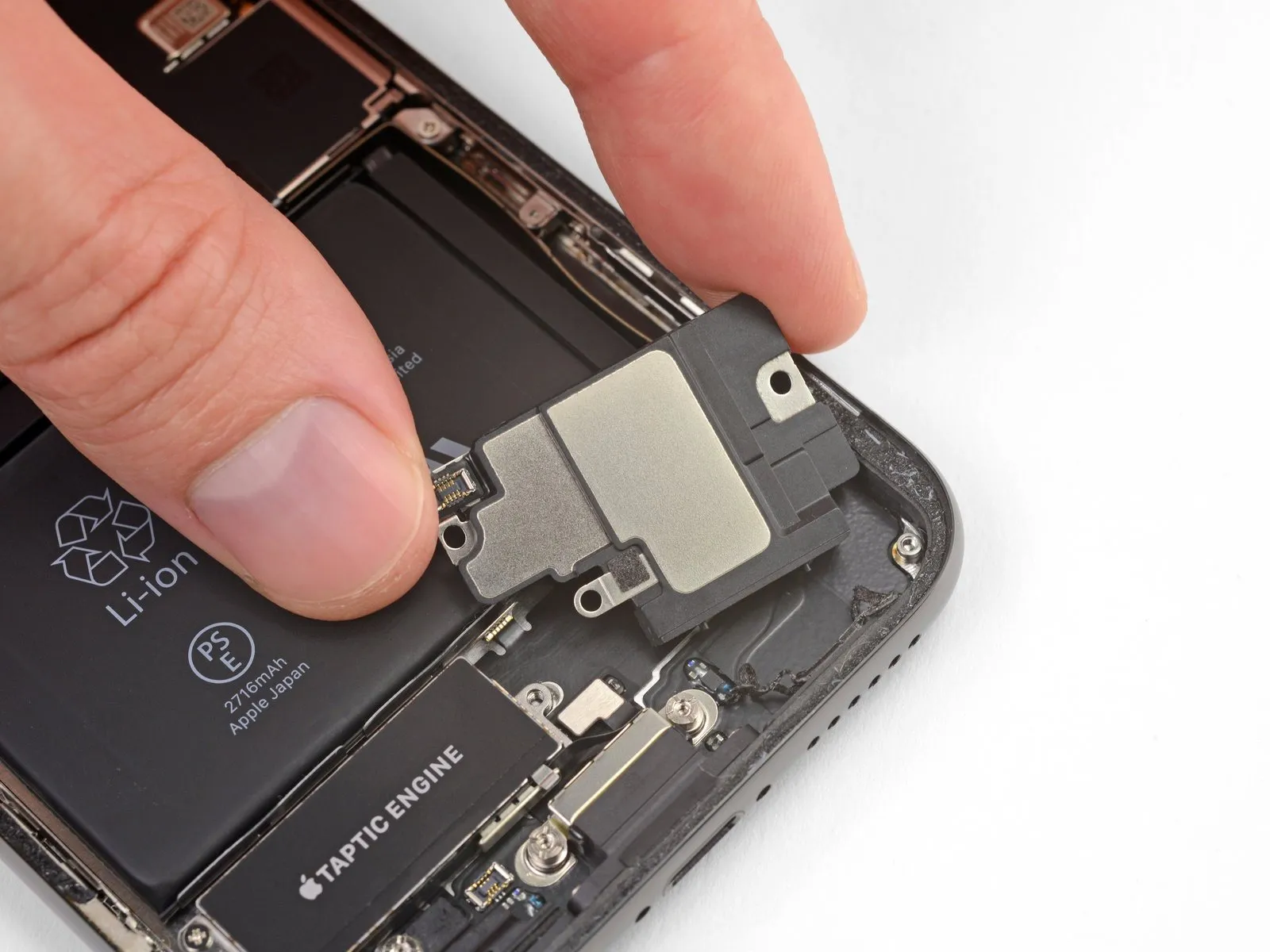
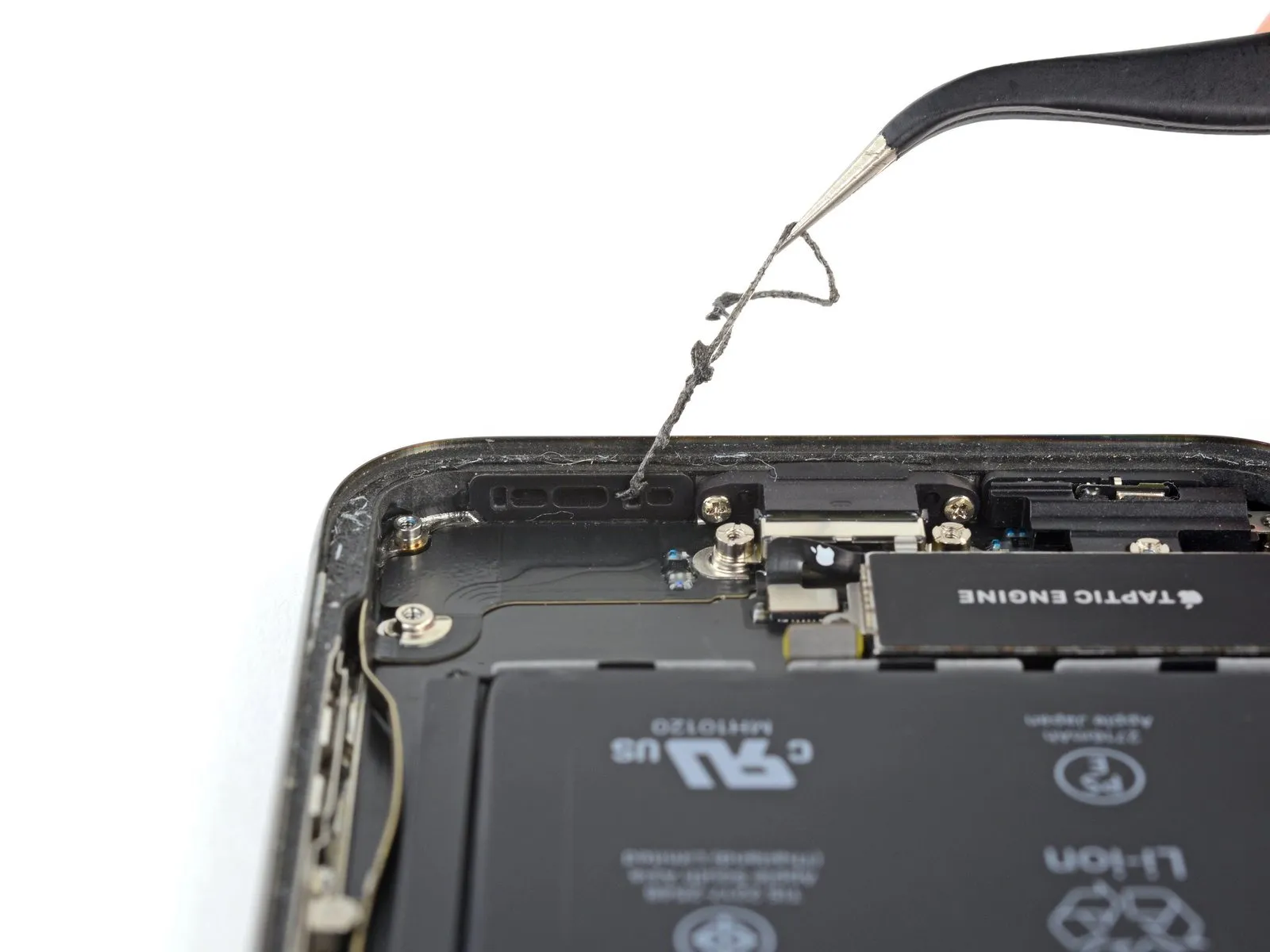
Detach the speaker component from the device.
Step 36 | Replace the speaker gasket
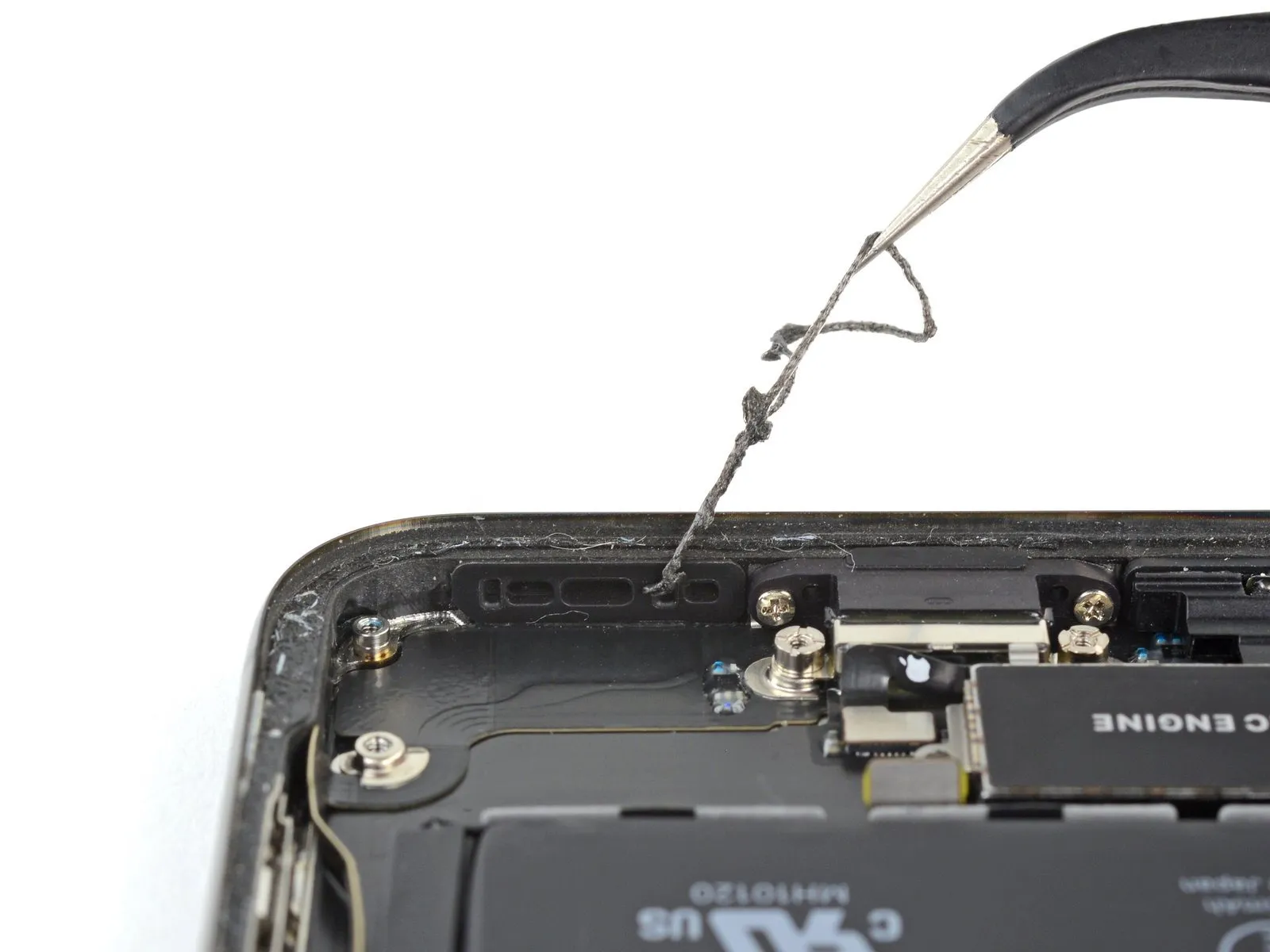
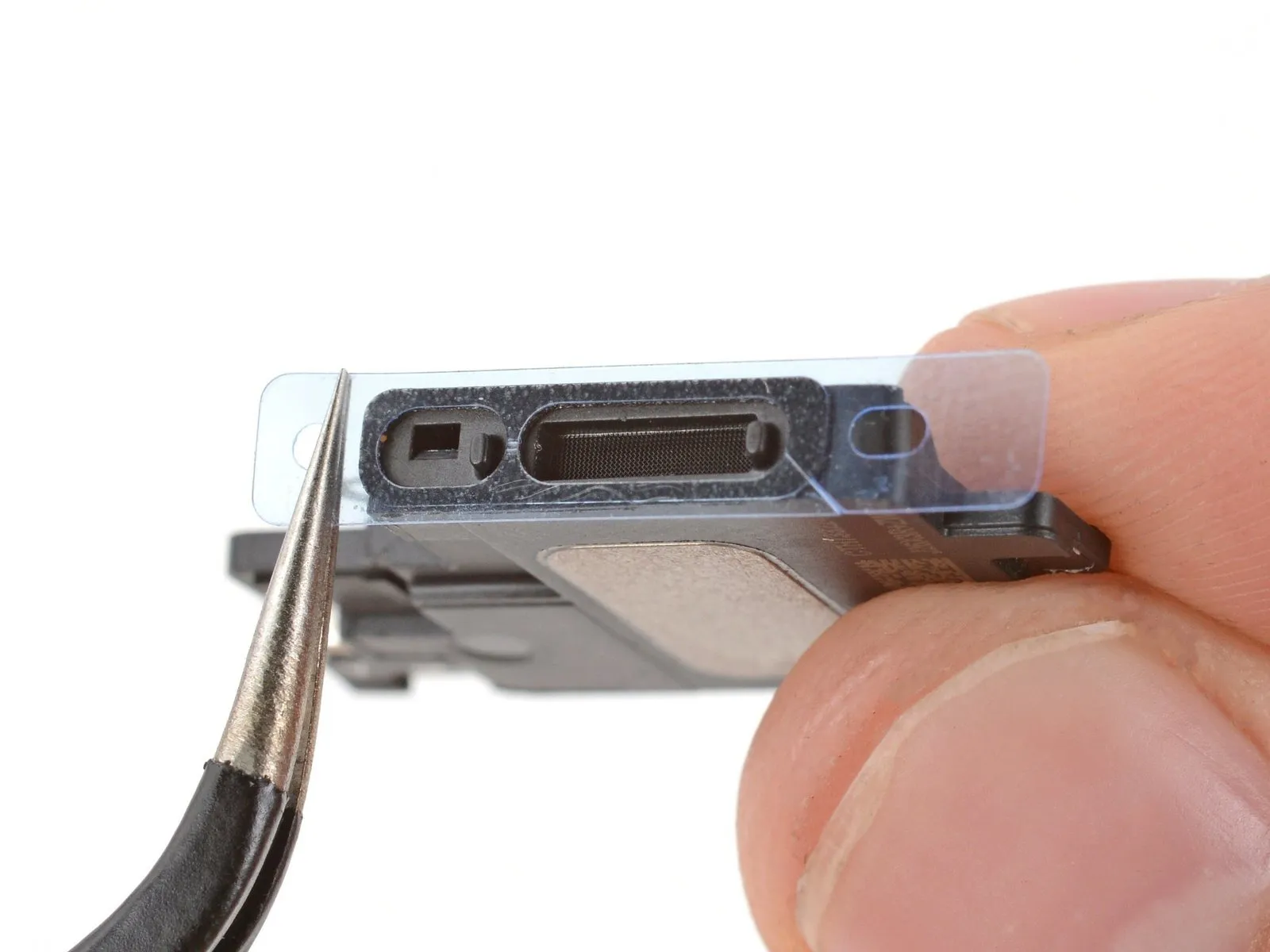
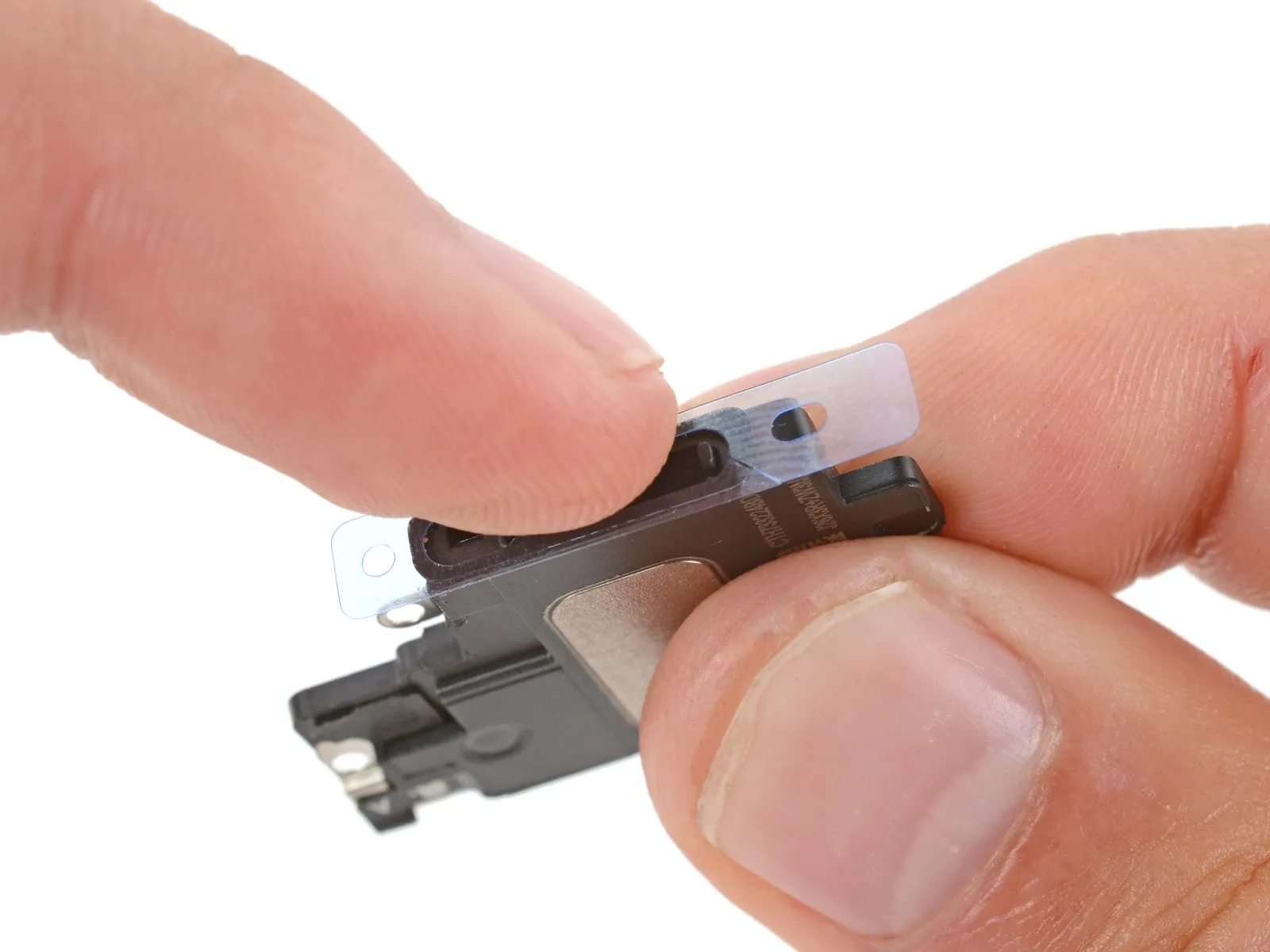
The speaker's gasket is a single-use component; therefore, it must be replaced during reassembly, adhering to the following procedure.
- Employing tweezers, detach and eliminate all remnants of the previous gasket material from both the speaker and its surrounding frame.
- Thoroughly cleanse any adhesive residue left by the old gasket from the speaker and frame surfaces by utilizing a microfiber cloth dampened with isopropyl alcohol.
- Prior to installing the replacement gasket, identify its correct positioning on the speaker's underside, ensuring the substantial aperture aligns with the speaker grille's mesh pattern.
- Detach the larger, transparent protective layer from the gasket and, utilizing tweezers, precisely position the gasket onto the speaker's underside.
- To prevent contamination of the adhesive surface, only handle the gasket by its liner's peripheral sections.
- Apply firm pressure with your fingers or a spudger to ensure the gasket adheres securely to the speaker via its adhesive.
- Remove the remaining liner and reinstall the speaker assembly, verifying that the speaker connector remains unobstructed and does not become trapped.
Step 37 | Taptic Engine
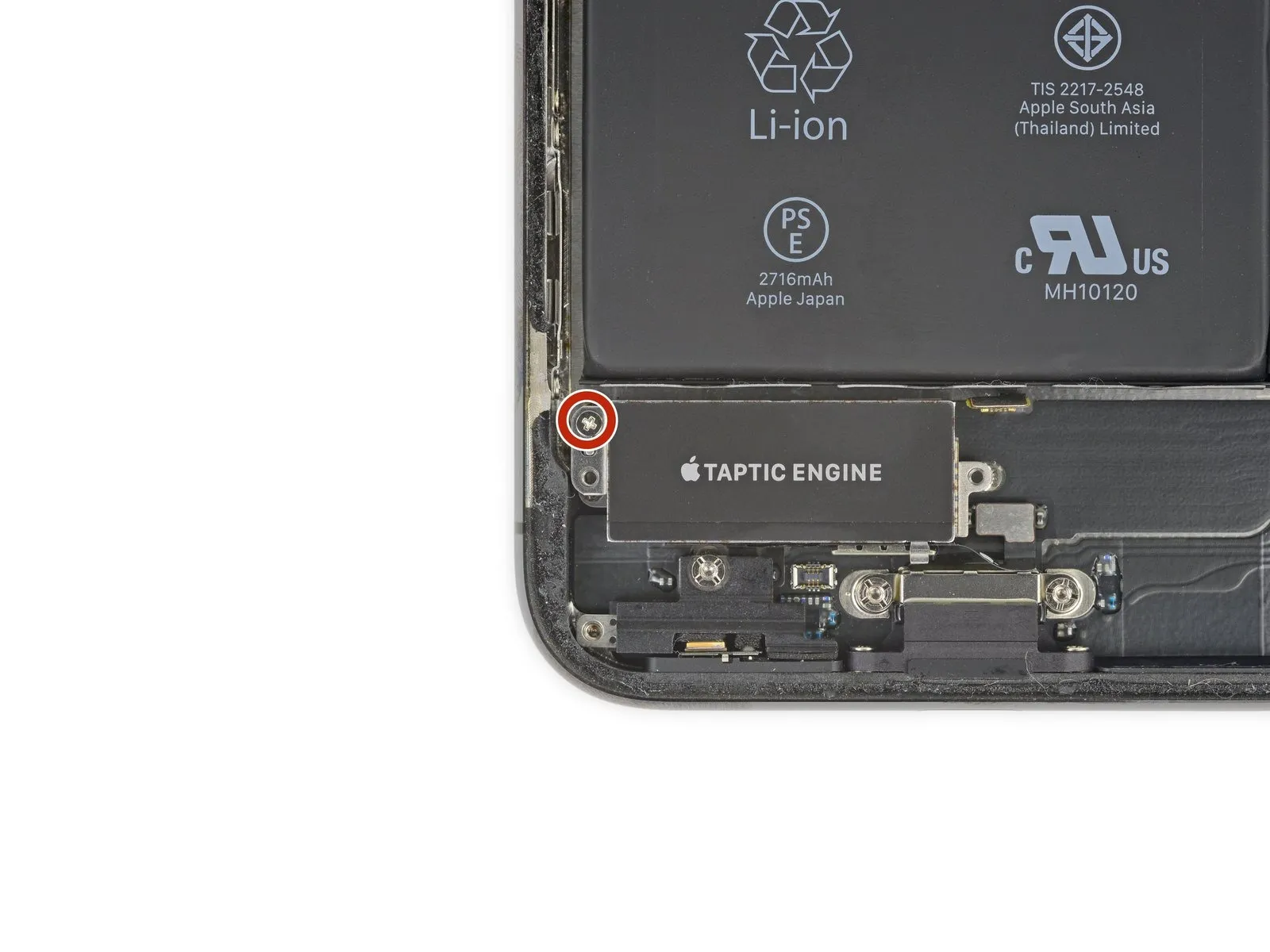
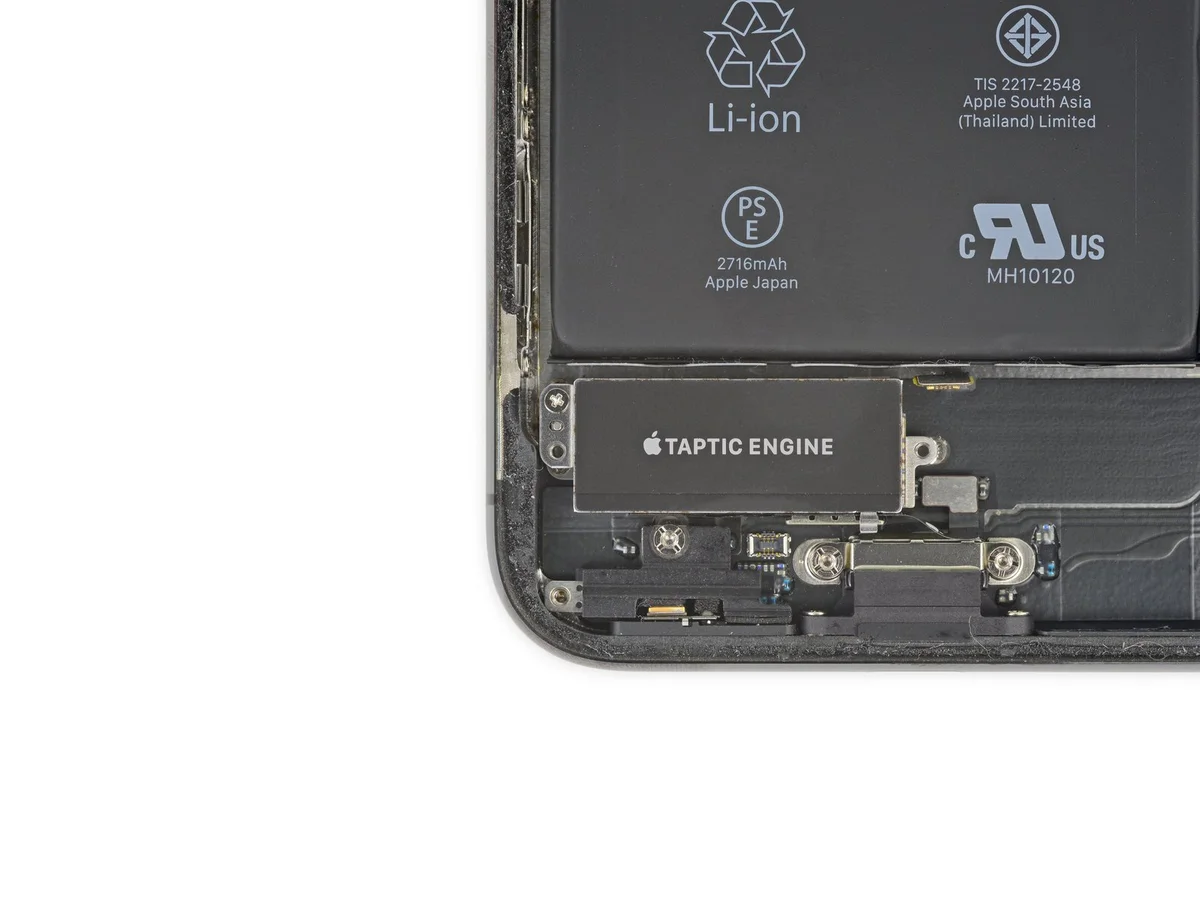
- To detach the component, eliminate the2.3-millimeter Phillips head screwthat holds the Taptic Engine in place.
Step 38
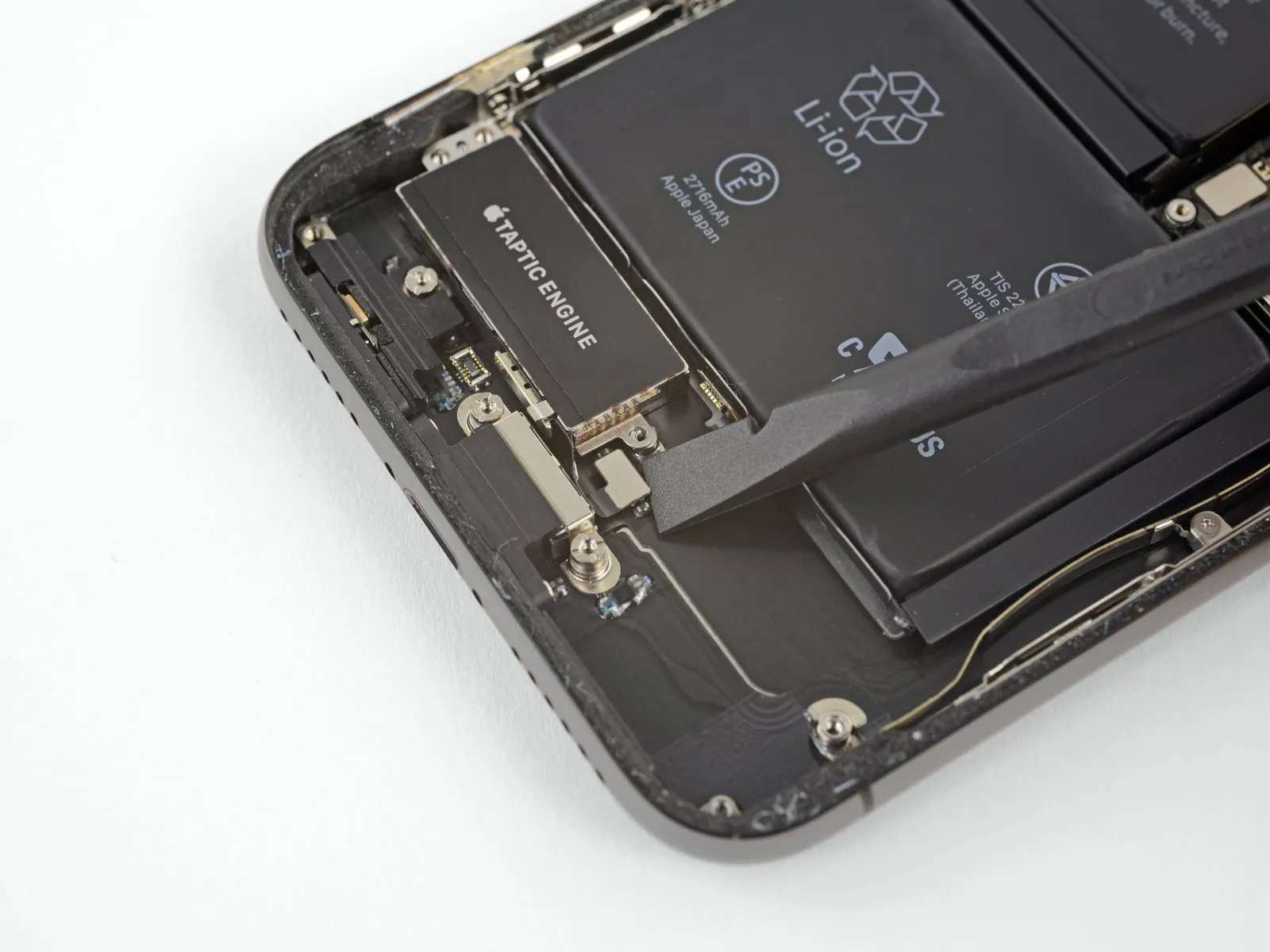
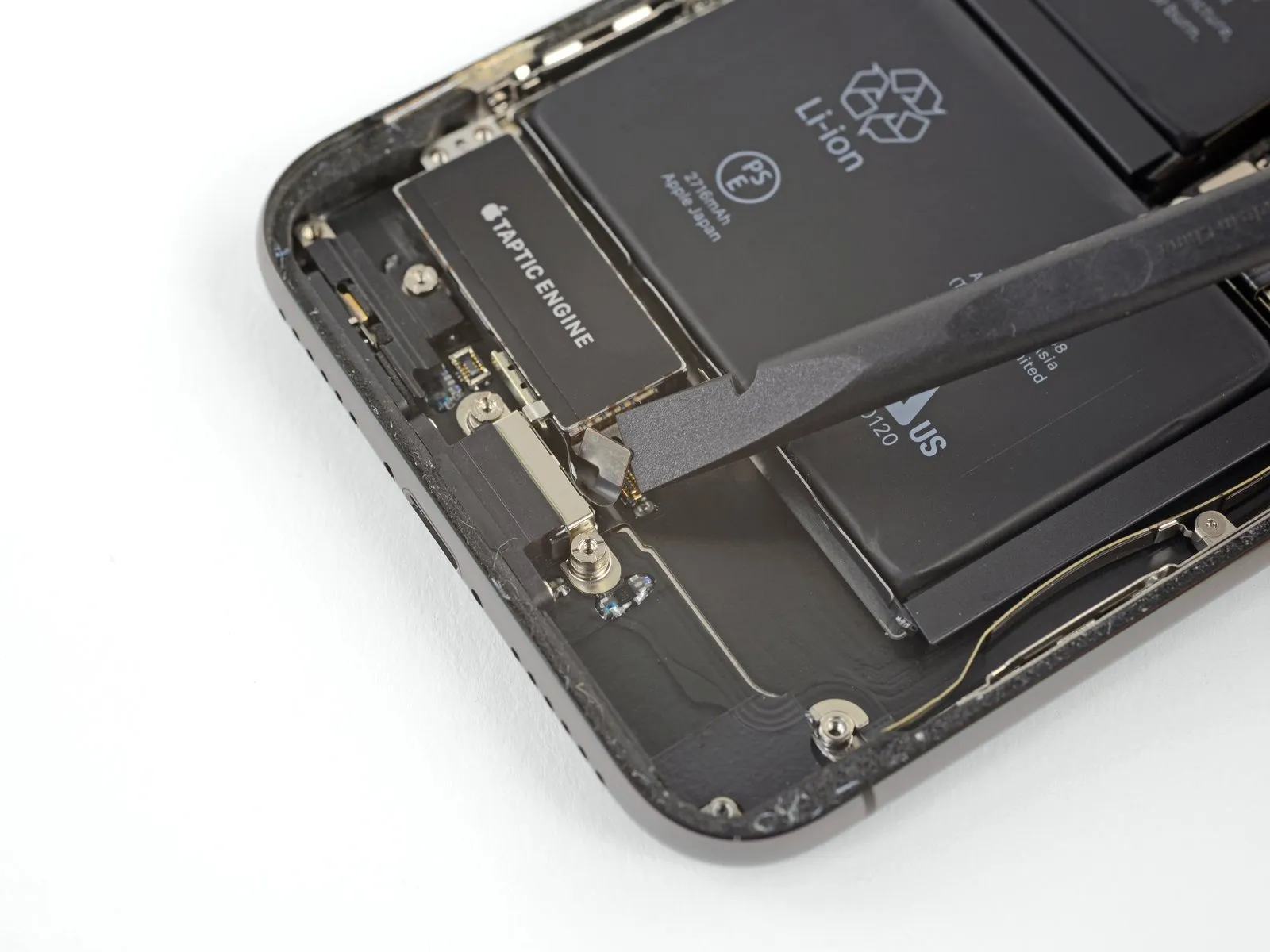
- Employing a spudger, carefully detach the Taptic Engine flex cable by applying upward pressure directly above the connector.
Step 39
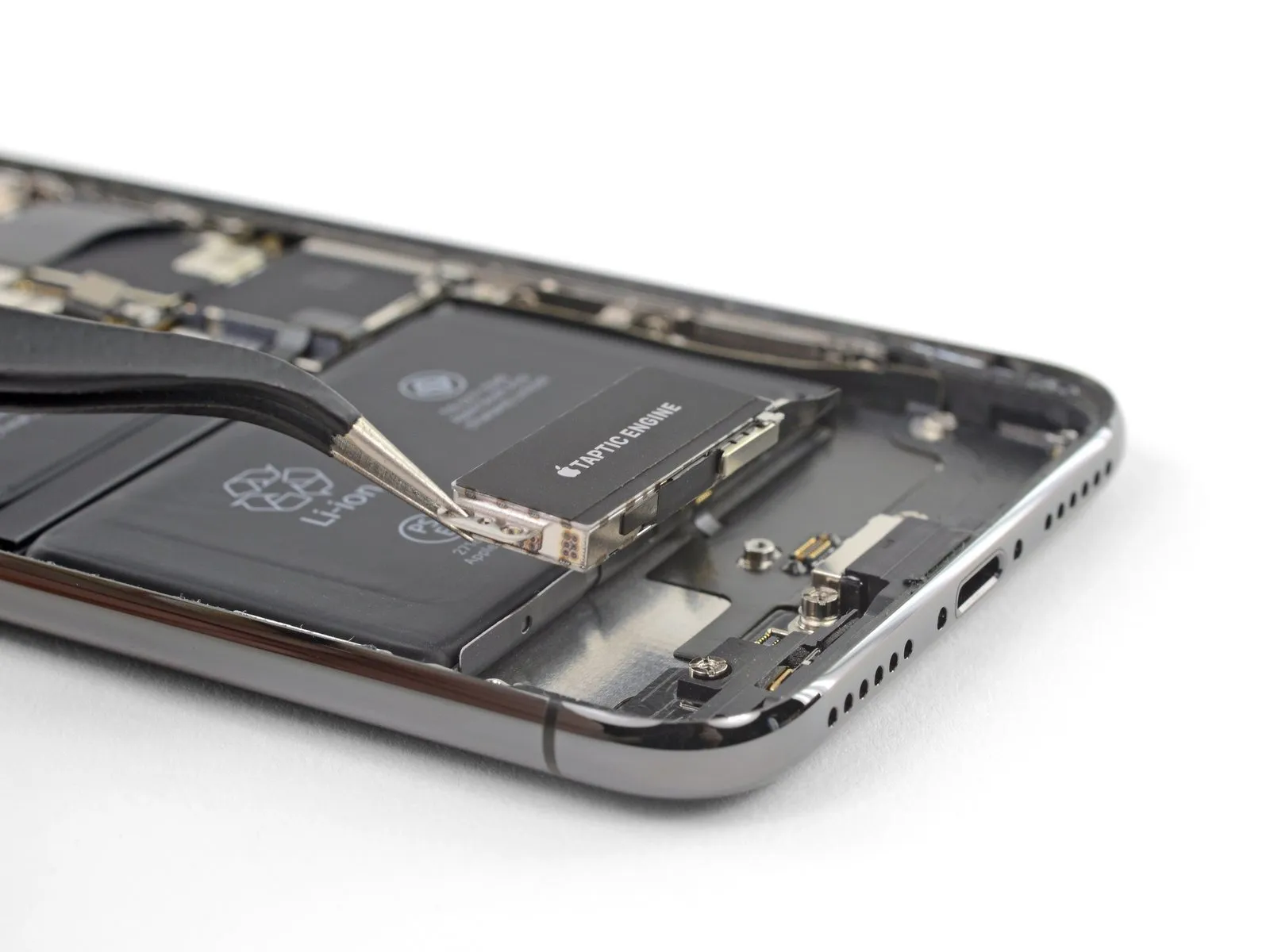
- Detach the Taptic Engine component.
Step 40 | Battery
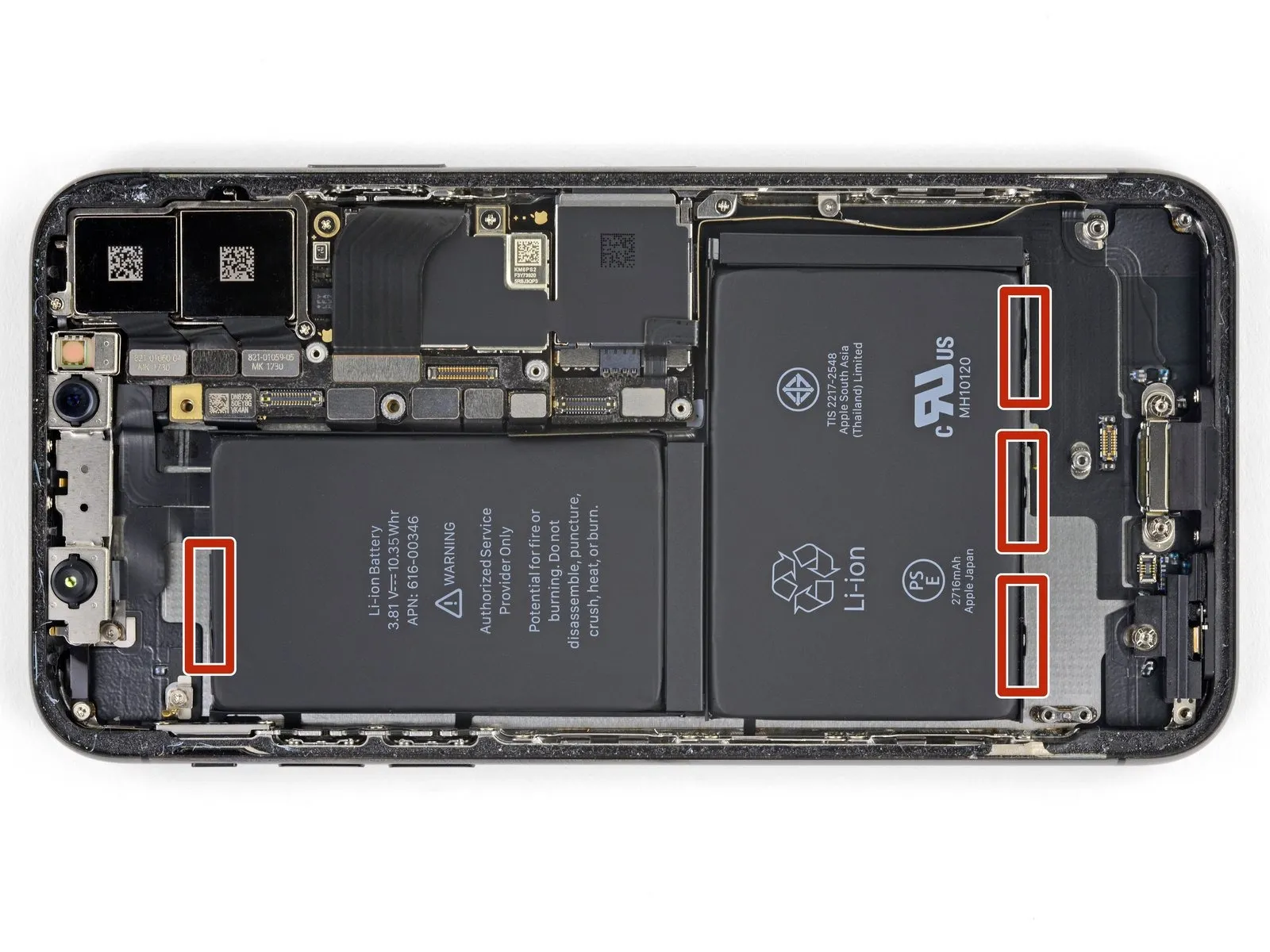
Four strips of stretch-release adhesive fasten the iPhone X's battery to the rear enclosure; specifically, one secures the upper battery cell, while three secure the lower portion. A small, black pull-tab, lightly bonded to the battery's side edge, is present on each adhesive strip.
Step 41
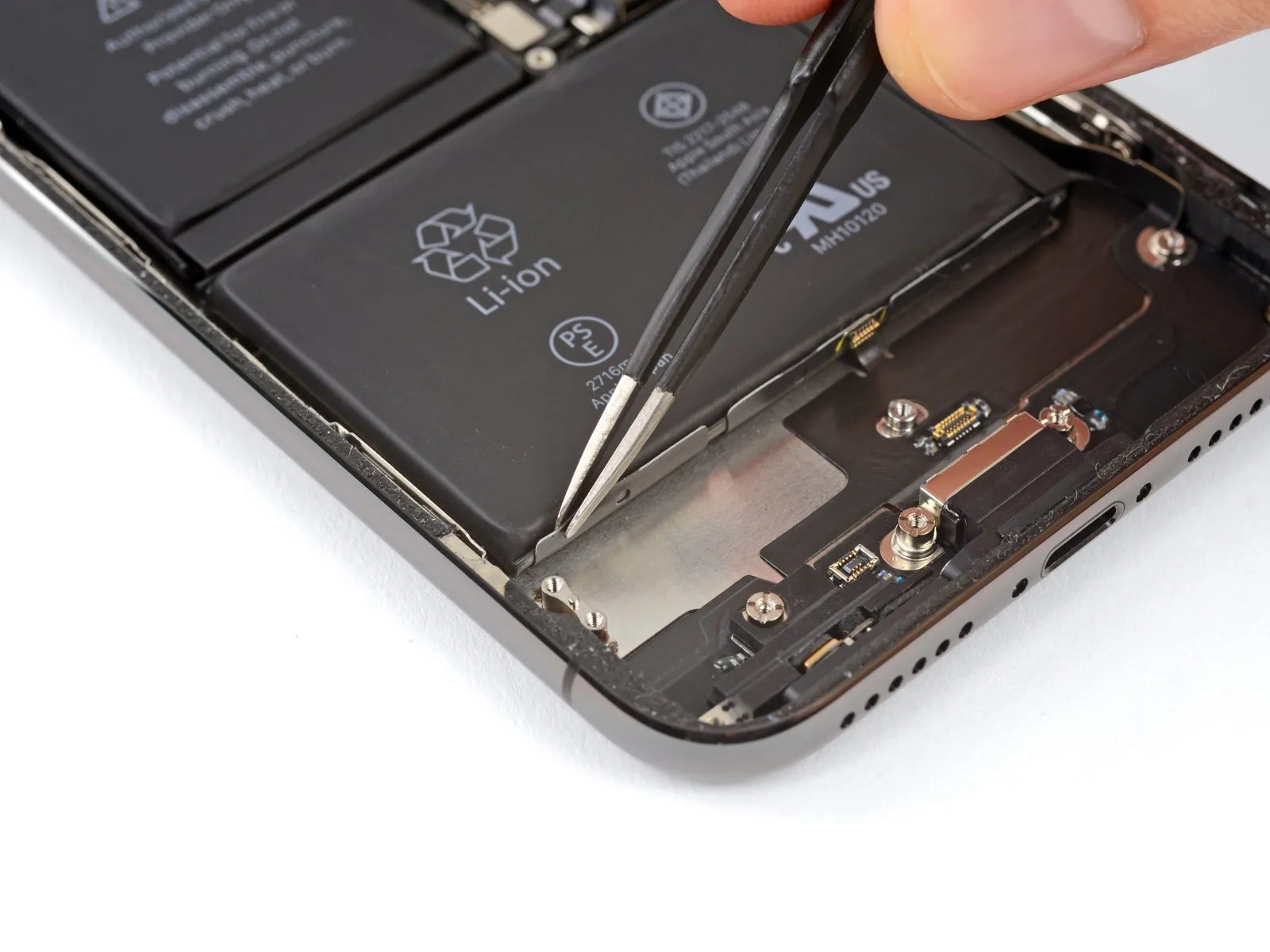
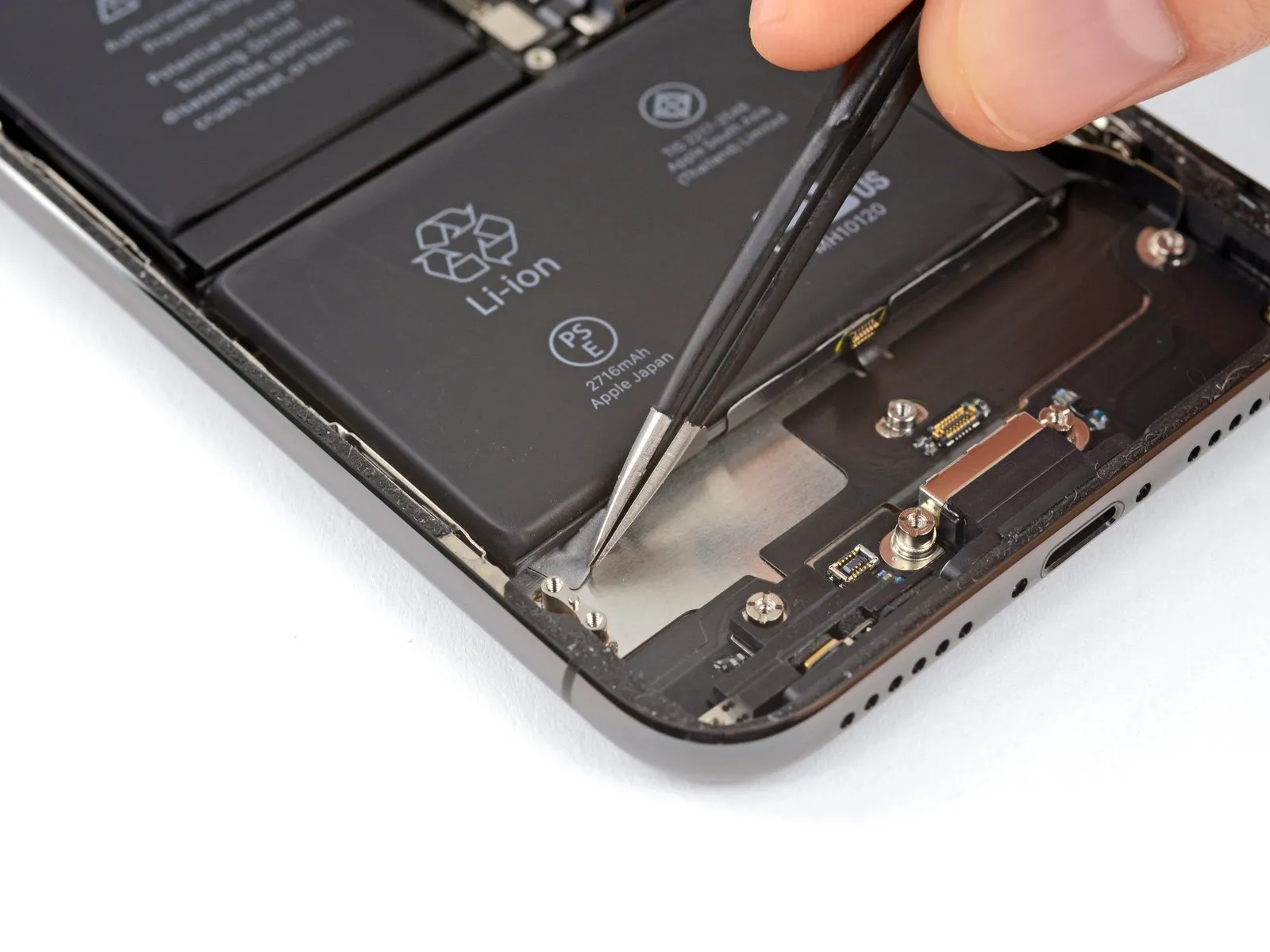
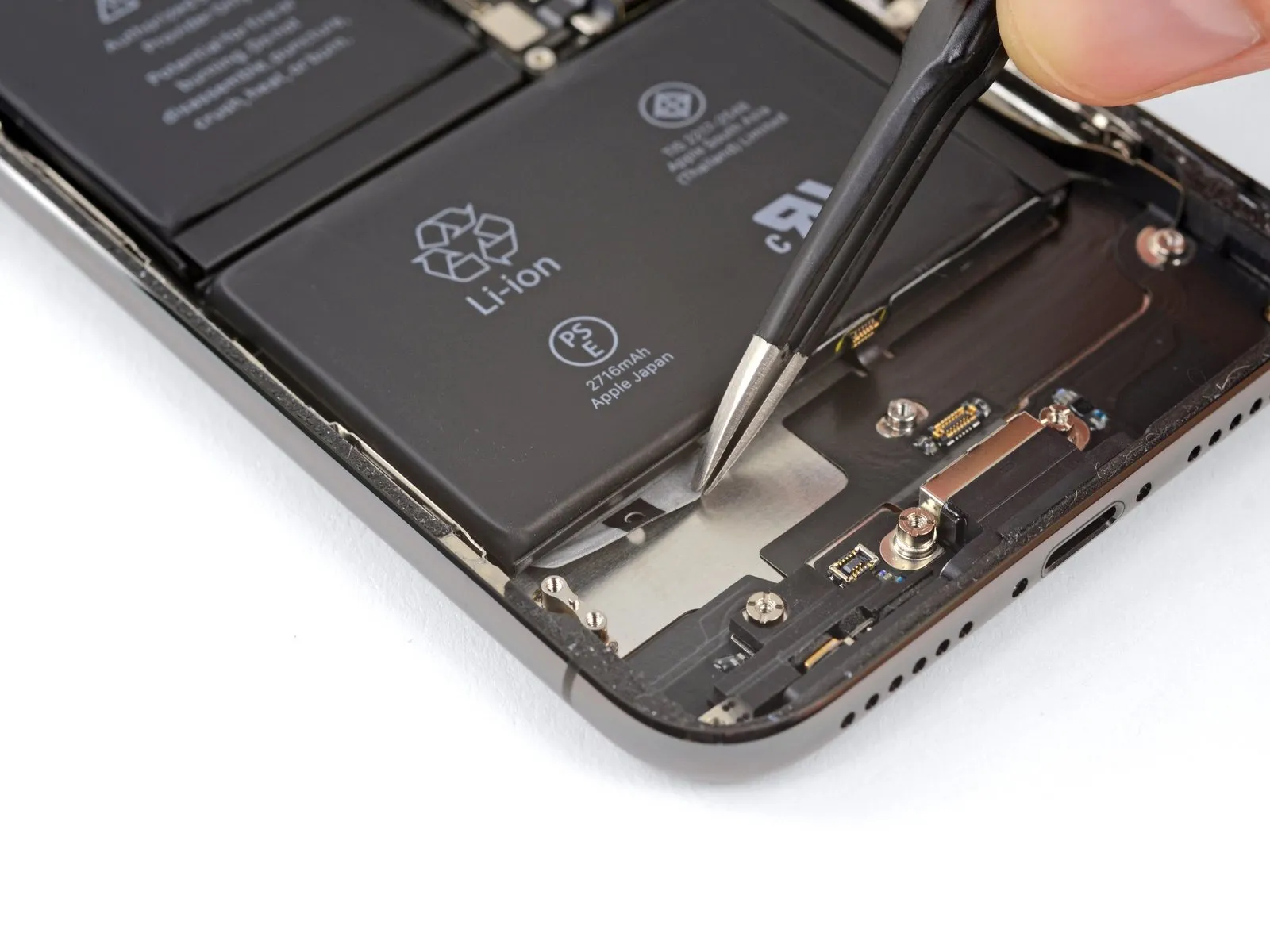
- Carefully detach the initial battery adhesive tab from the battery's lower border.
- If grasping the tab proves difficult, utilize a specialized tool to pass through the small loop situated centrally on each tab.
- Exercise caution to prevent puncturing the battery with any pointed instruments, as this could result in the release of hazardous substances or potential ignition.
Step 42
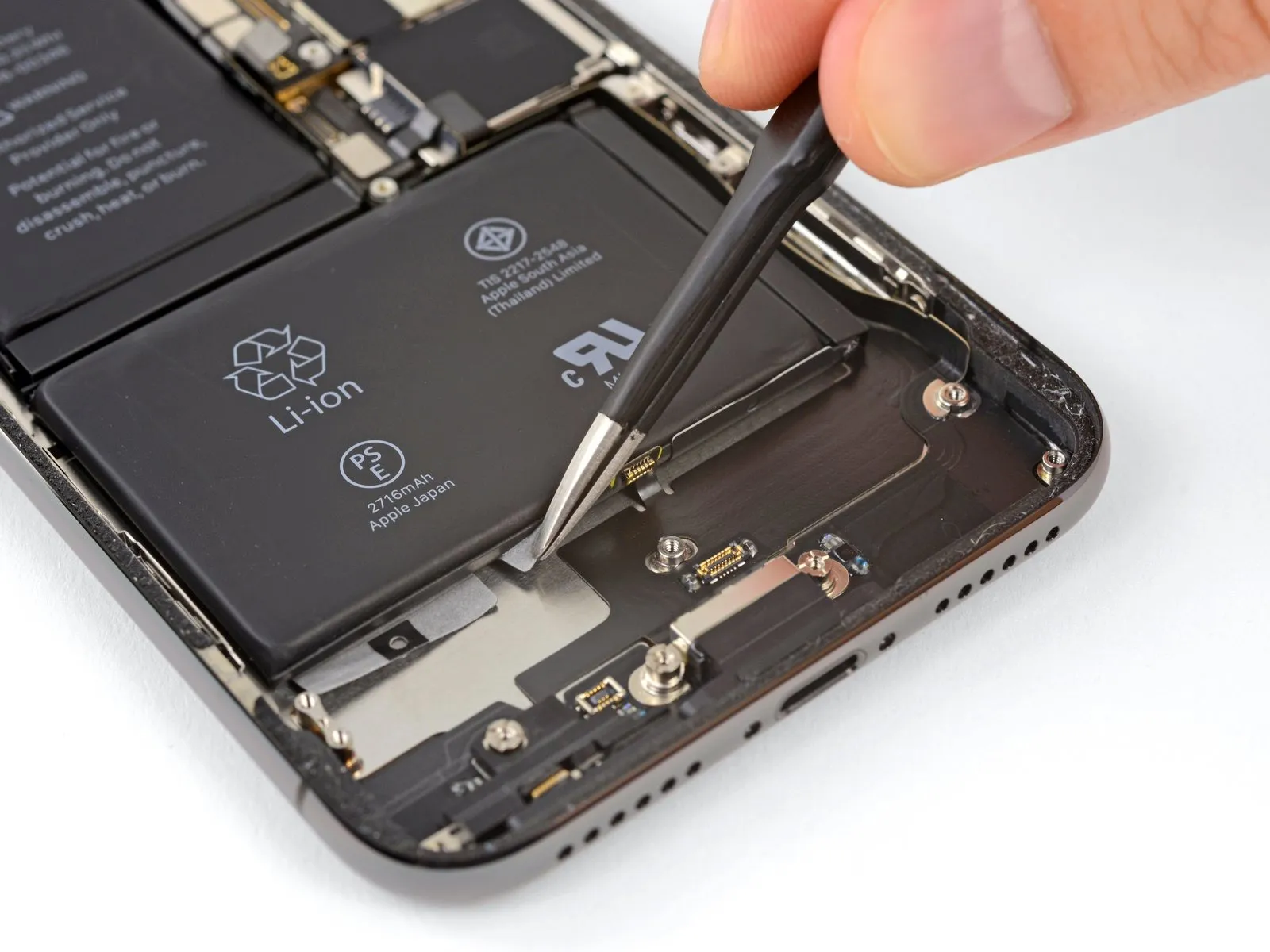
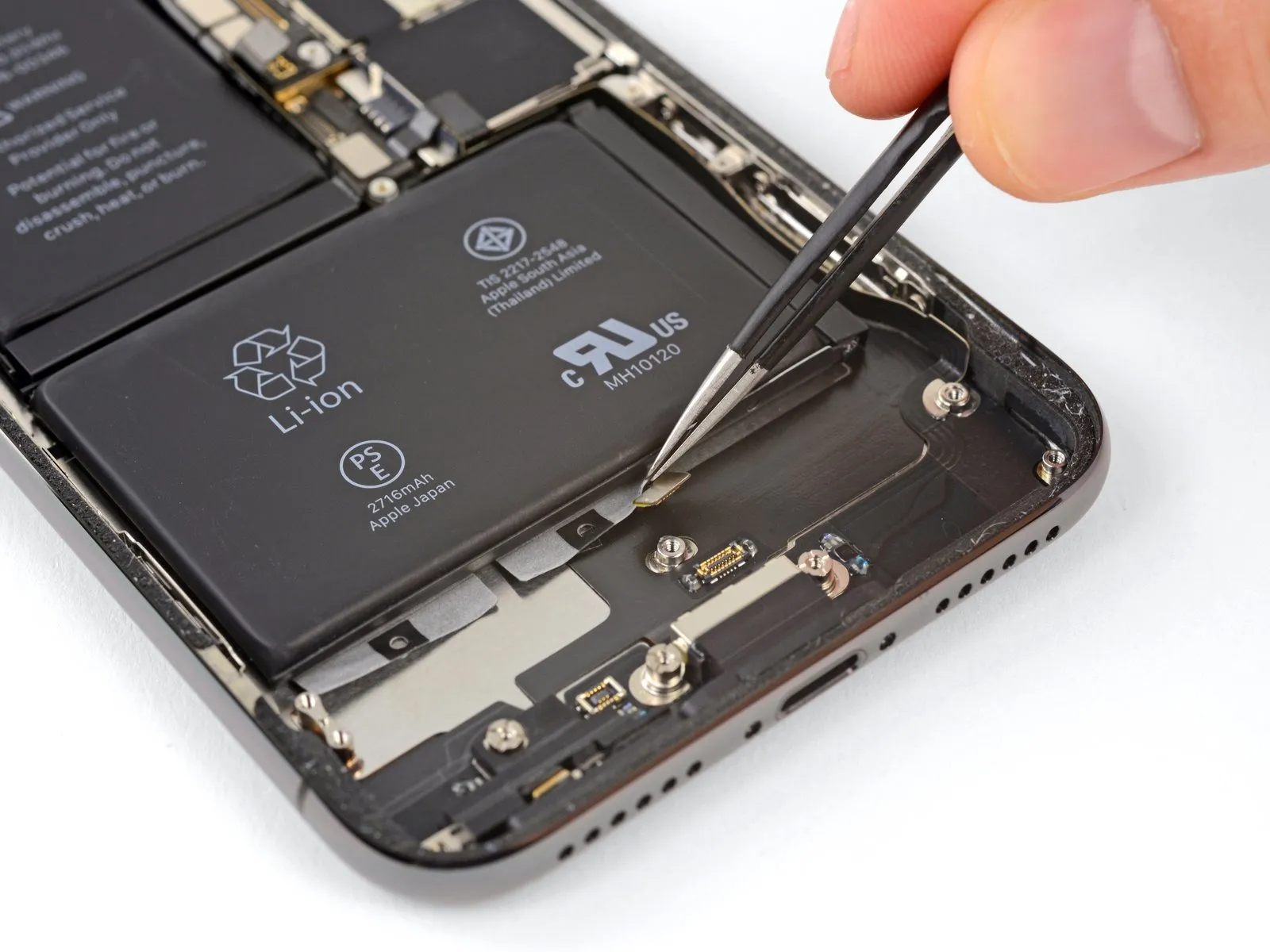
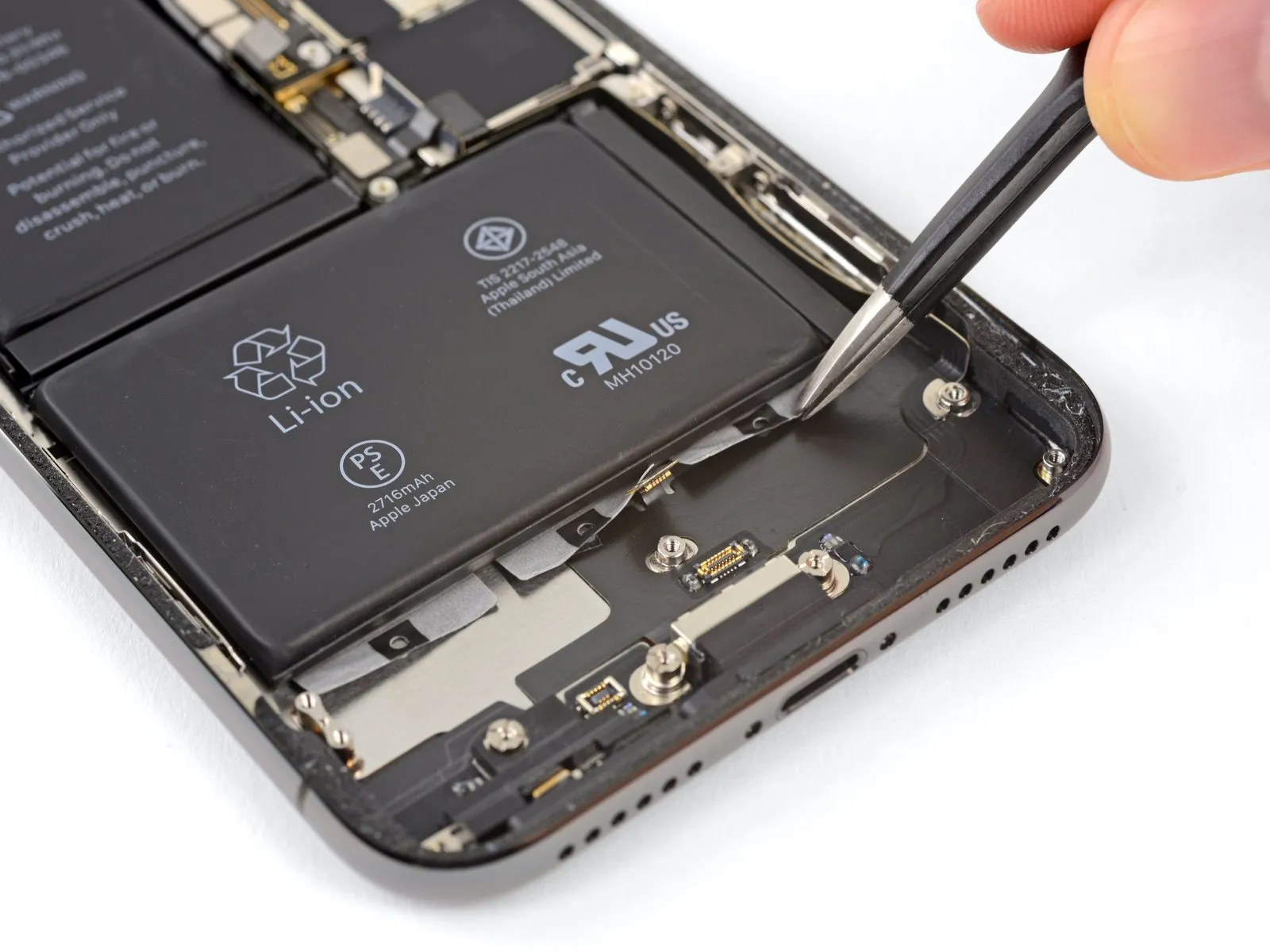
- To detach the remaining two adhesive strips, perform the previously described procedure once more, ensuring they are released from the battery's lower border.
- Exercise caution to prevent any harm to the speaker cable connector, which is situated directly beneath the central adhesive tab.
Step 43
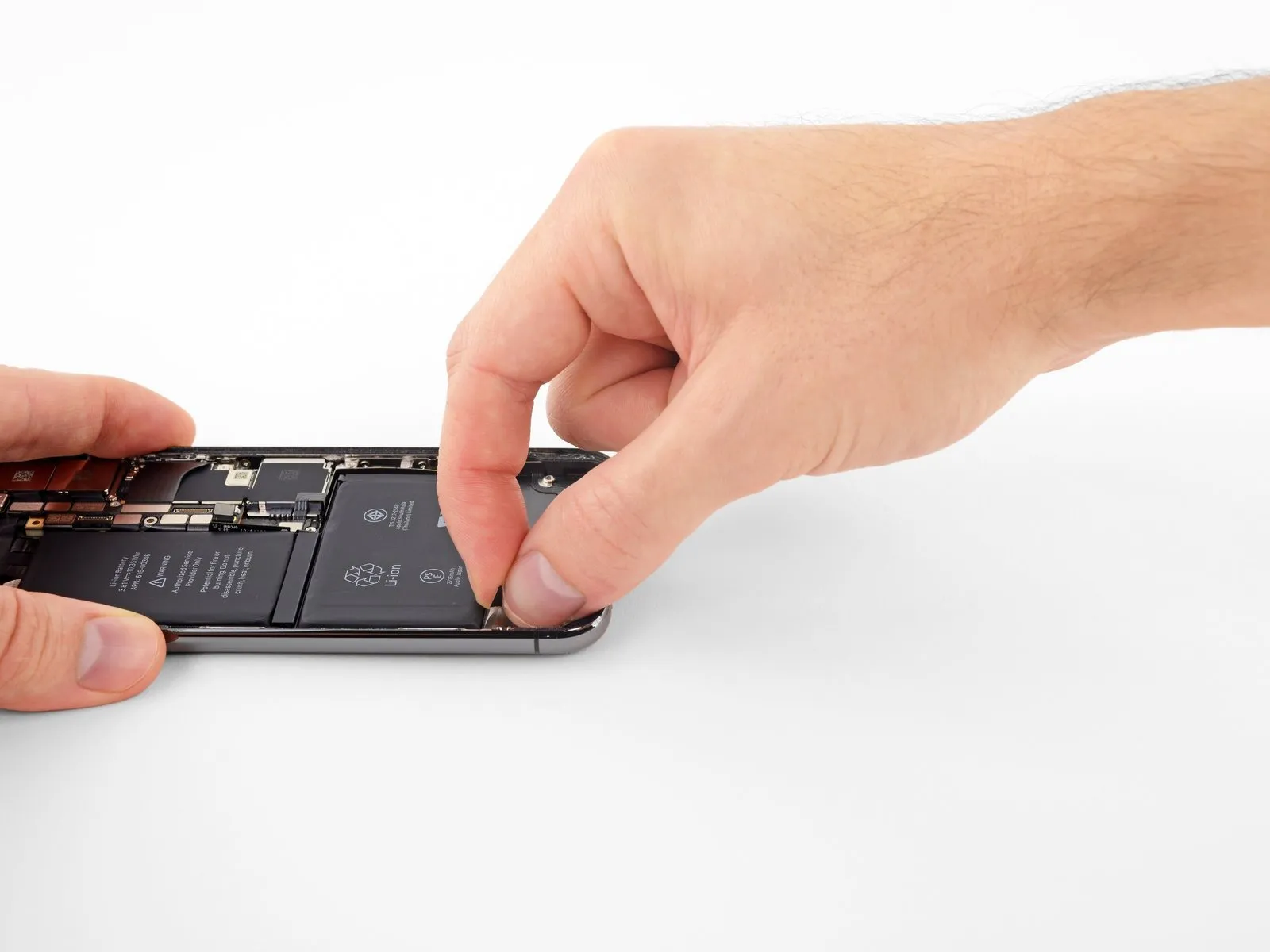
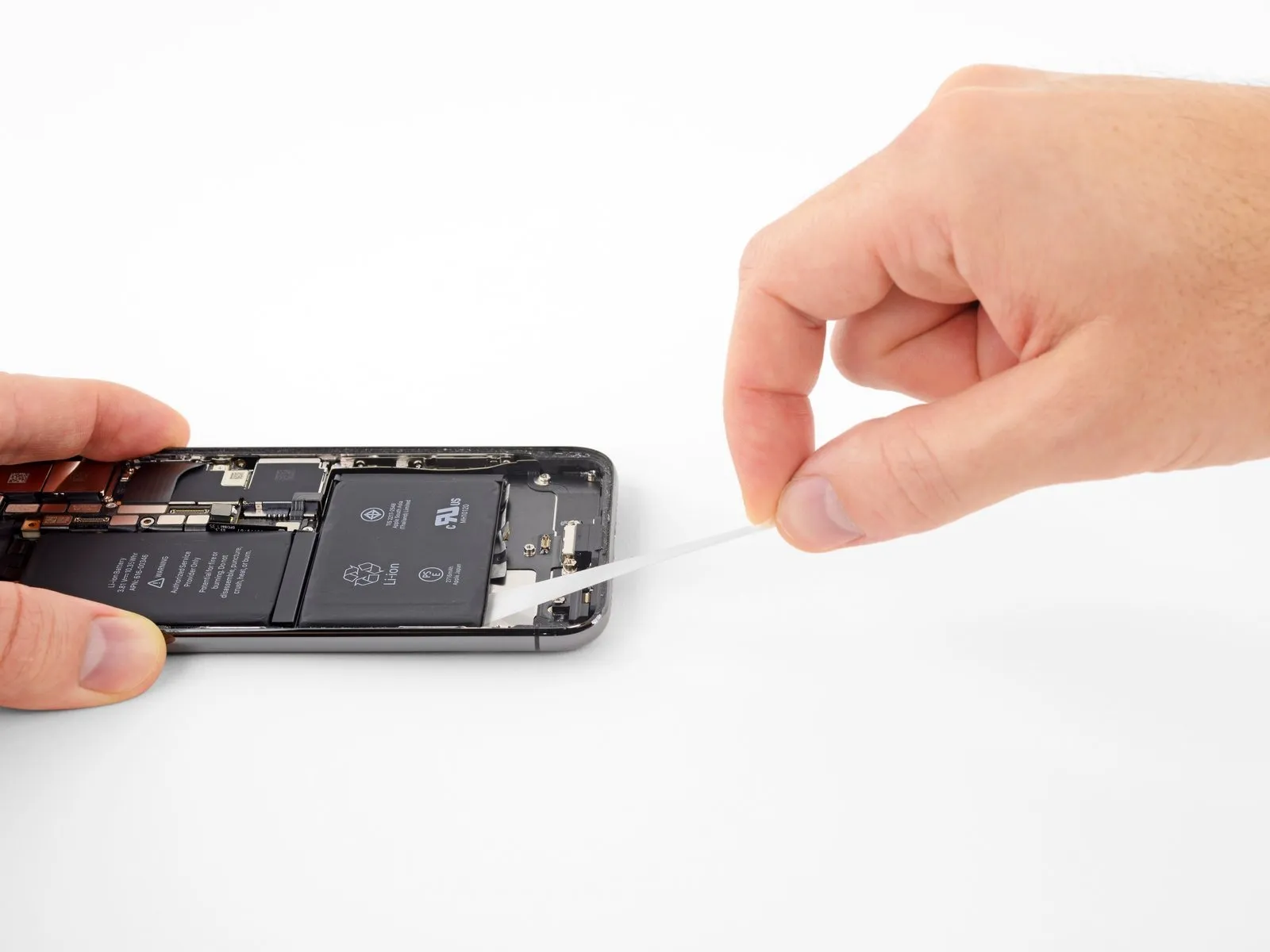
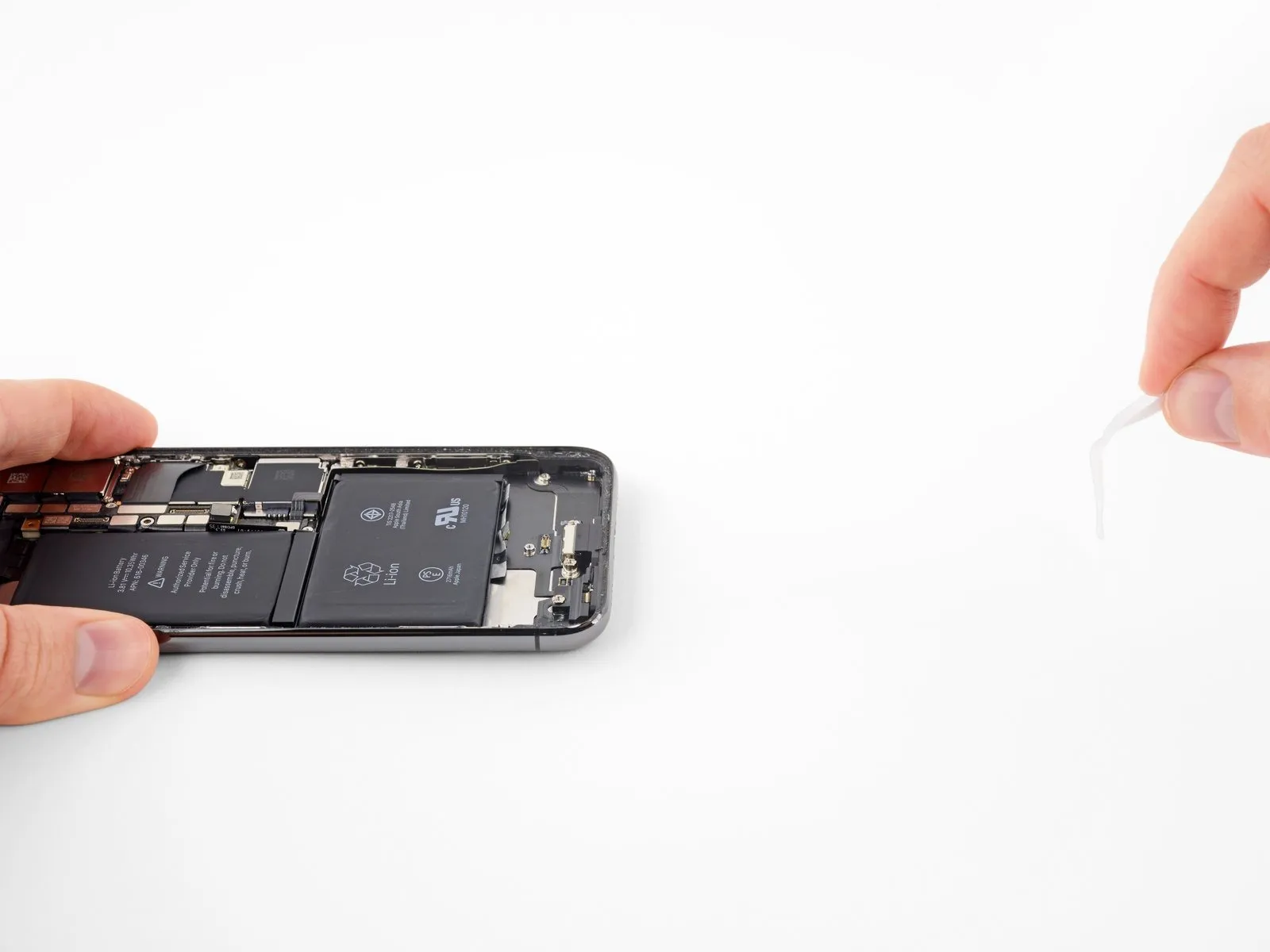
The subsequent instructions detail how to gradually extend each adhesive tab, facilitating separation of the adhesive layer from the battery's underside. This unique stretch-release adhesive diminishes its stickiness when extended, subsequently detaching from the device and enabling effortless battery removal.
Should any of the adhesive strips fracture, remain composed; their functionality isn't guaranteed. Proceed with reading the subsequent instructions for alternative battery removal techniques when strip breakage occurs.
To maximize the likelihood of a successful repair:
Avoid applying downward pressure to the battery; instead, maintain a secure grip on the iPhone's lateral surfaces.
Ensure the strips remain smooth and without creases during the pulling process.
Exercise extreme caution by pulling with deliberate slowness, allowing sufficient time for the strip to extend and disengage; each strip typically requires 15 to 30 seconds of stretching for complete removal.
Maintain a shallow pulling angle to prevent the strip from catching on the battery's lower perimeter.
If a strip fractures and remains inaccessible beneath the battery, proceed with the remaining strips and then follow the supplementary instructions provided below.
Step 44
- Carefully detach one of the battery's external adhesive strips by gently drawing it away from the battery surface, directing the movement towards the iPhone's lower edge.
- Maintain a consistent, even force as you pull the strip, ensuring it remains taut until it disengages from the space between the battery and the rear enclosure.
- Expect the adhesive strip to elongate significantly, extending to several times its initial size; persist in pulling and reposition your grip along the strip's length near the battery if needed.
- Should the battery adhesive strips tear during removal, utilize your fingers or non-piercing tweezers to collect any detached adhesive fragments, and continue the extraction process.
- In the event that adhesive strips fracture beneath the battery and are inaccessible, attempt to remove the remaining strips and then follow the subsequent instructions.
Step 45
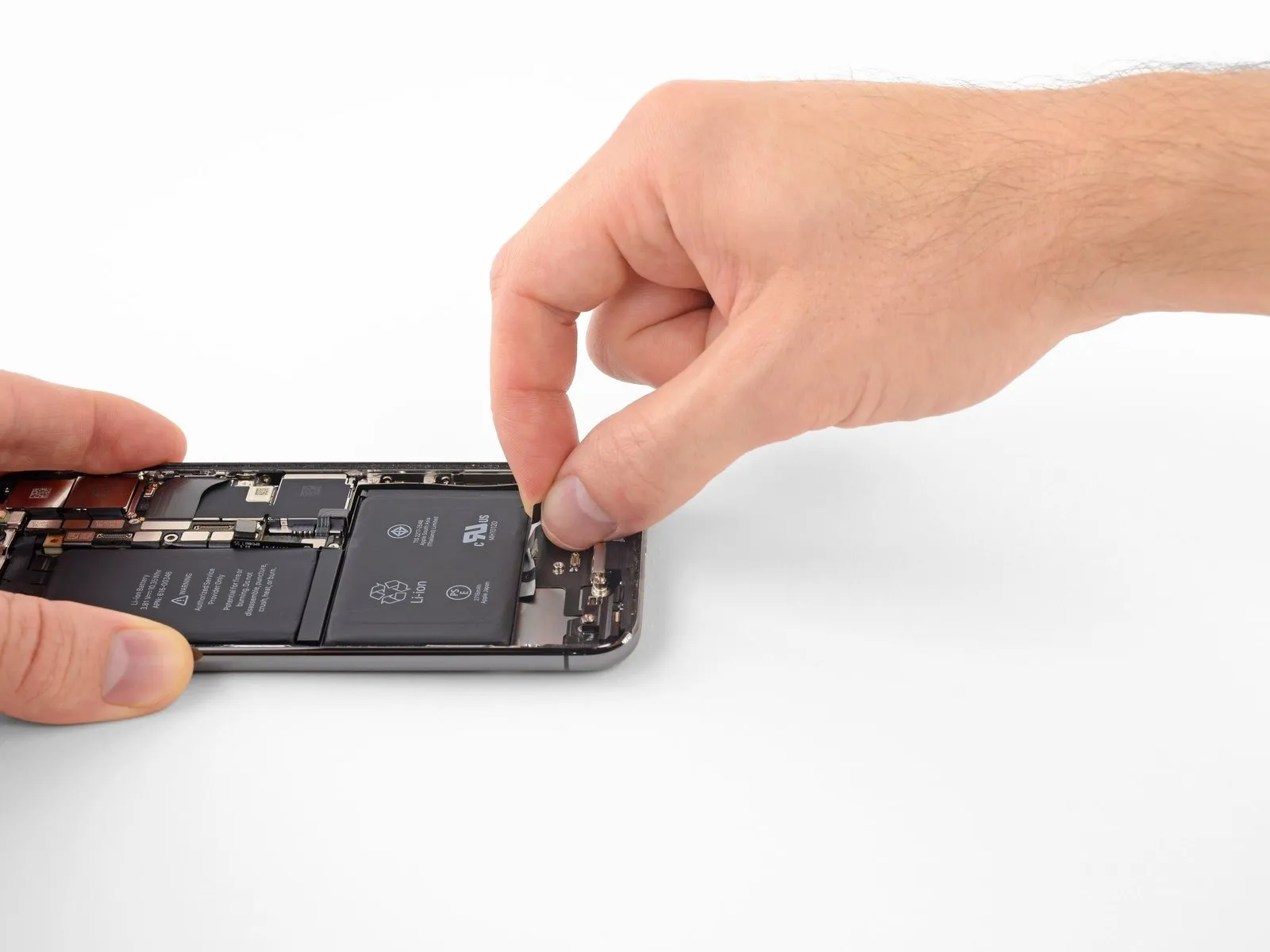
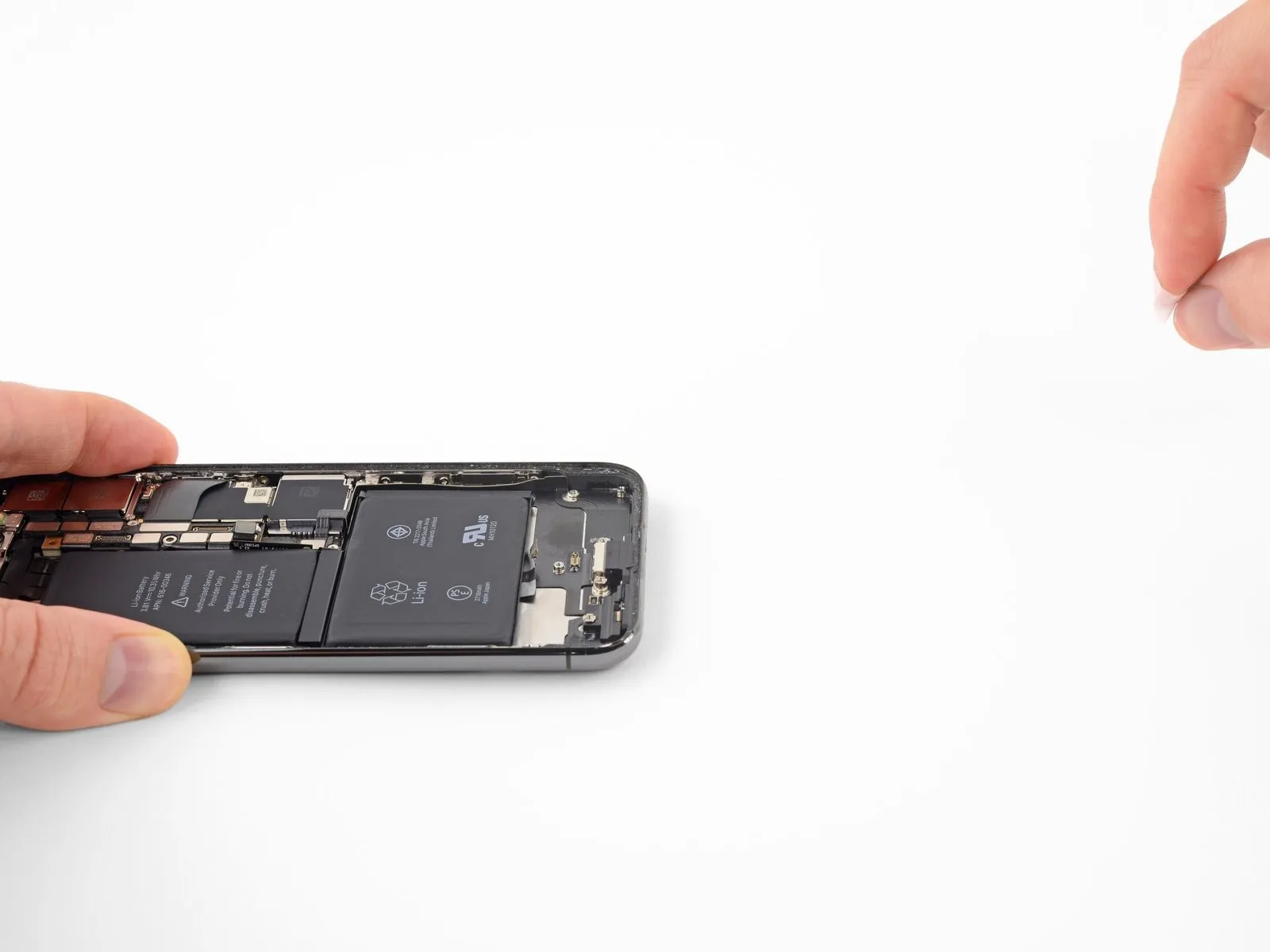
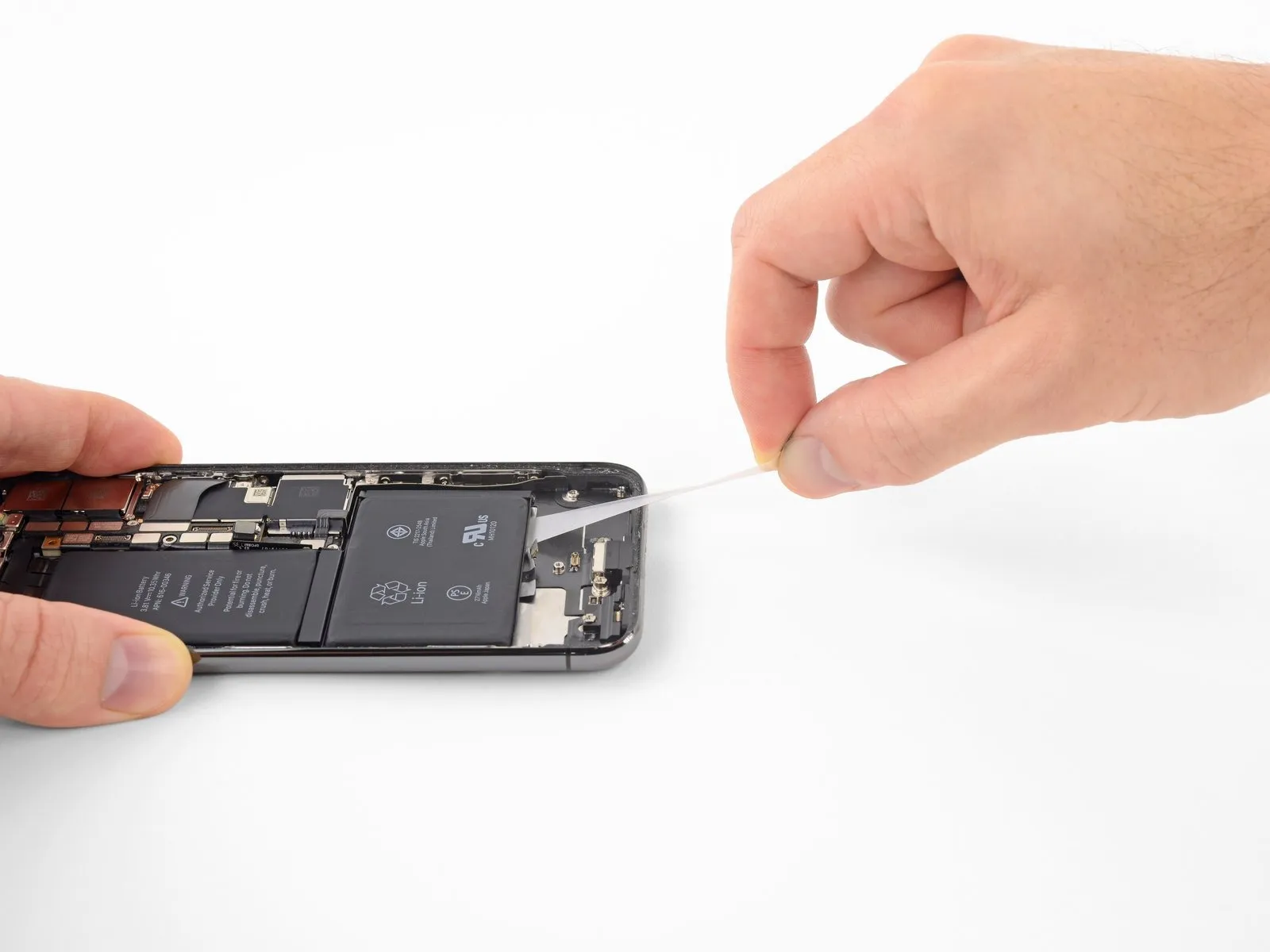
Step 46
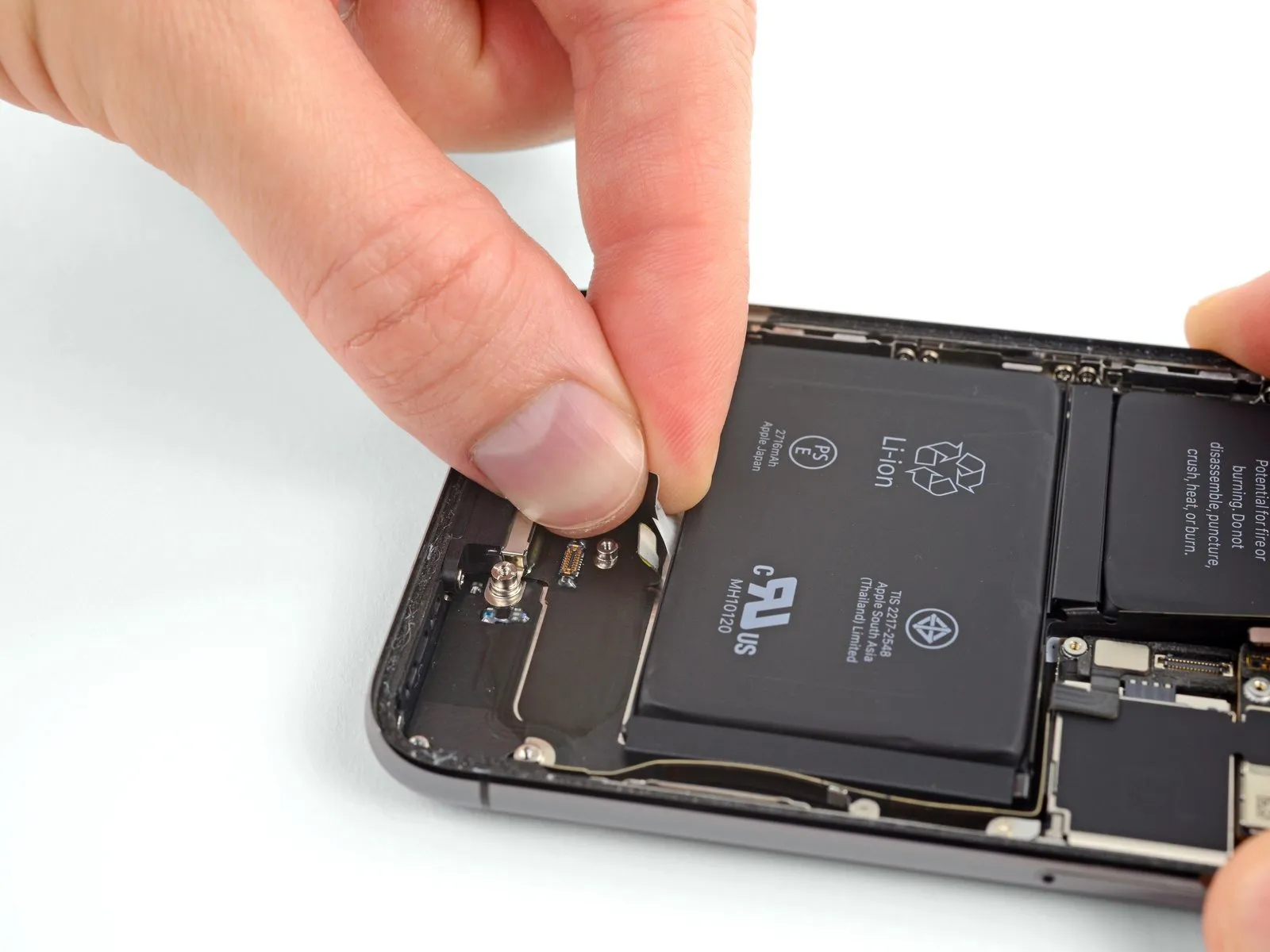
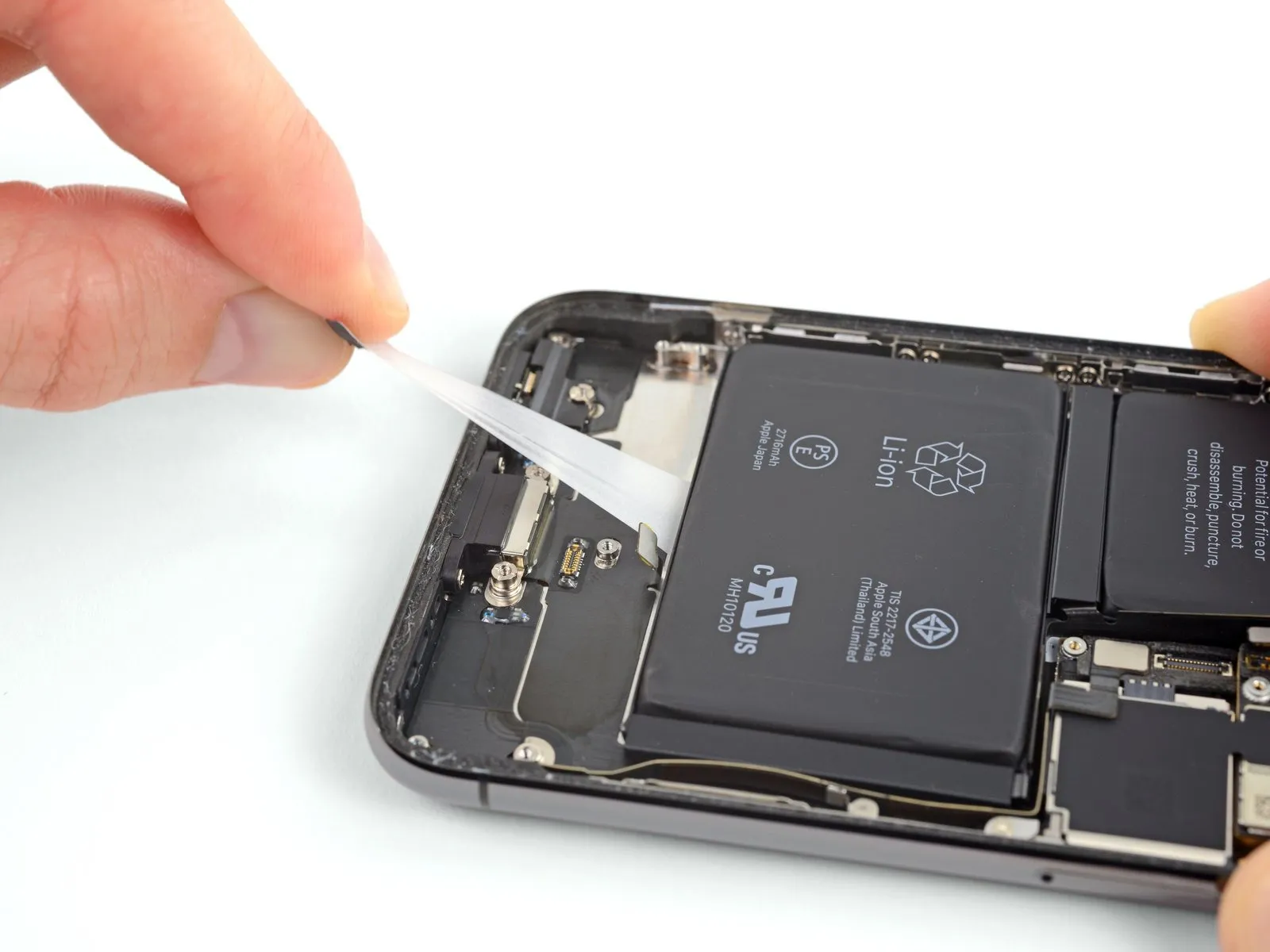
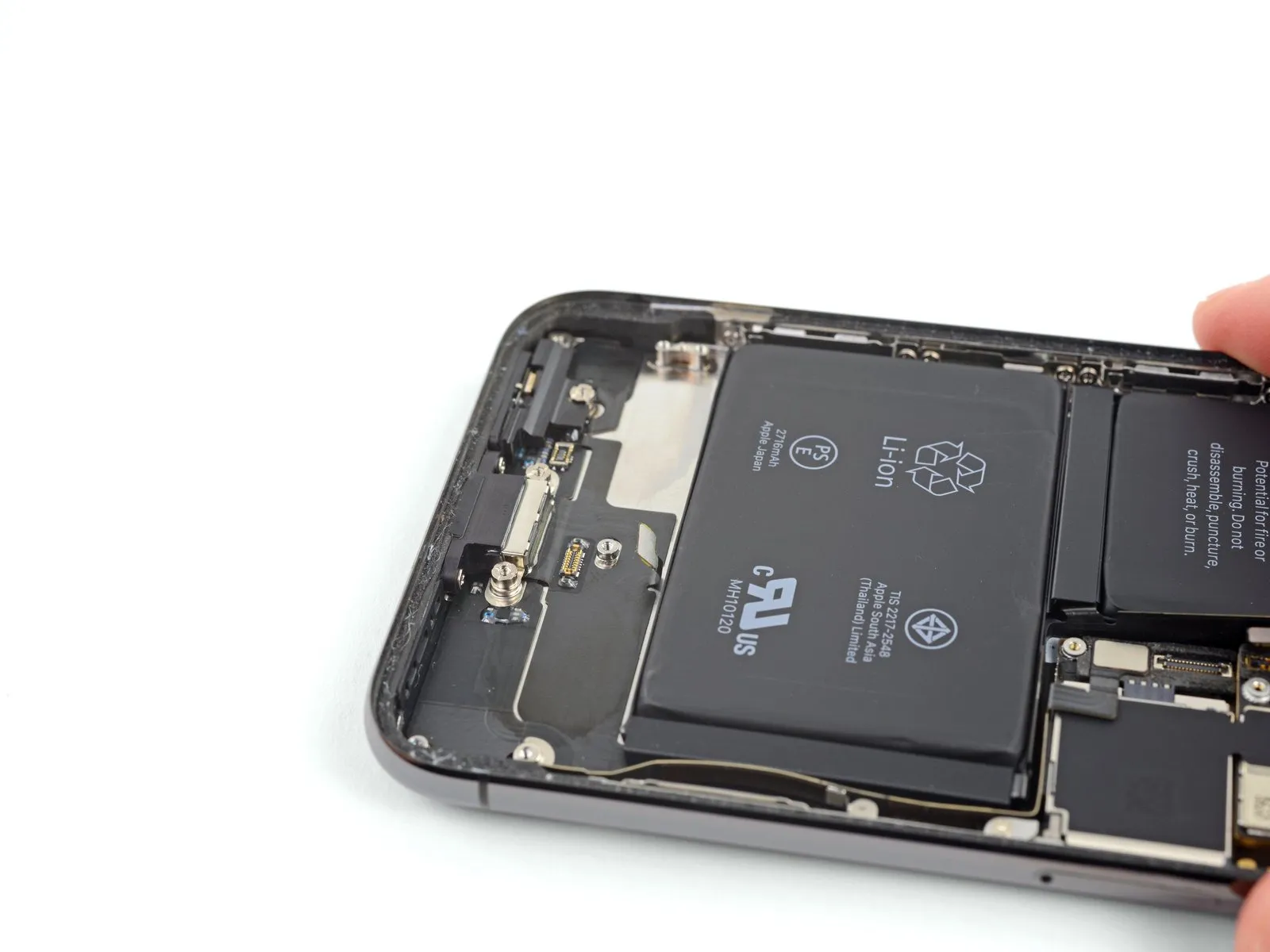
- Detach the central portion of the assembly, exercising caution to prevent the speaker flex cable from being damaged.
Step 47
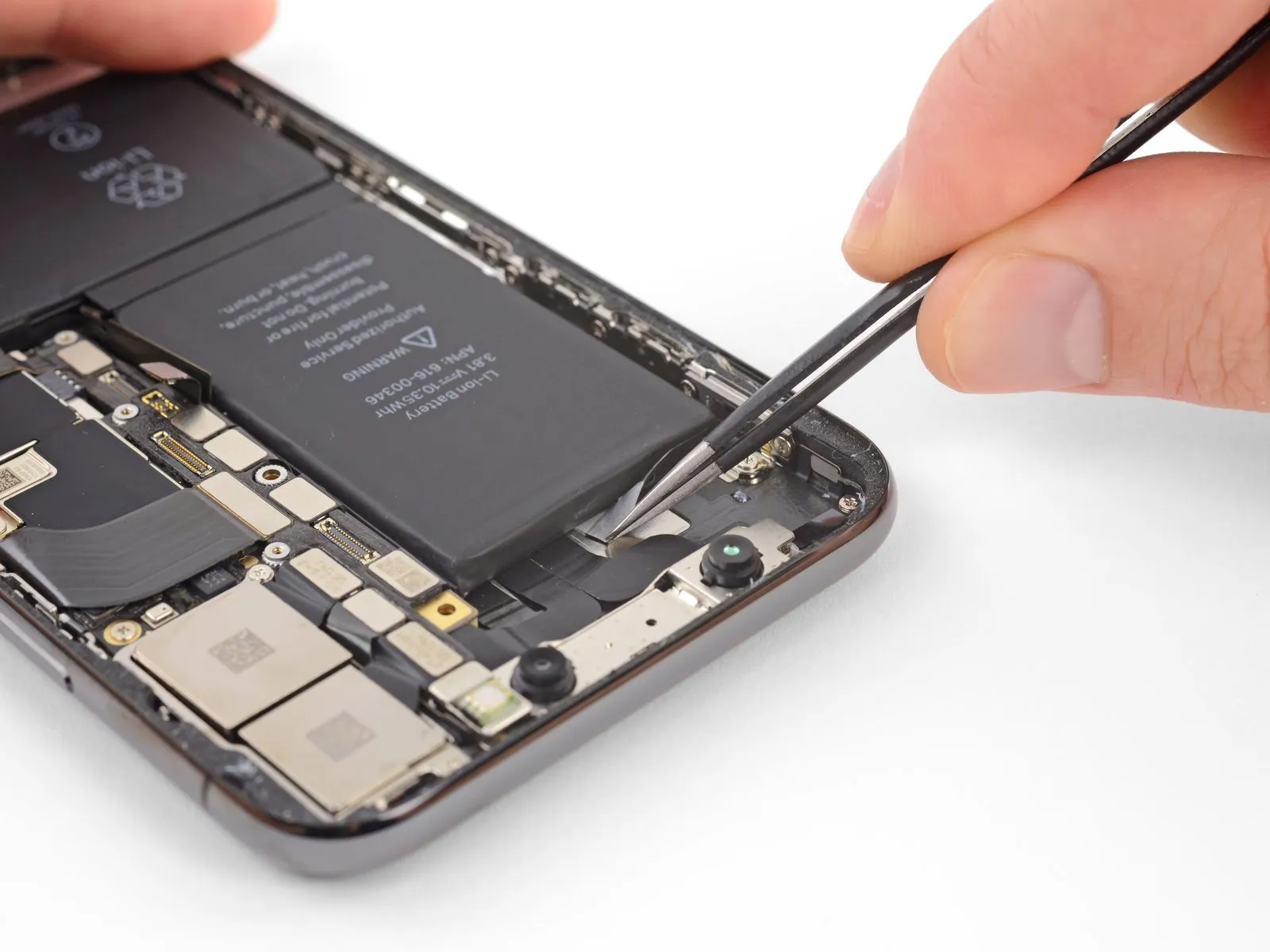
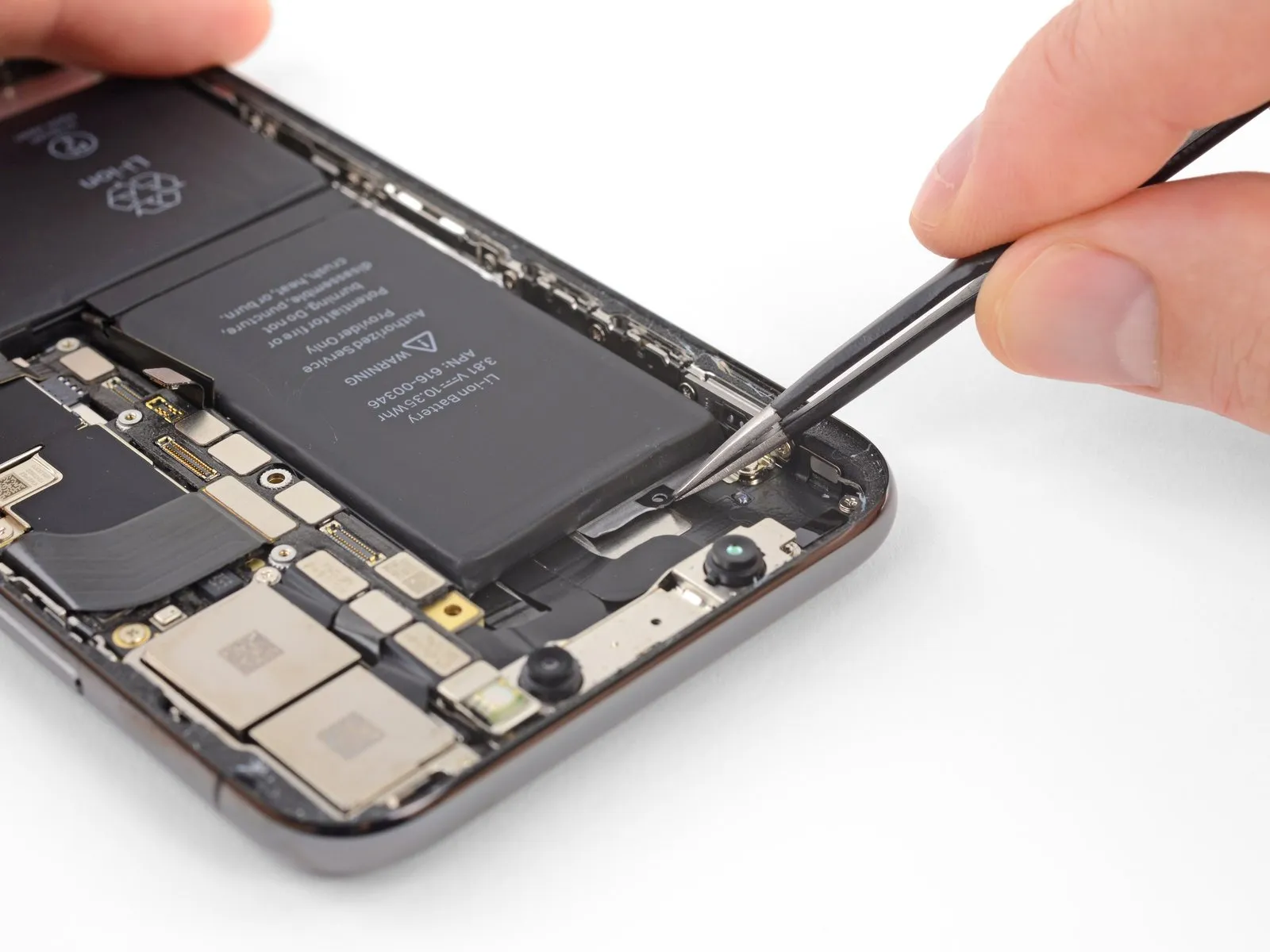
The last retaining tab is situated in immediate proximity to the Face ID components.Should this component sustain damage, Face ID functionality can only be restored through service performed by Apple., therefore proceed with meticulous attention.
Carefully lift and detach the pull tab from the uppermost adhesive strip, which is positioned along the superior edge of the upper battery cell.
Step 48
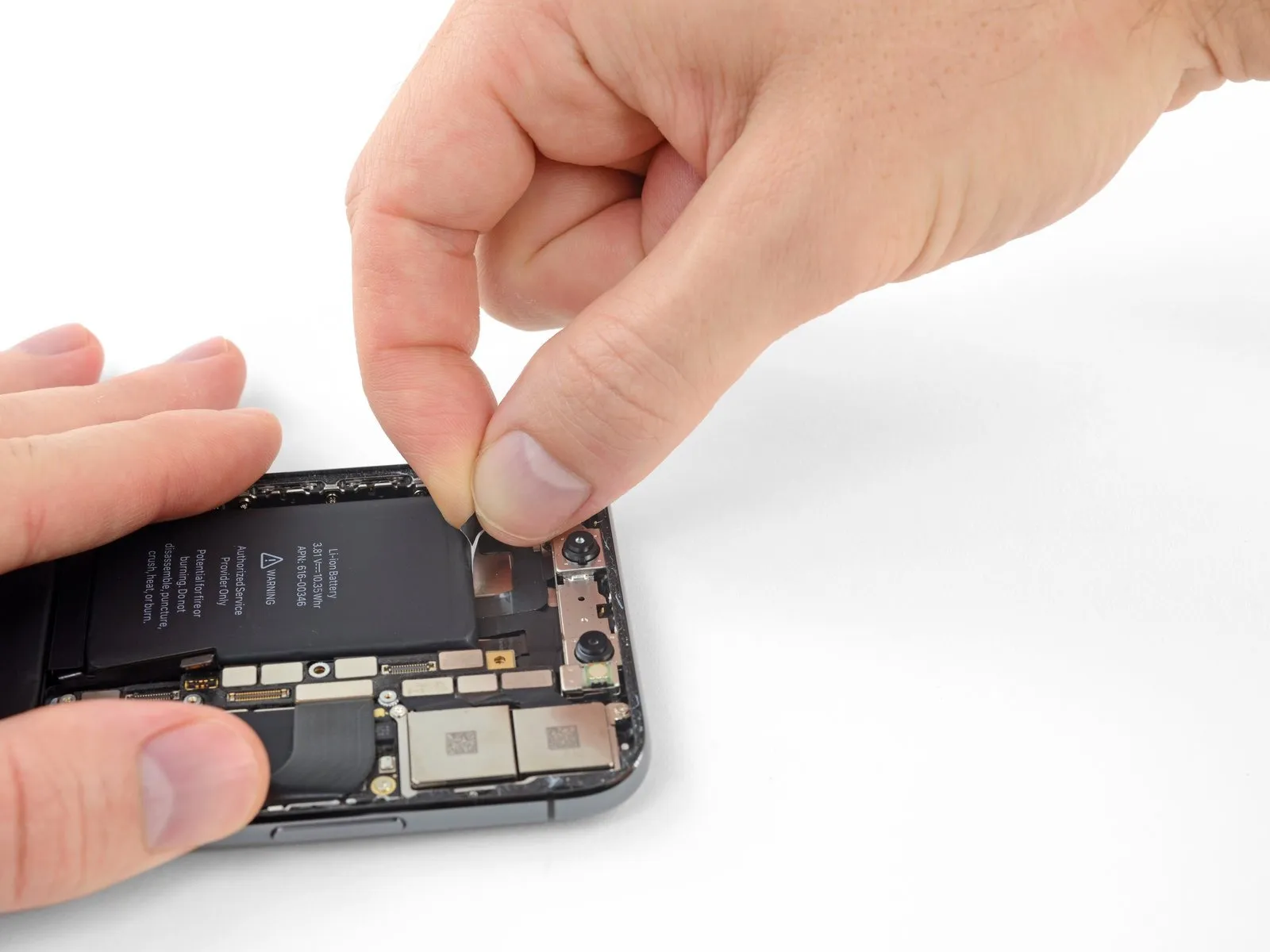
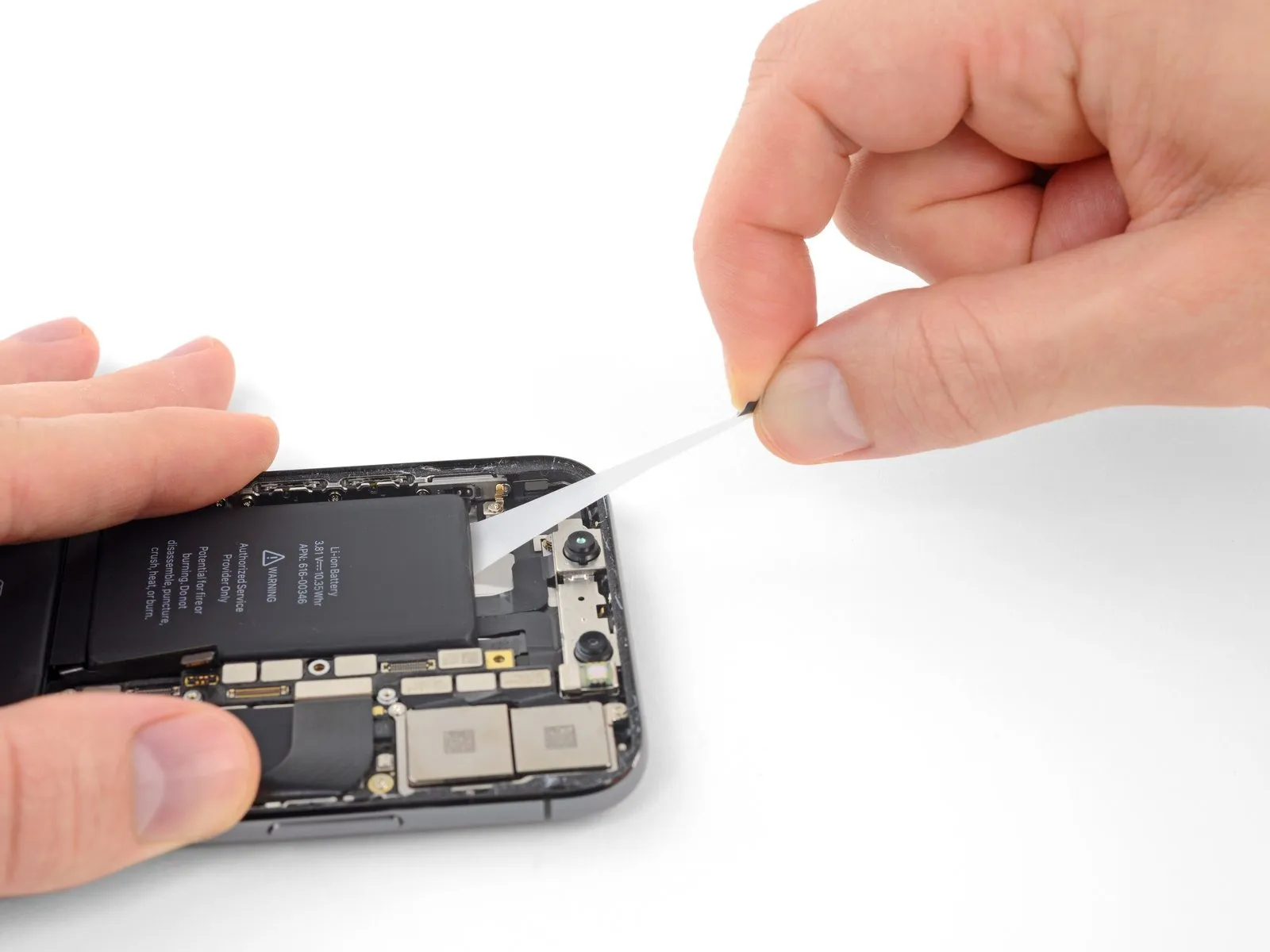
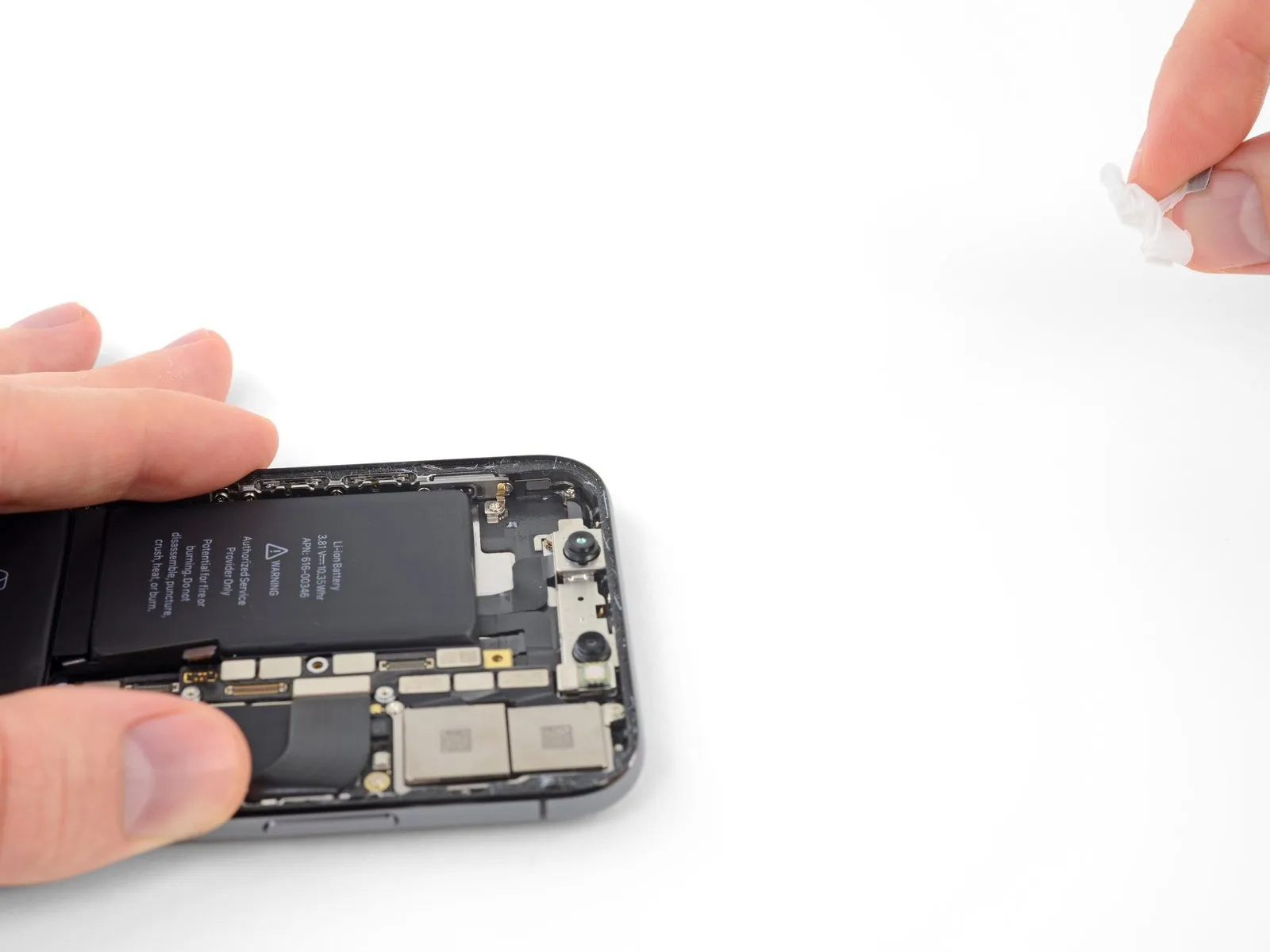
- Detach and eliminate the last adhesive strip.
- Should you successfully remove all four adhesive strips, proceed past the following instruction.
- Should fragments of the adhesive become detached and inaccessible beneath the battery, introduce a small quantity of high-concentration isopropyl alcohol (exceeding 90%) beneath the battery's edge, specifically targeting the area where the adhesive strip(s) fractured.
- Refrain from employing excessive force to dislodge the battery.
Exercise caution to prevent damage to the ribbon cables and the wireless charging coil situated directly beneath the battery.
- For different approaches to freeing the battery from the chassis, consult the subsequent instructions.
Step 49 | Alternative method to unstick the battery from the case
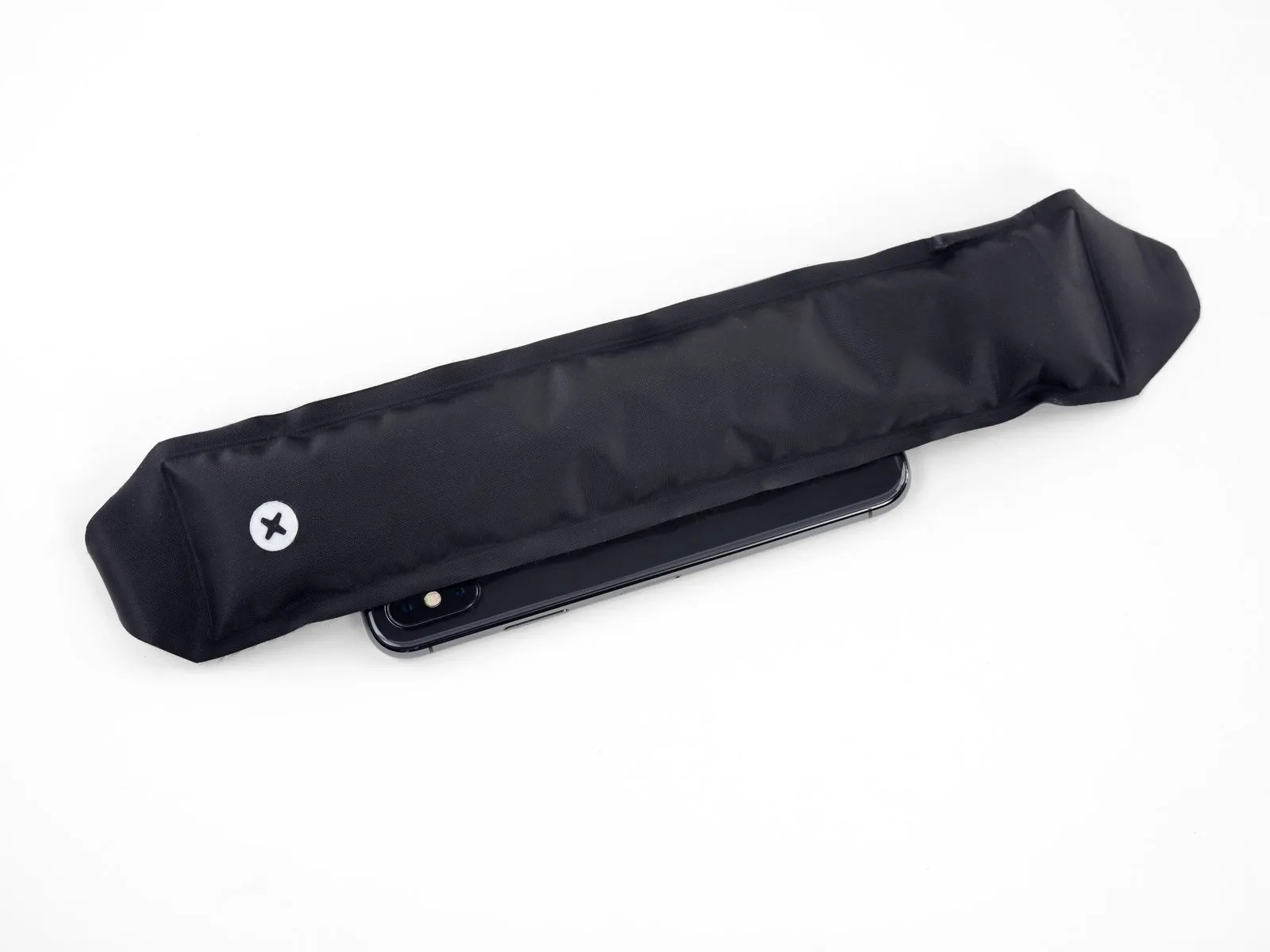
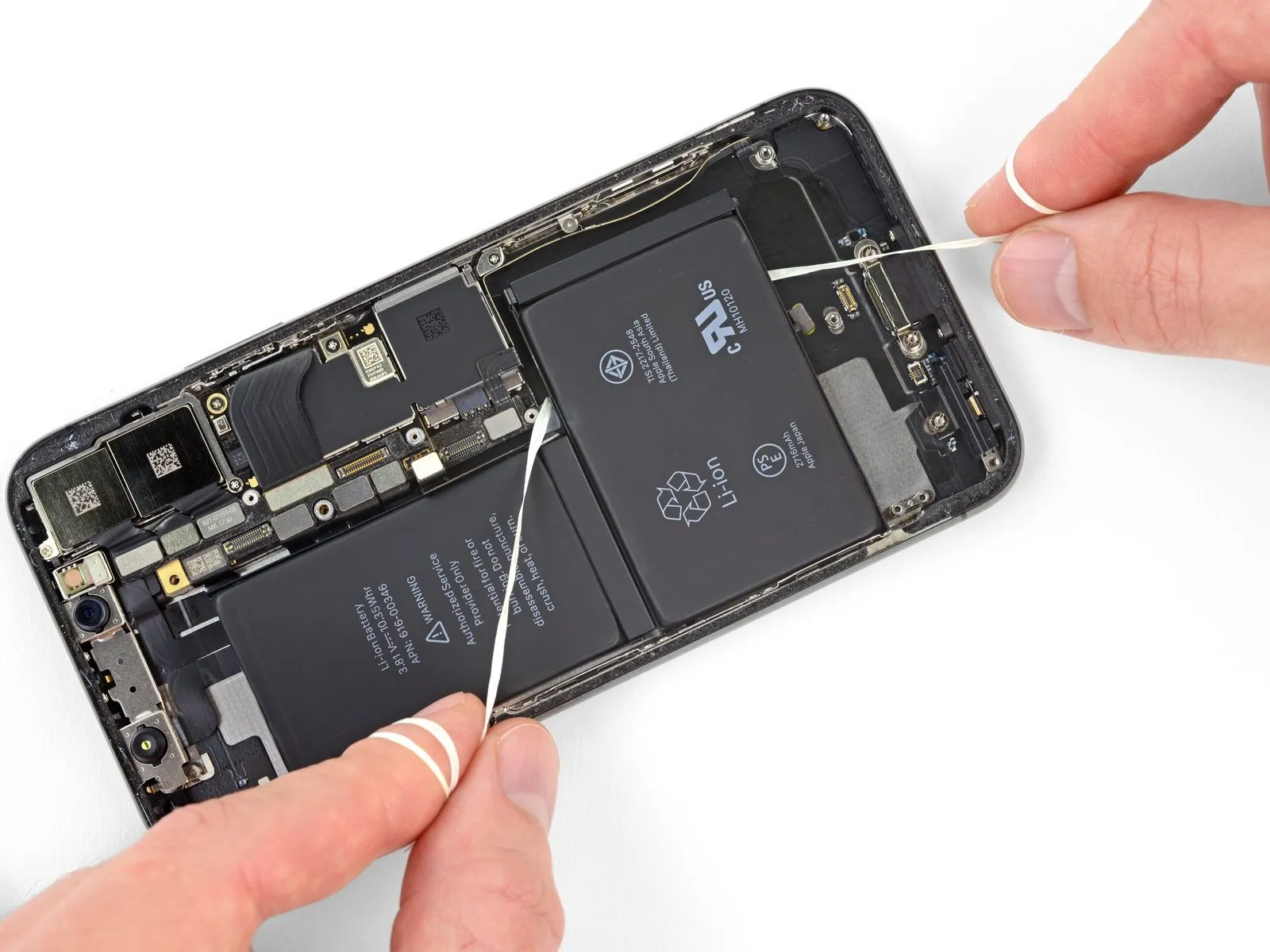
- Should any of the adhesive strips detach and the battery remains adhered to the rear case, utilize an iOpener or apply heat to the rear case's surface immediately behind the battery with a hair dryer.
- Warm the iPhone until the rear case reaches a temperature that is slightly uncomfortable to touch, exercising care to avoid overheating, which could potentially cause battery ignition.
- Return the iPhone to its original orientation and carefully slide a durable string – such as dental floss or a slender guitar string – beneath the battery.
- Protect your fingers by enveloping the string's ends within a cloth or by wearing protective gloves.
- Employ a sawing motion, drawing the string horizontally across the battery's entire length, to sever the adhesive bond; this process may require considerable time due to the adhesive's slow yielding characteristics, but persistence will result in its separation, ensuring the battery remains undamaged.
- Should you opt to employ prying implements to extract the battery from the iPhone, exercise utmost caution to prevent potential harm to the delicate ribbon cables or the wireless charging coil situated directly beneath the battery.
Step 50
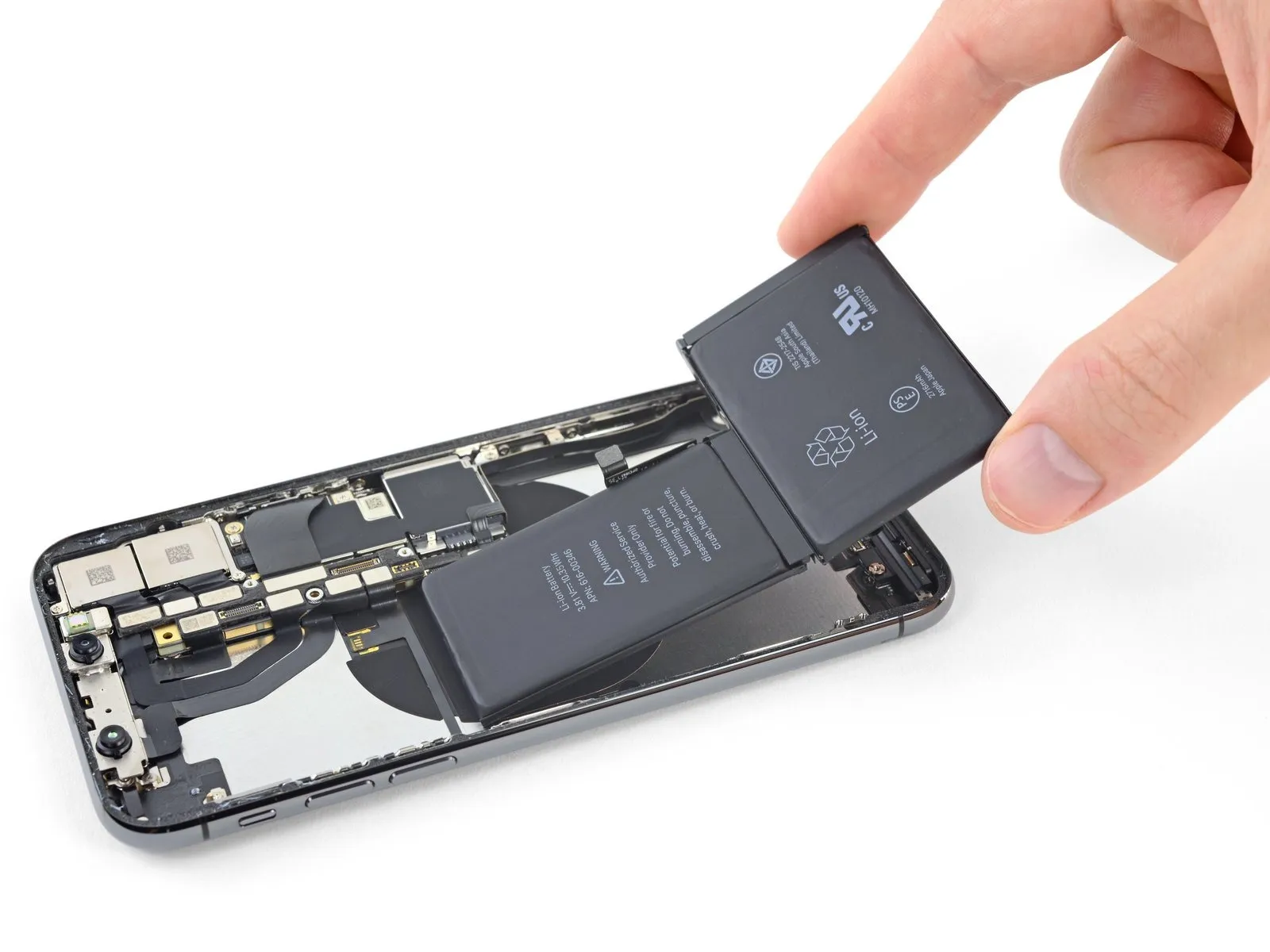
- Securely hold the battery from its lower edge and detach it from the iPhone's internal structure.
- To prevent potential issues, thoroughly eliminate any residual alcohol solution from within the phone, either by careful wiping or allowing it to evaporate completely, prior to installing the new battery.
- Prior to installing a new battery, ensure the Taptic Engine and speaker are reinstalled. Maintaining this order assists in ensuring correct battery alignment during the installation process.
- To guarantee proper positioning within its designated recess, briefly reconnect the battery connector to the logic board socket before securing the replacement battery.
- Attach the replacement battery, subsequently disconnect it, and proceed with the remaining reassembly steps for your device.
- Should your replacement battery lack pre-applied adhesive, consult this guide for detailed instructions on replacing the adhesive strips.
- Following complete reassembly, execute a forced restart; this action can proactively resolve potential problems and streamline any necessary troubleshooting.
Step 51 | Front Camera Assembly

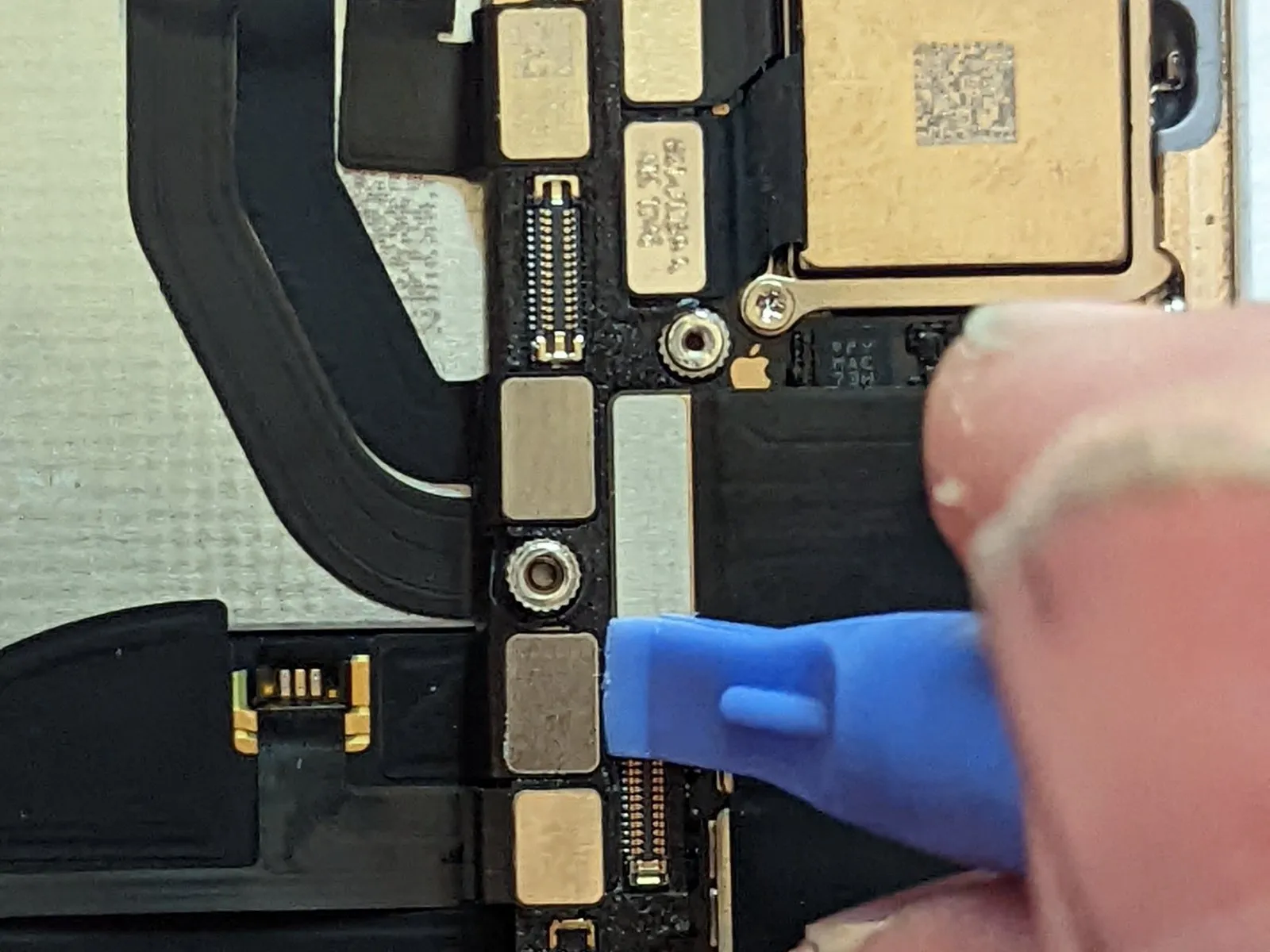

- Employing the planar edge of a spudger tool, carefully detach the three cable connectors linked to the front camera assembly.
This includes the component responsible for projecting a visual reference point.
Also, separate the connector for the primary front-facing camera.
Furthermore, disconnect the cable associated with the infrared camera.
Step 52
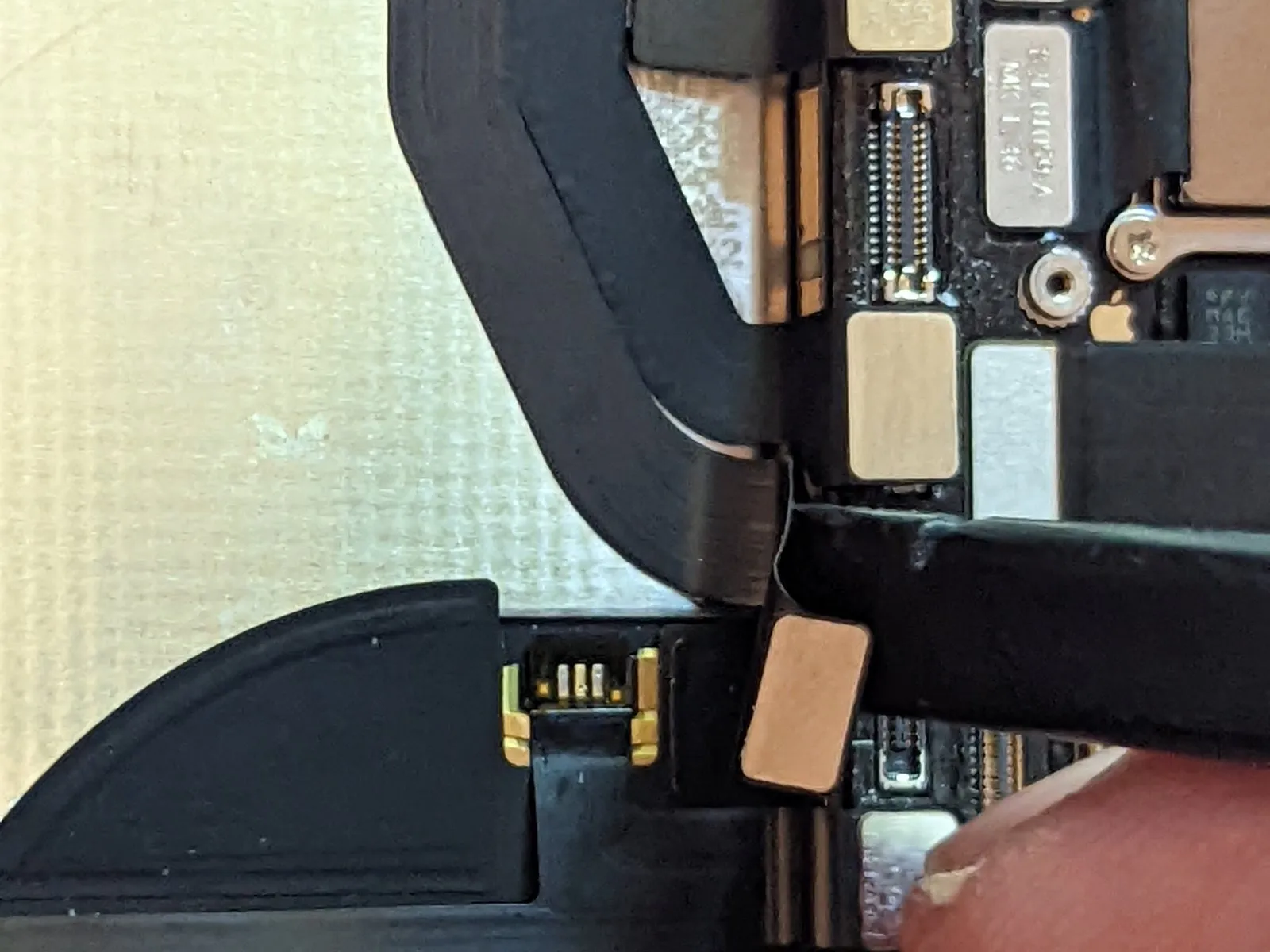
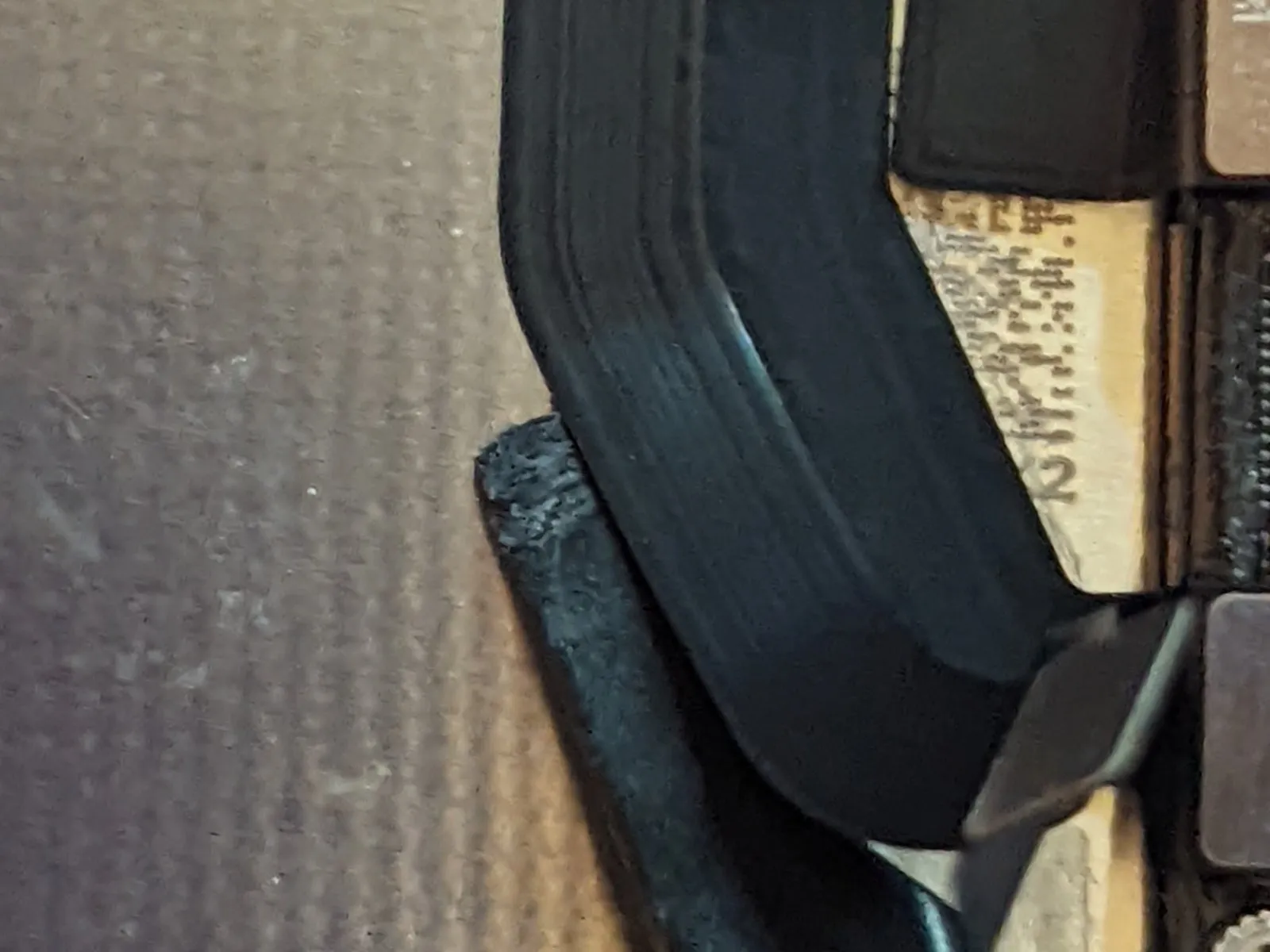
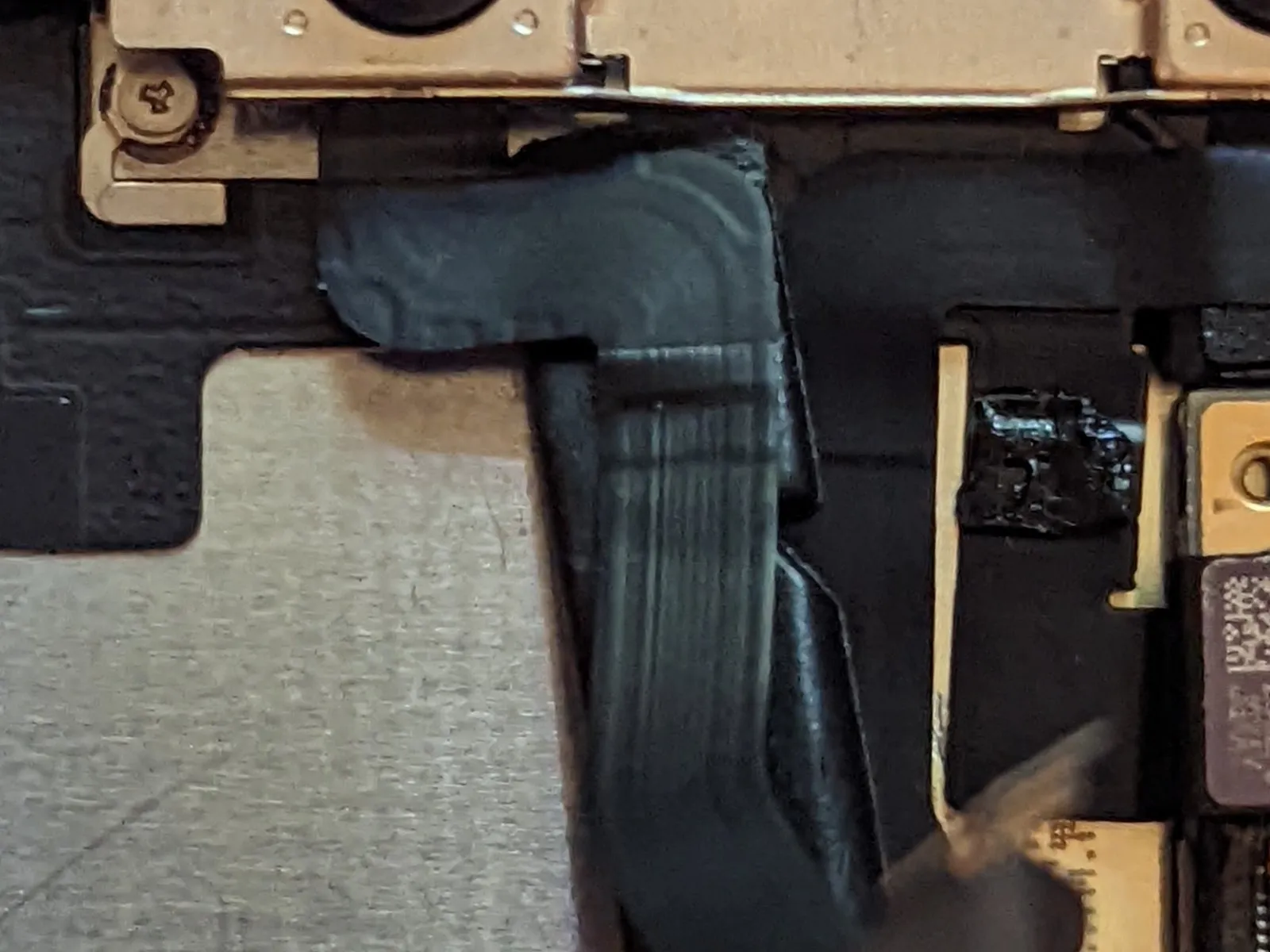
Adhesion secures the camera cables to the midframe with a minimal bond.
Employing the spudger's pointed end, initiate the separation process at the connector, then carefully insert the spudger's tip into the space between the infrared camera cable and the case to detach the cable.
Replicate this procedure for the front camera cable.
Step 53
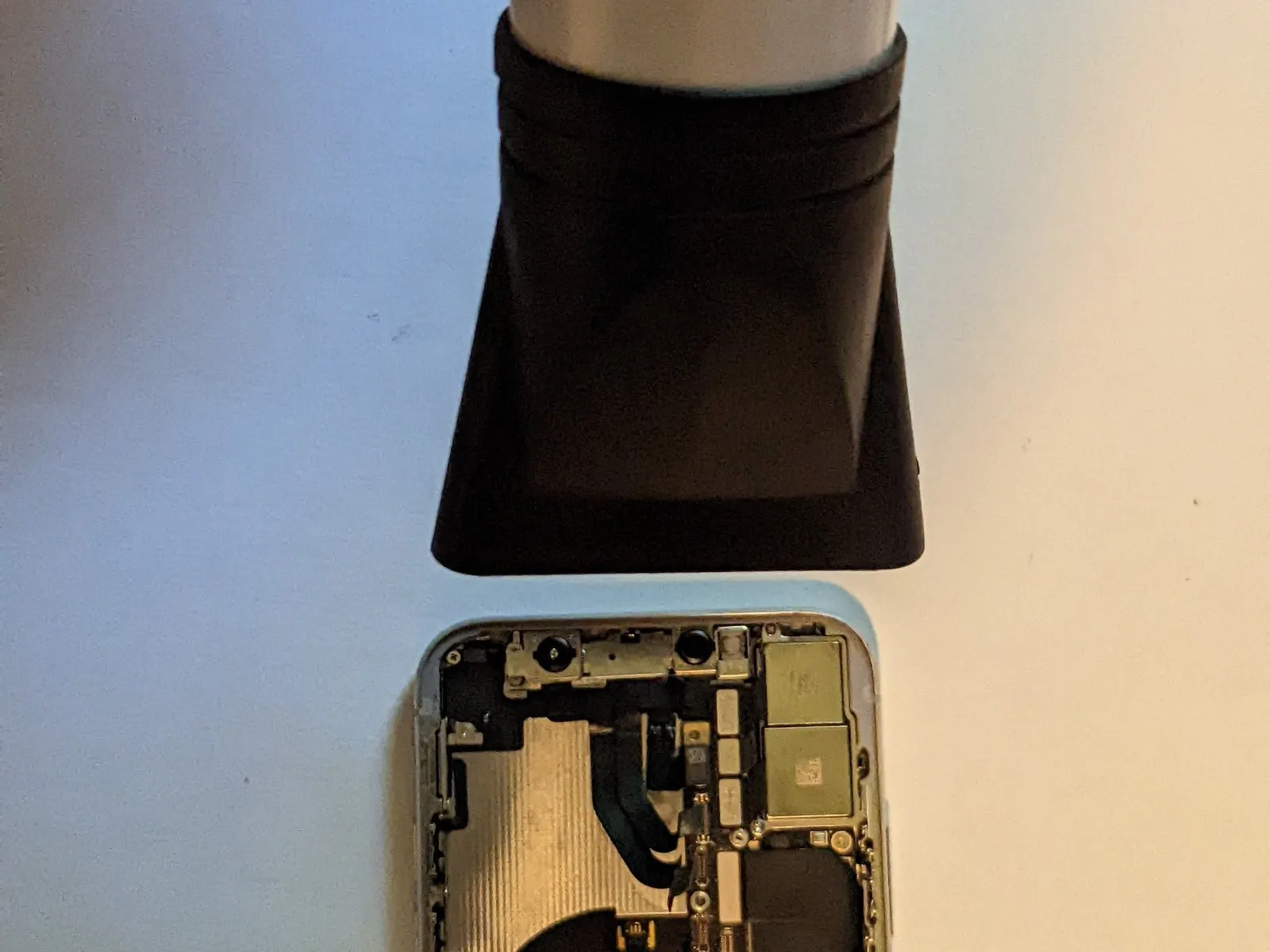
To release the bonding agent securing the front camera module, direct heat onto its surface.
Step 54
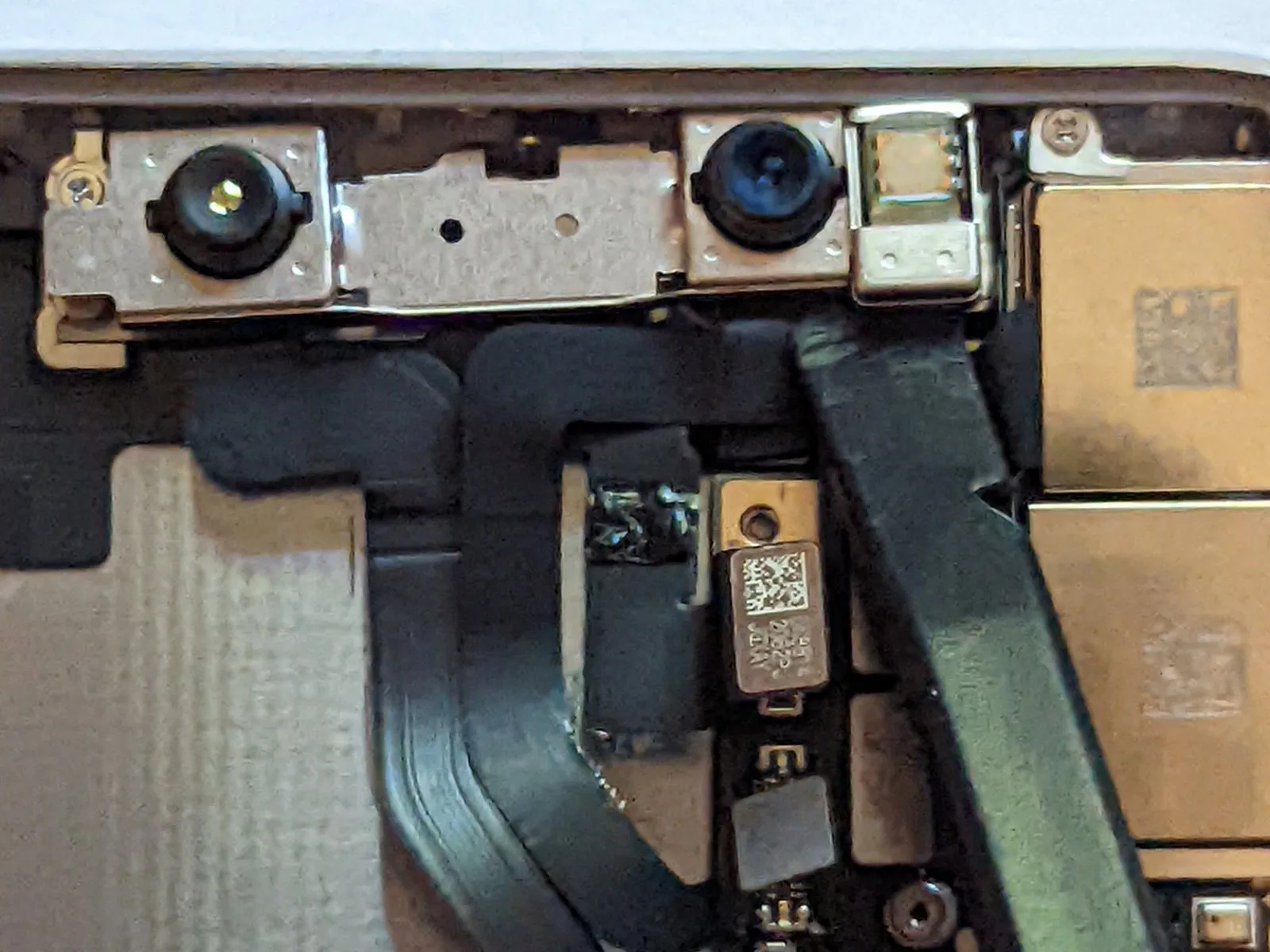
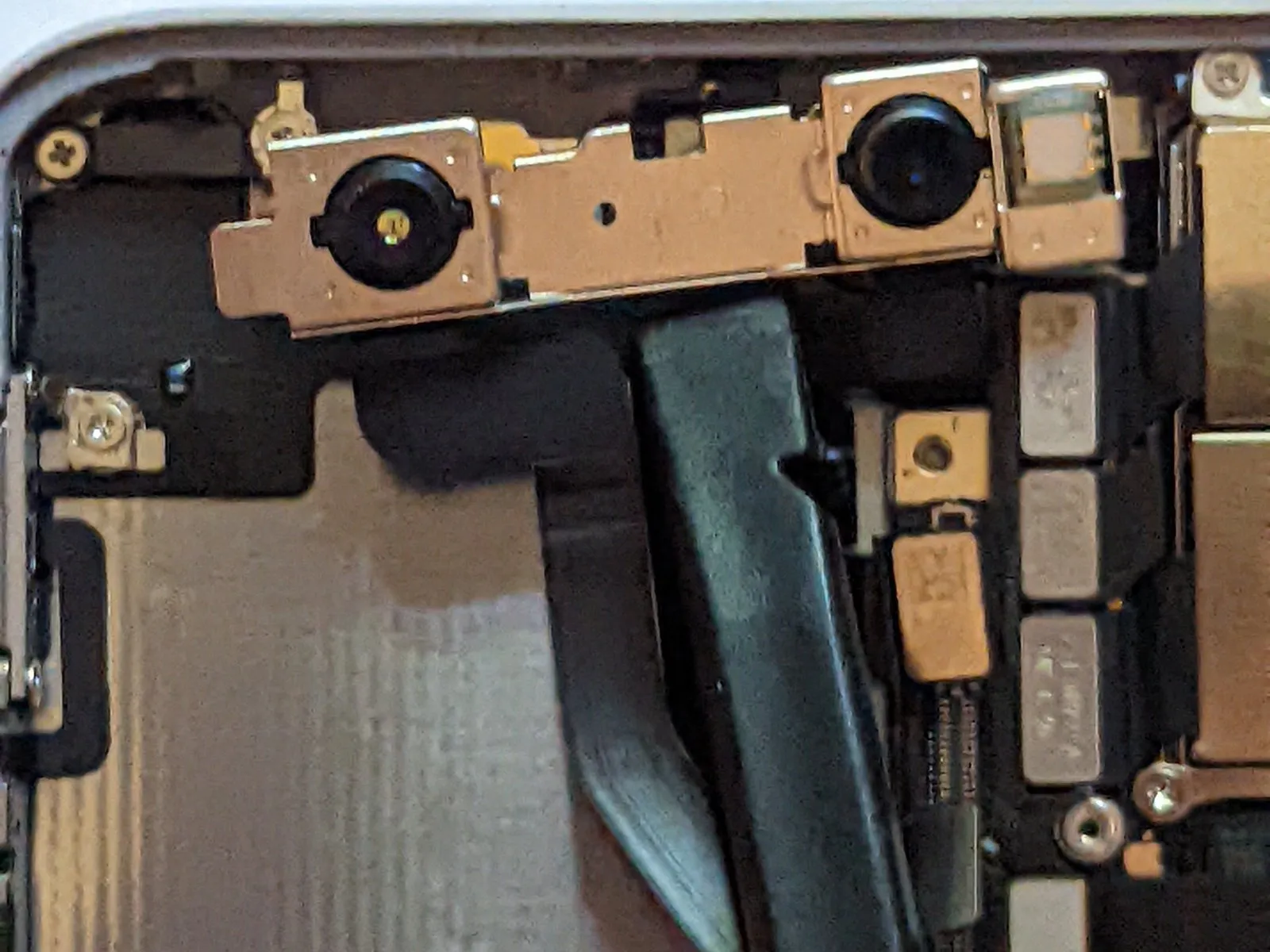
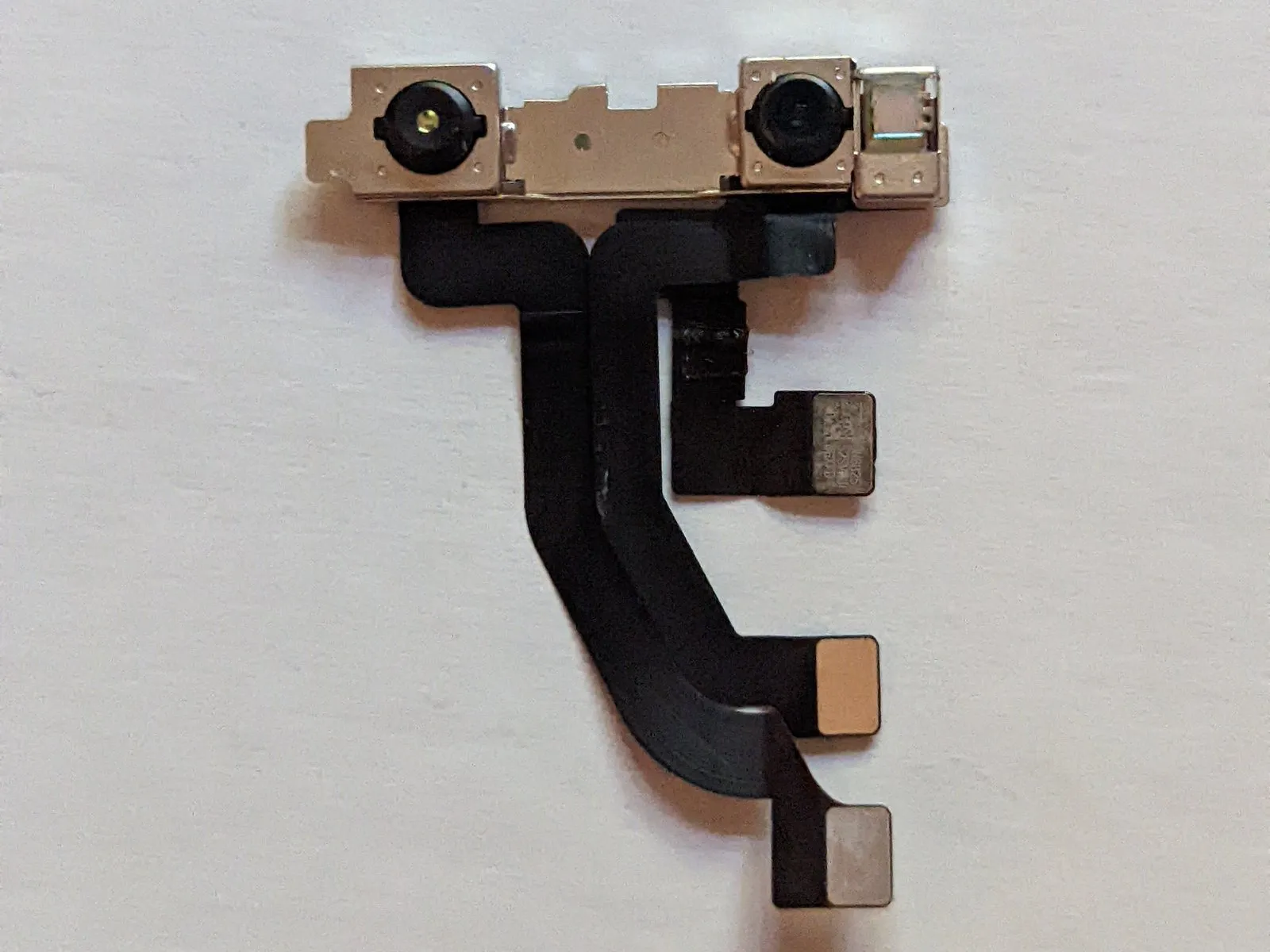
Carefully detach the front-facing camera module.
Step 55 | Logic Board
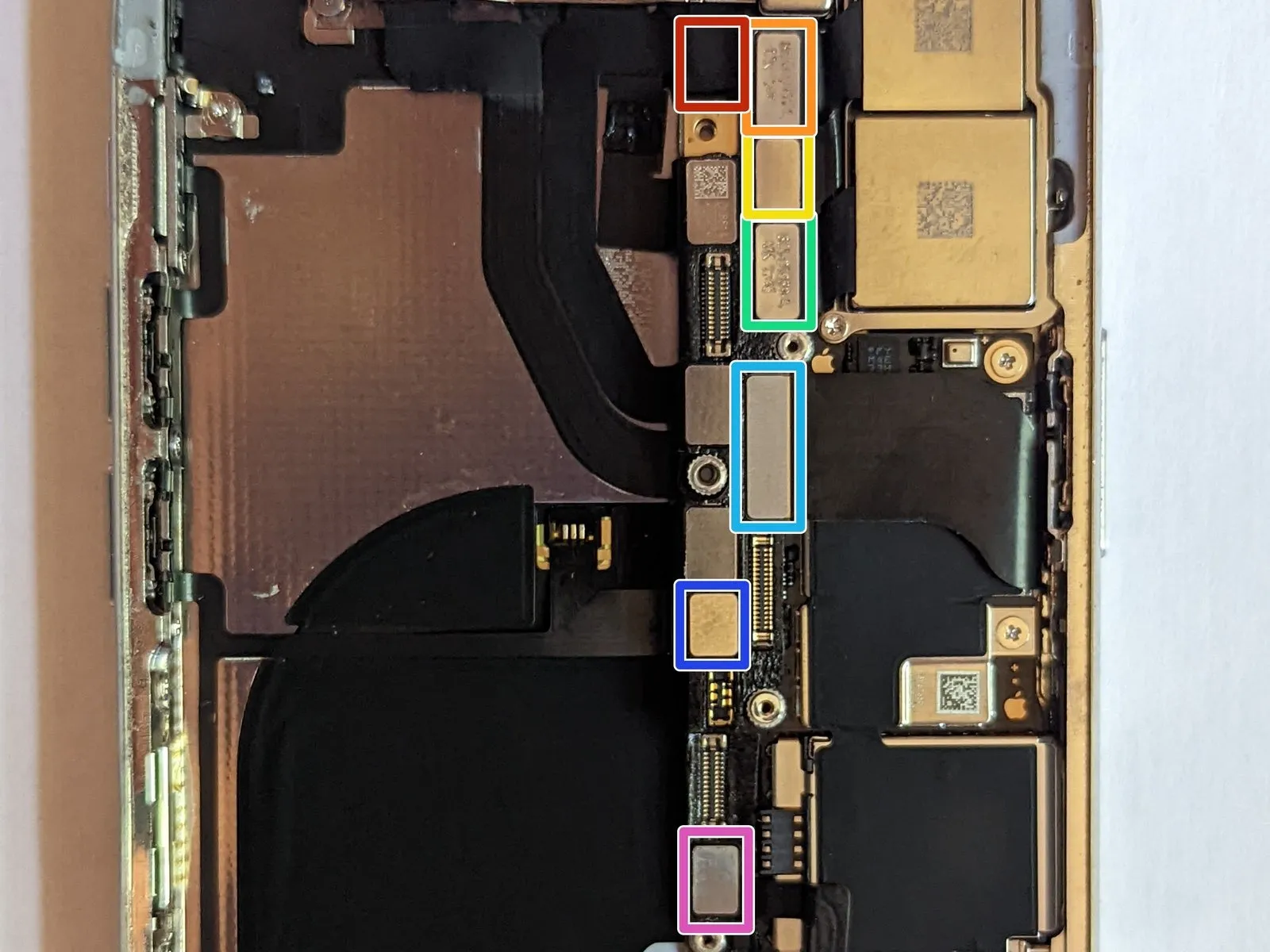
- To proceed with the repair, first, carefully detach the listed cable connectors.
The WiFi Antenna connection must be separated.
The Wide-Angle Camera interface needs to be disconnected.
The Power Button / Flash / Microphone link should be released.
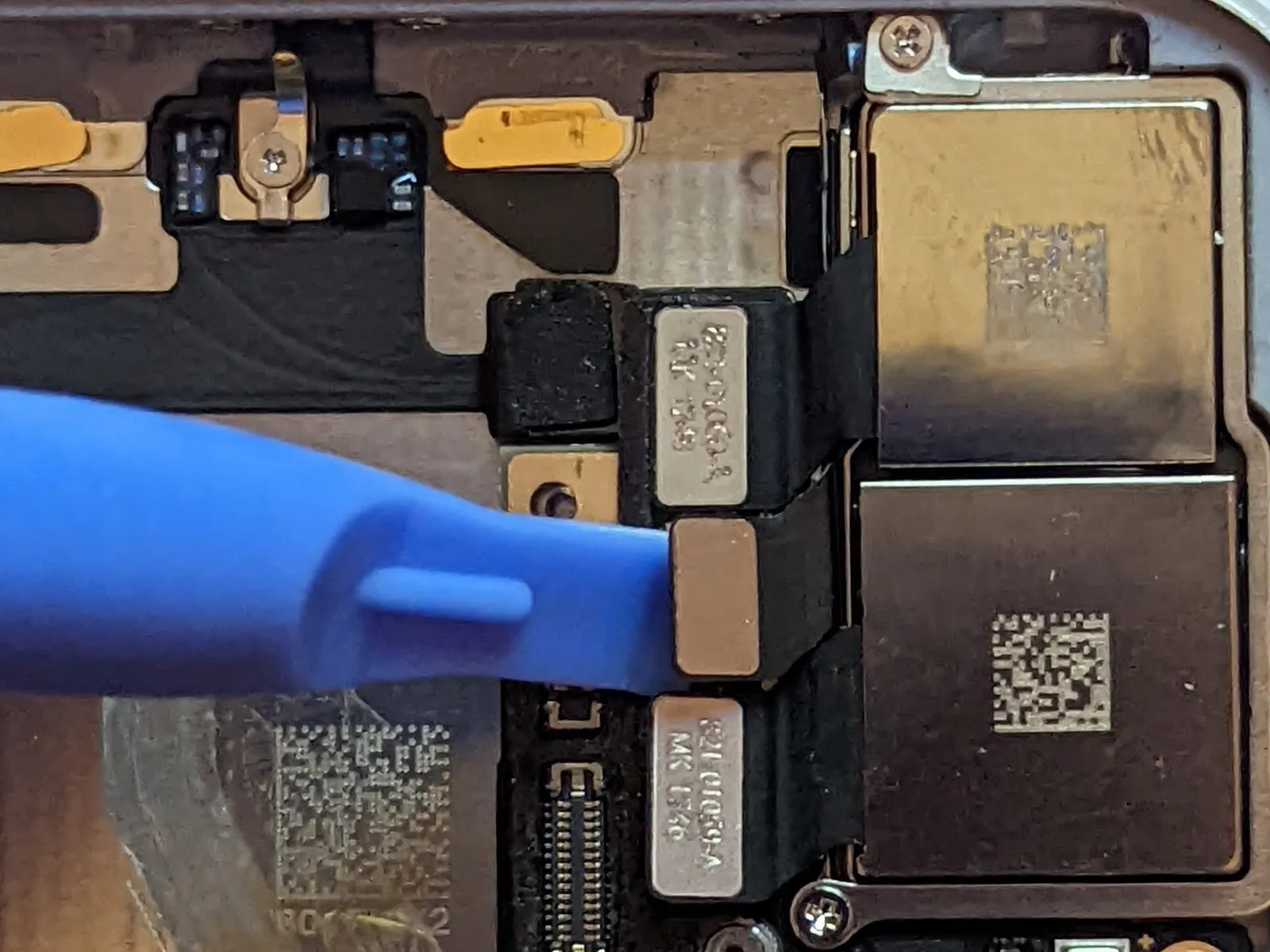
The Telephoto Camera connection requires disconnection.
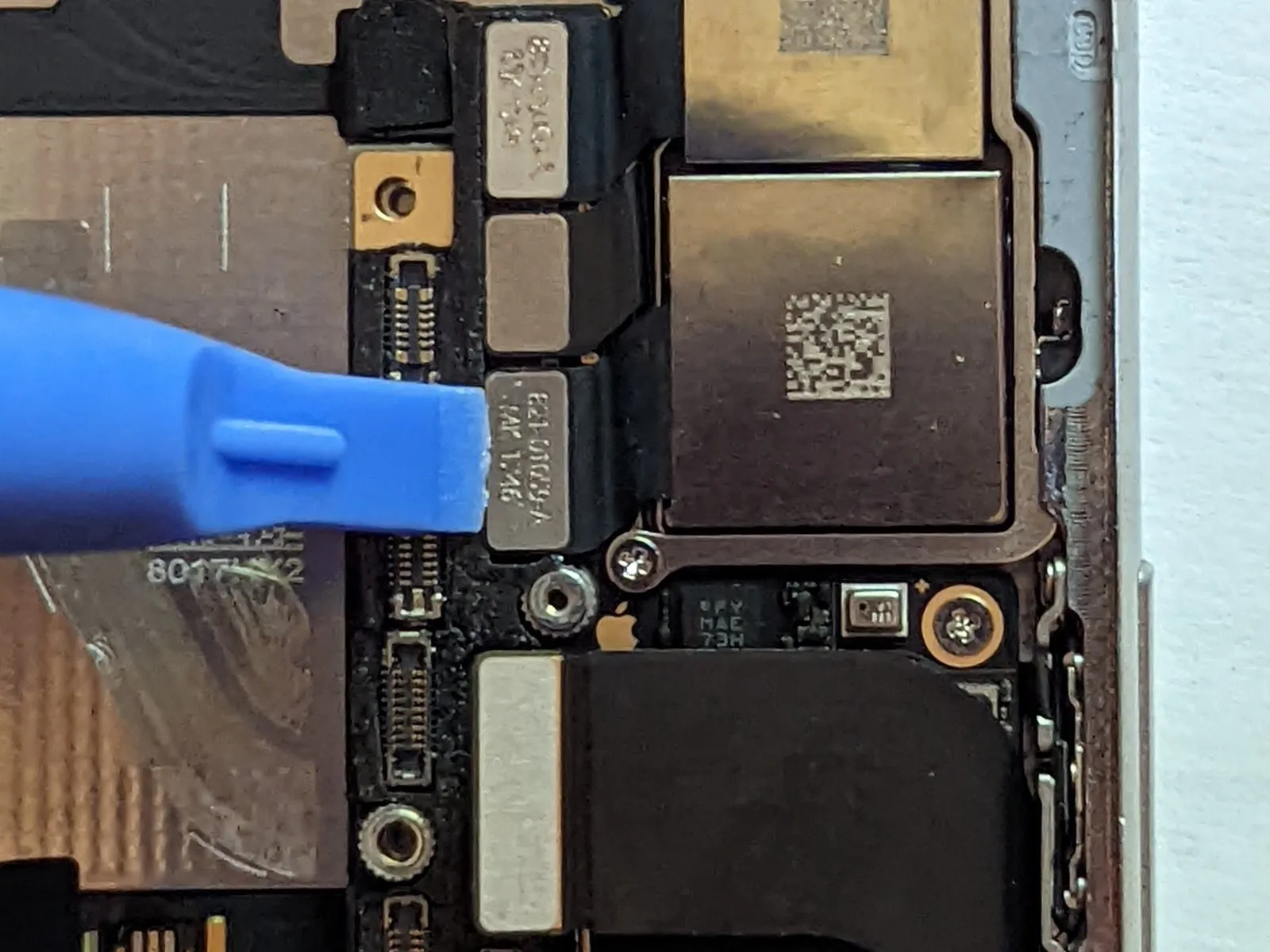
The Dock Flex interface must be detached.
The Button / Wireless Charging connection needs to be separated.
The Cellular Antenna interface requires disconnection.
Step 56 | WiFi Antenna Connector
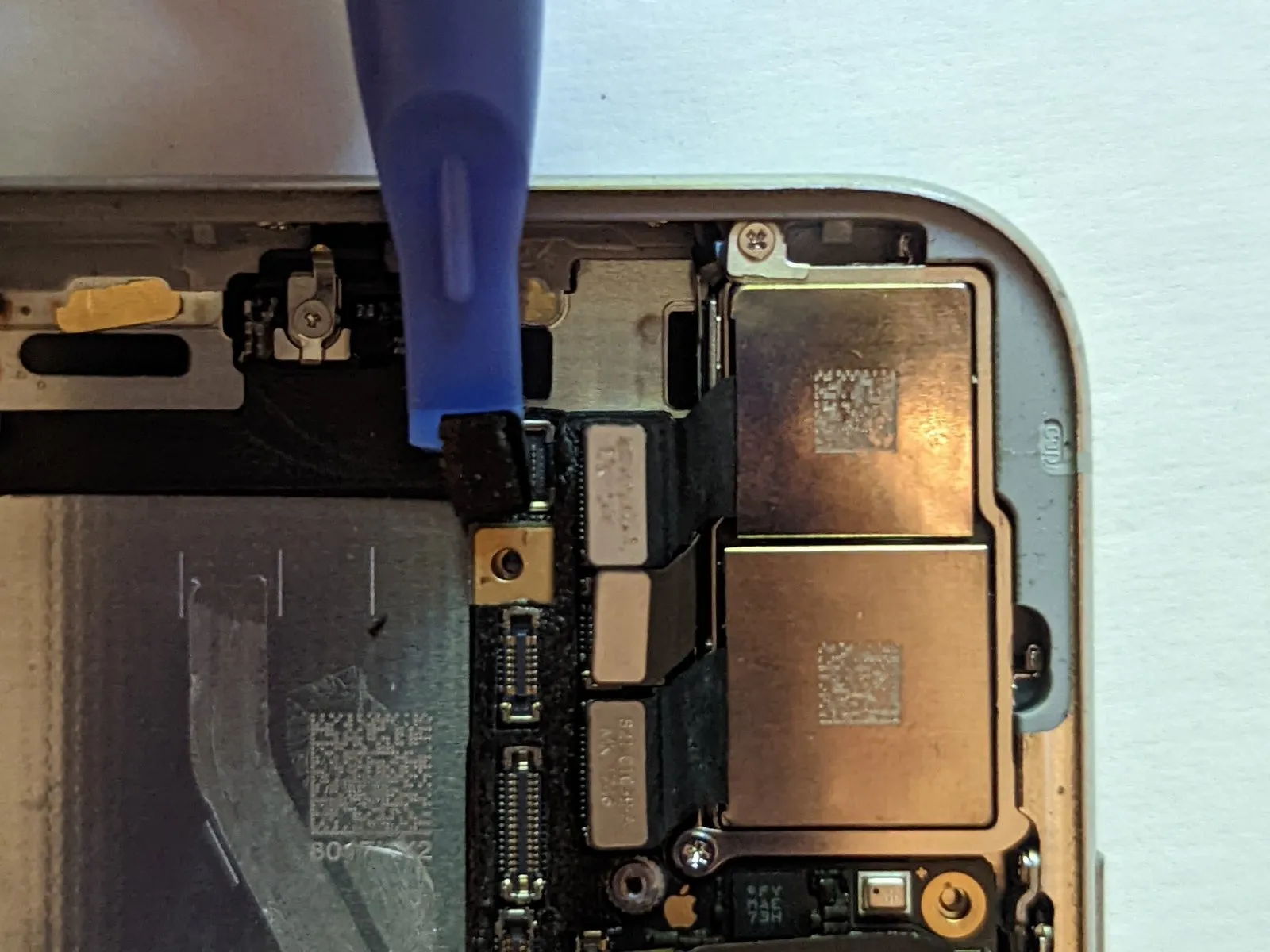

To proceed with the repair, first detach theWiFi Antenna cable from its corresponding connector.
Step 57 | Wide-Angle Camera Connector

Step 58 | Power Button / Flash / Microphone Connector

Step 59 | Telephoto Camera Connector
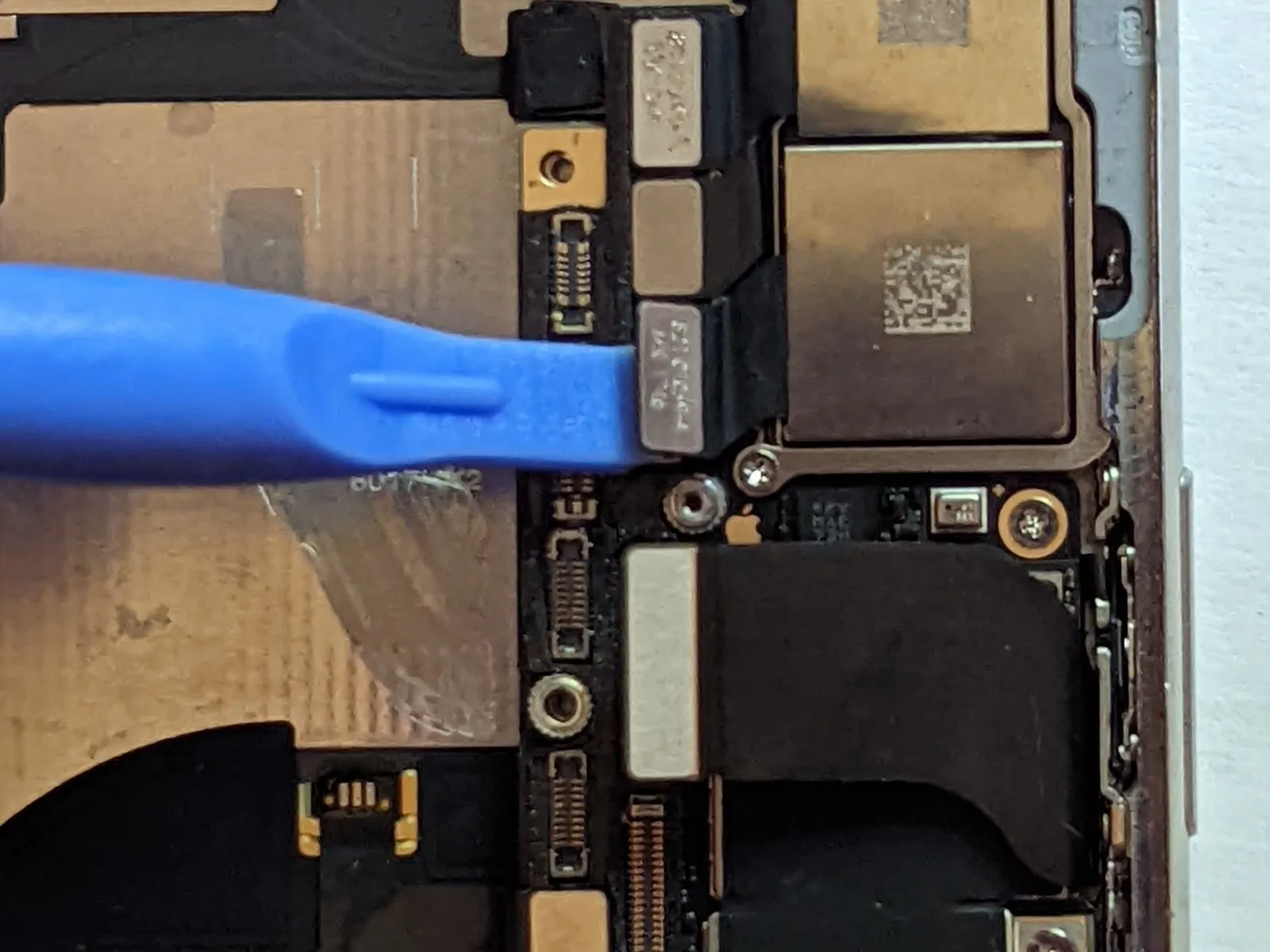
Step 60 | Dock Flex Connector
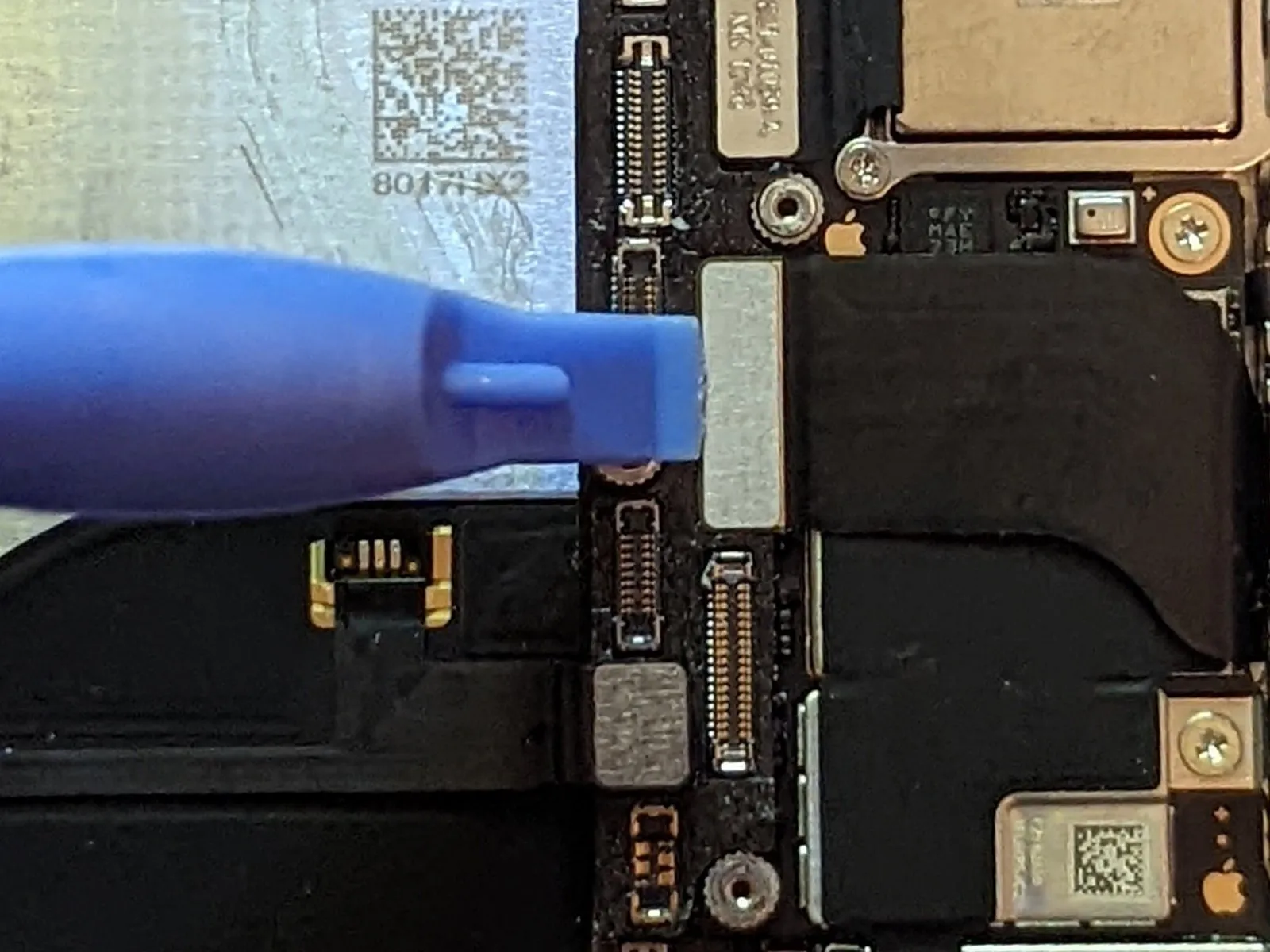
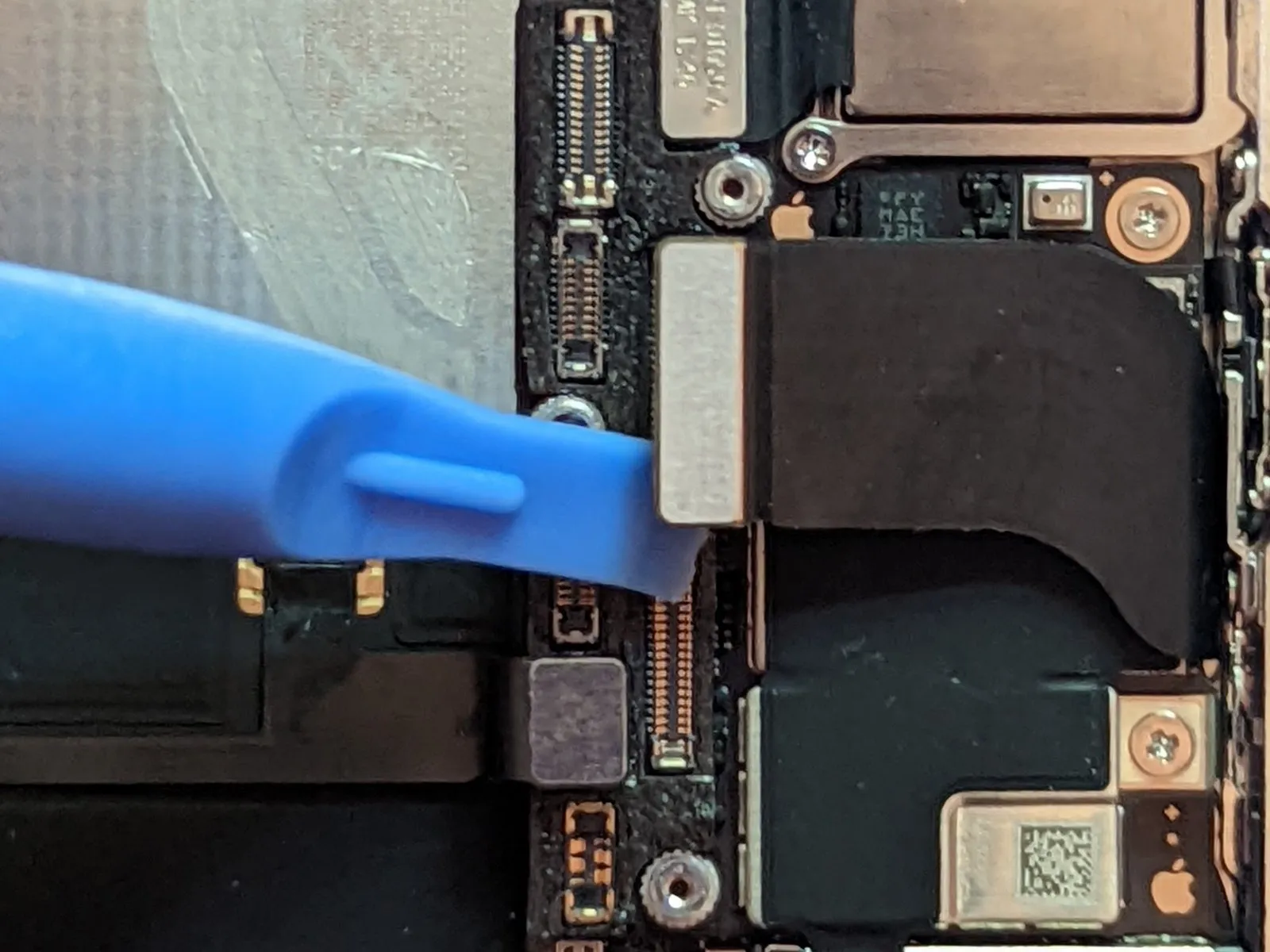
- To proceed with the repair, first detach the Dock Flex cable connector.
- Carefully manipulate the cable's position.Form a 90-degree angle.Then, orient it vertically to create sufficient space for logic board removal.
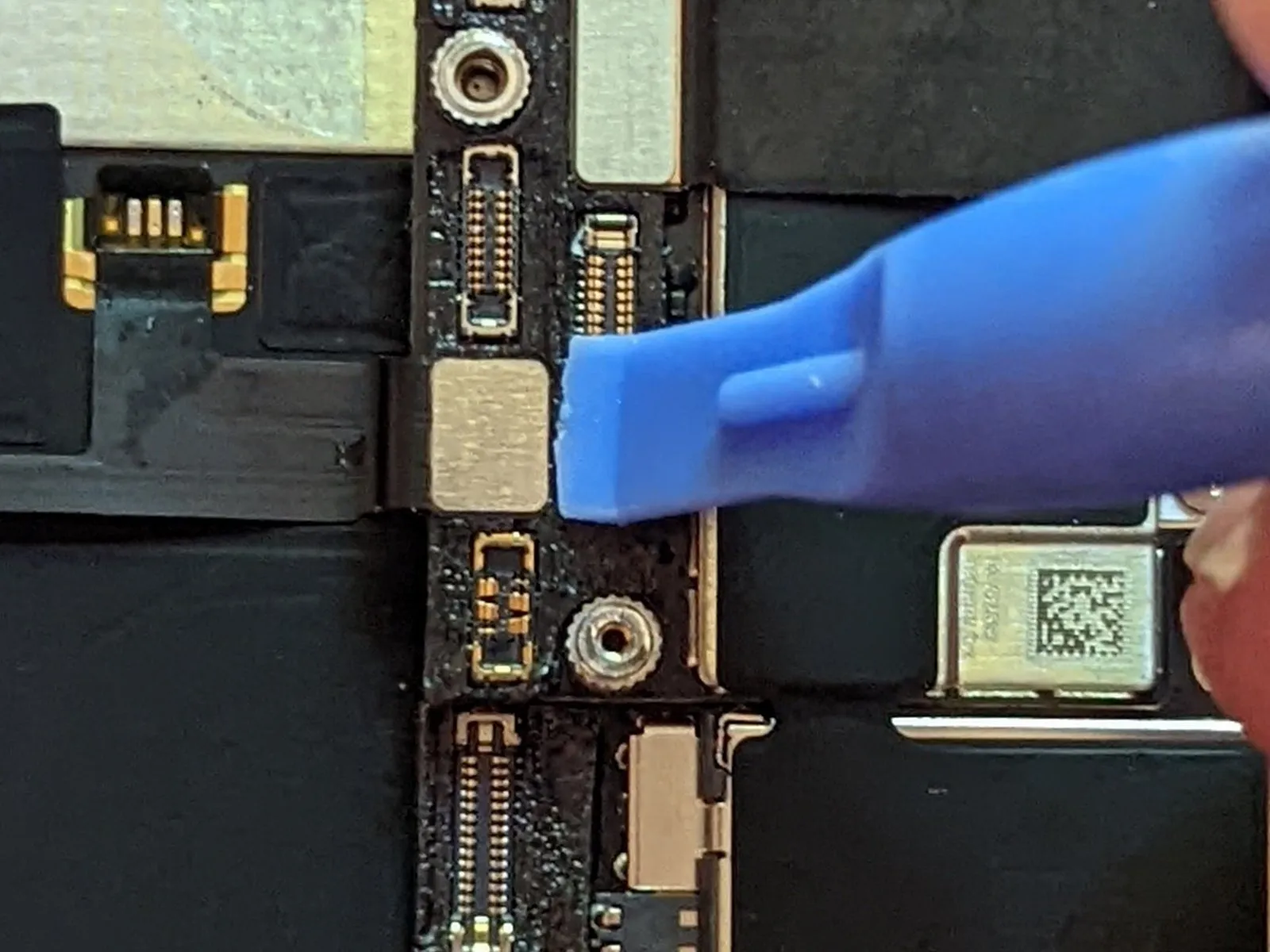
Step 61 | Button / Wireless Charging Connector
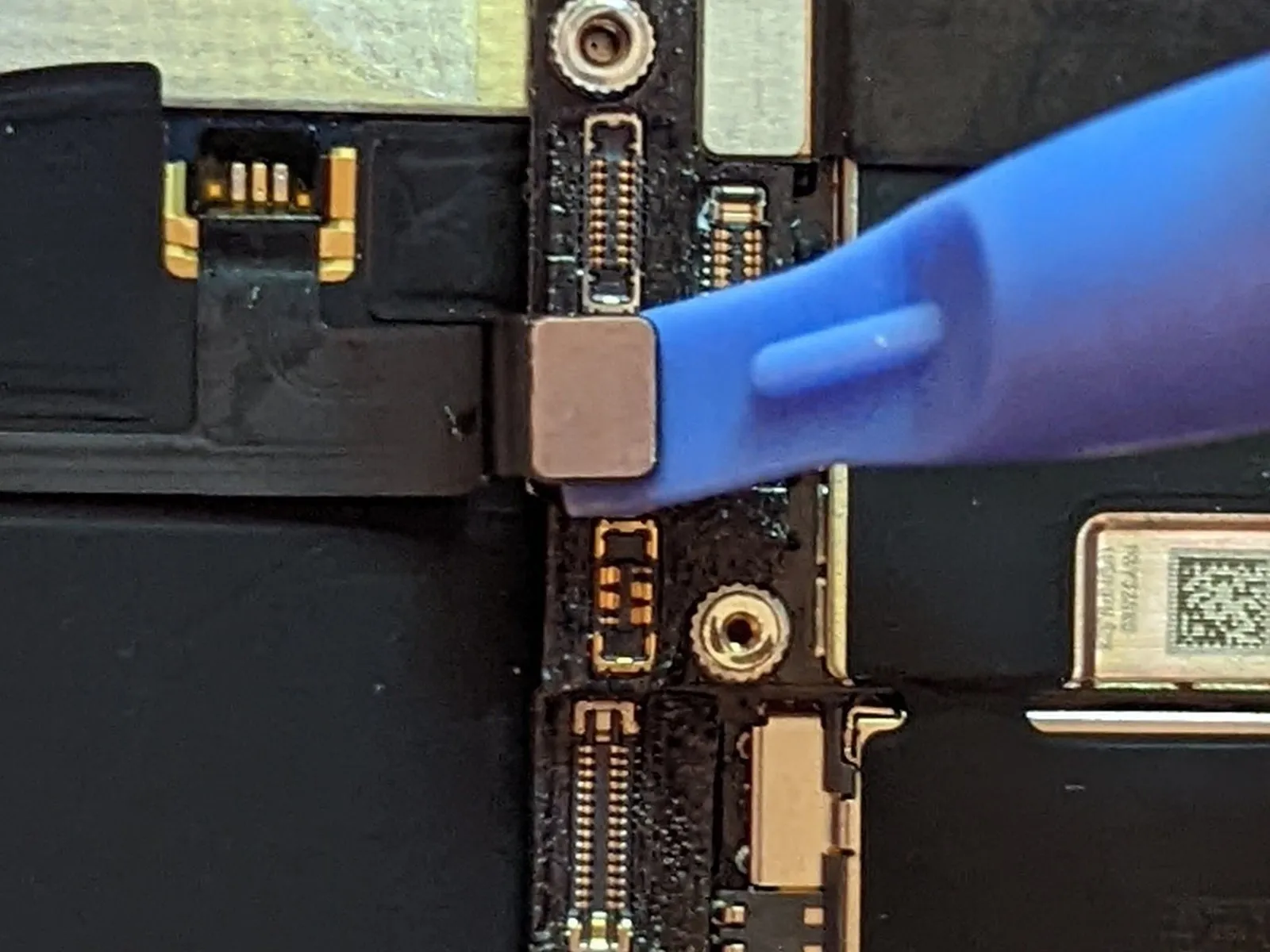
Step 62 | Cellular Antenna Connector
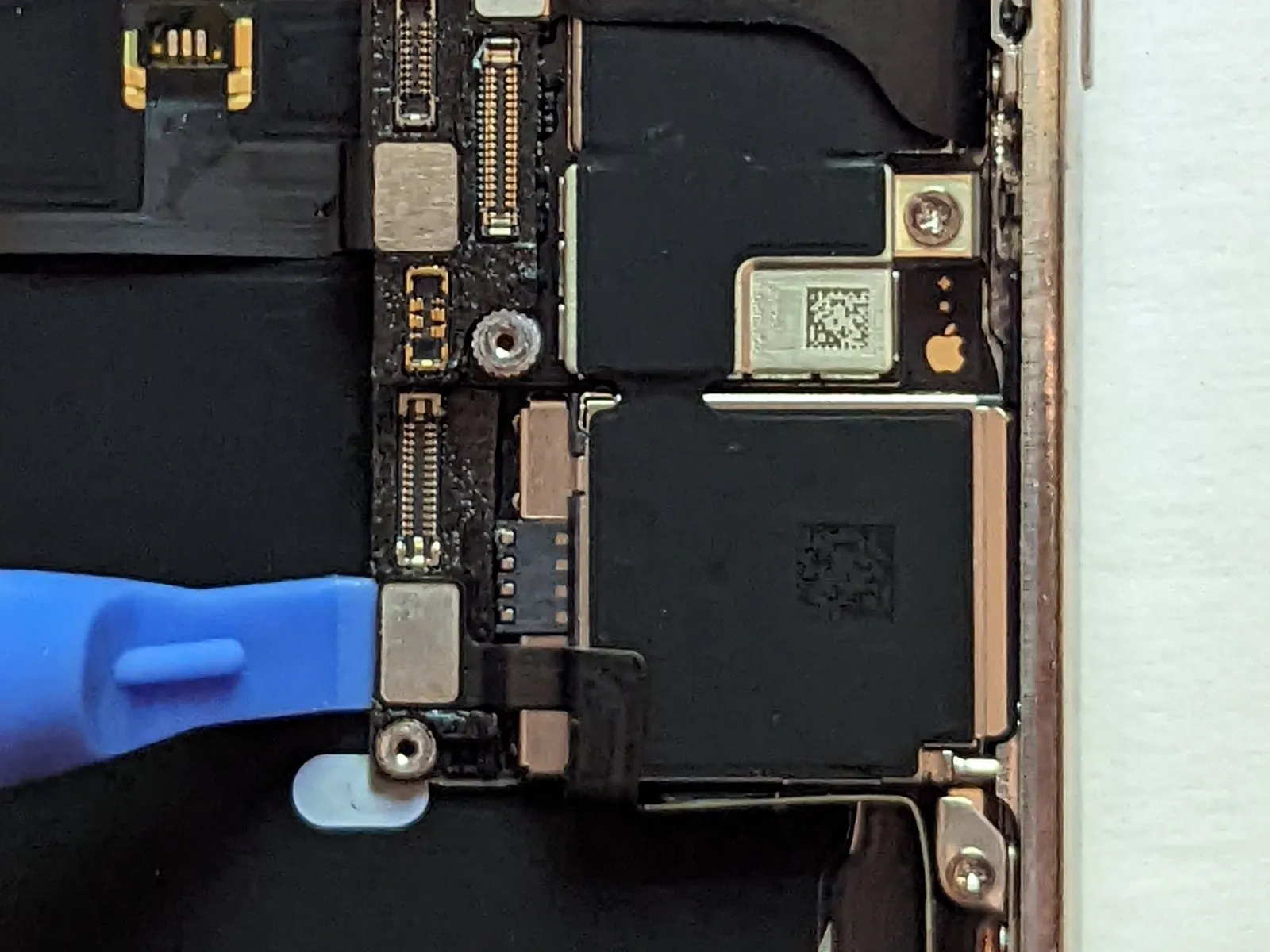

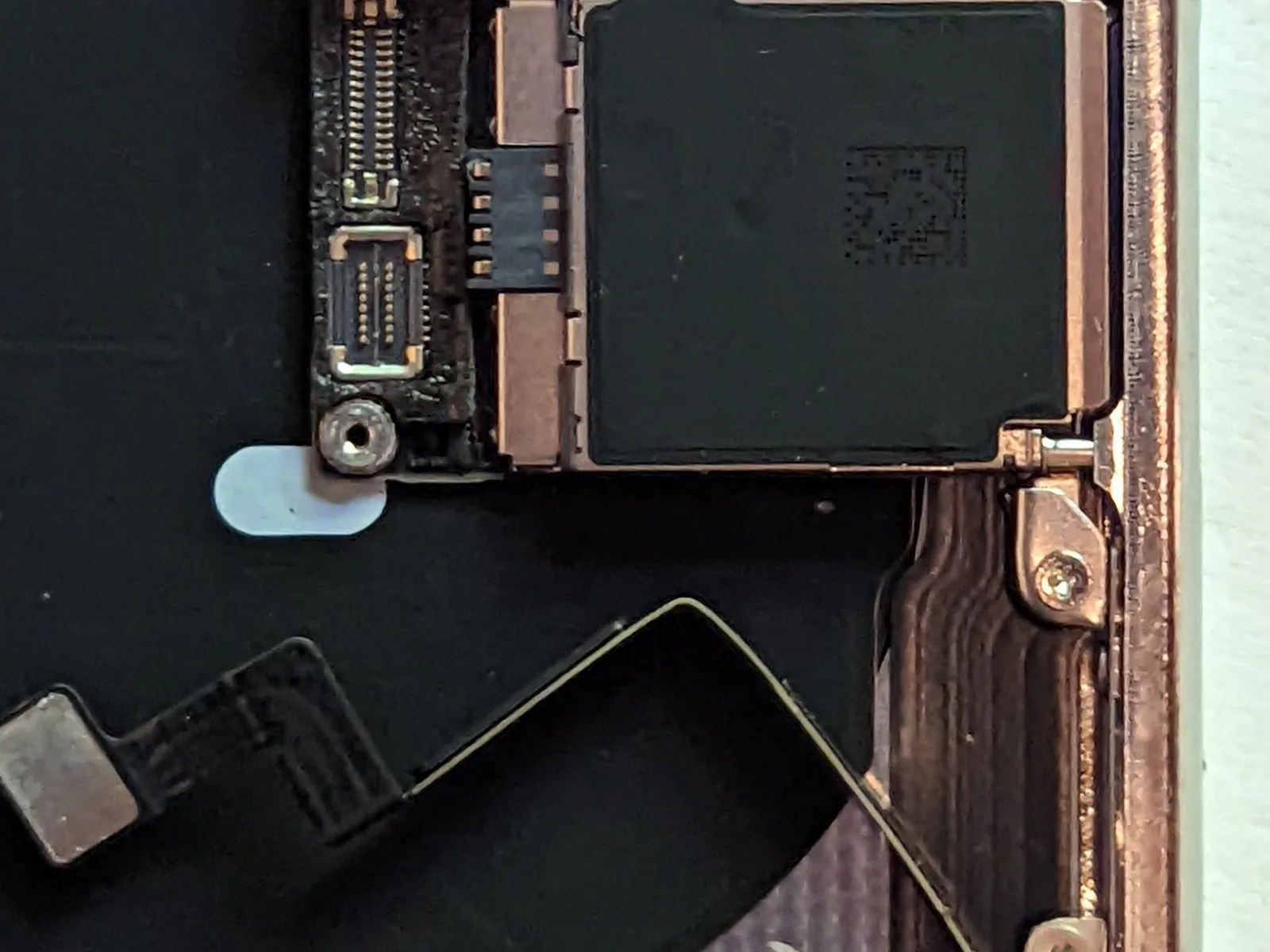
- To proceed with the repair, first detach the connector of the cellular antenna cable.
- Carefully deflect the cable to ensure it does not obstruct subsequent work.
Step 63
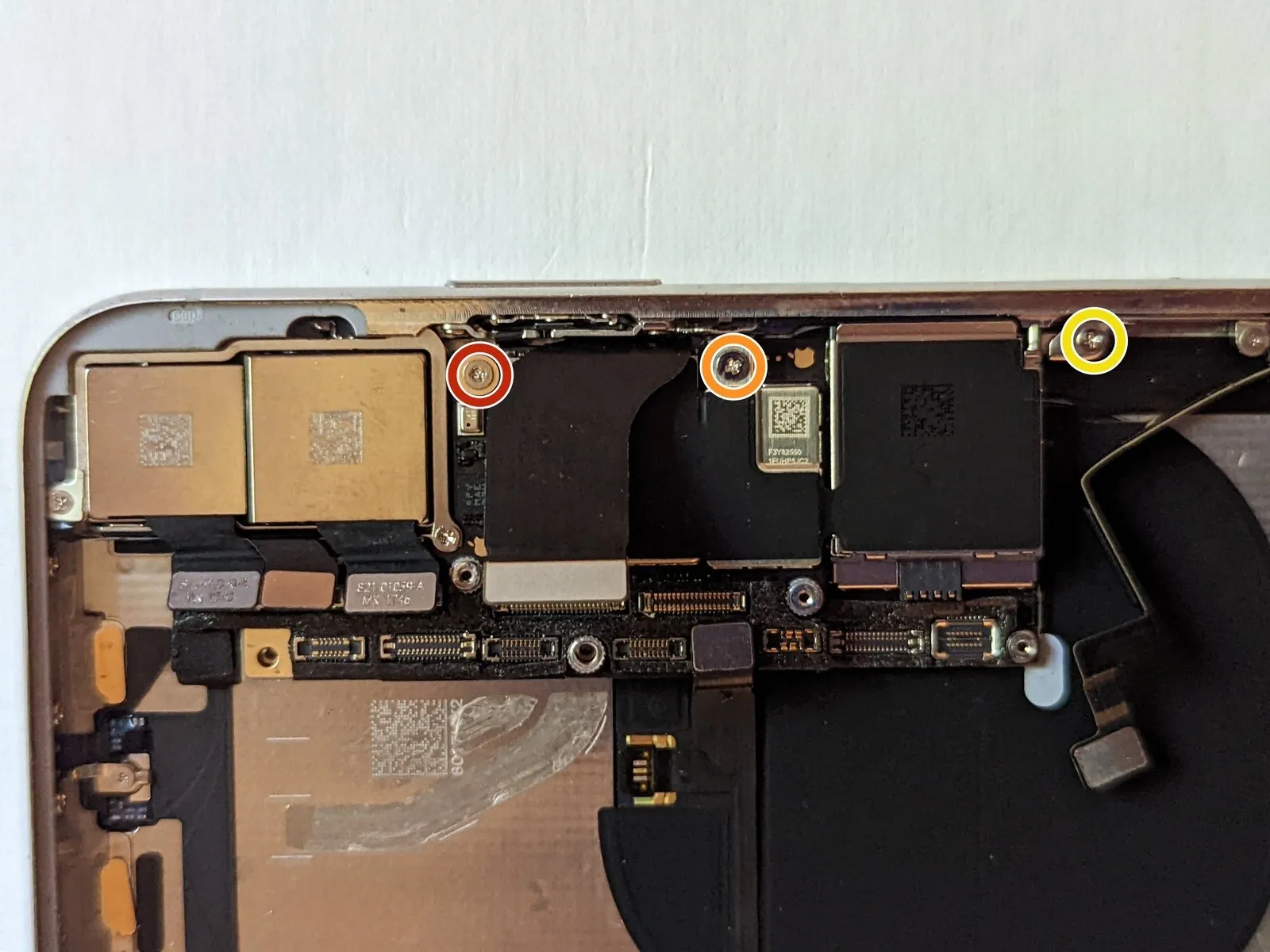
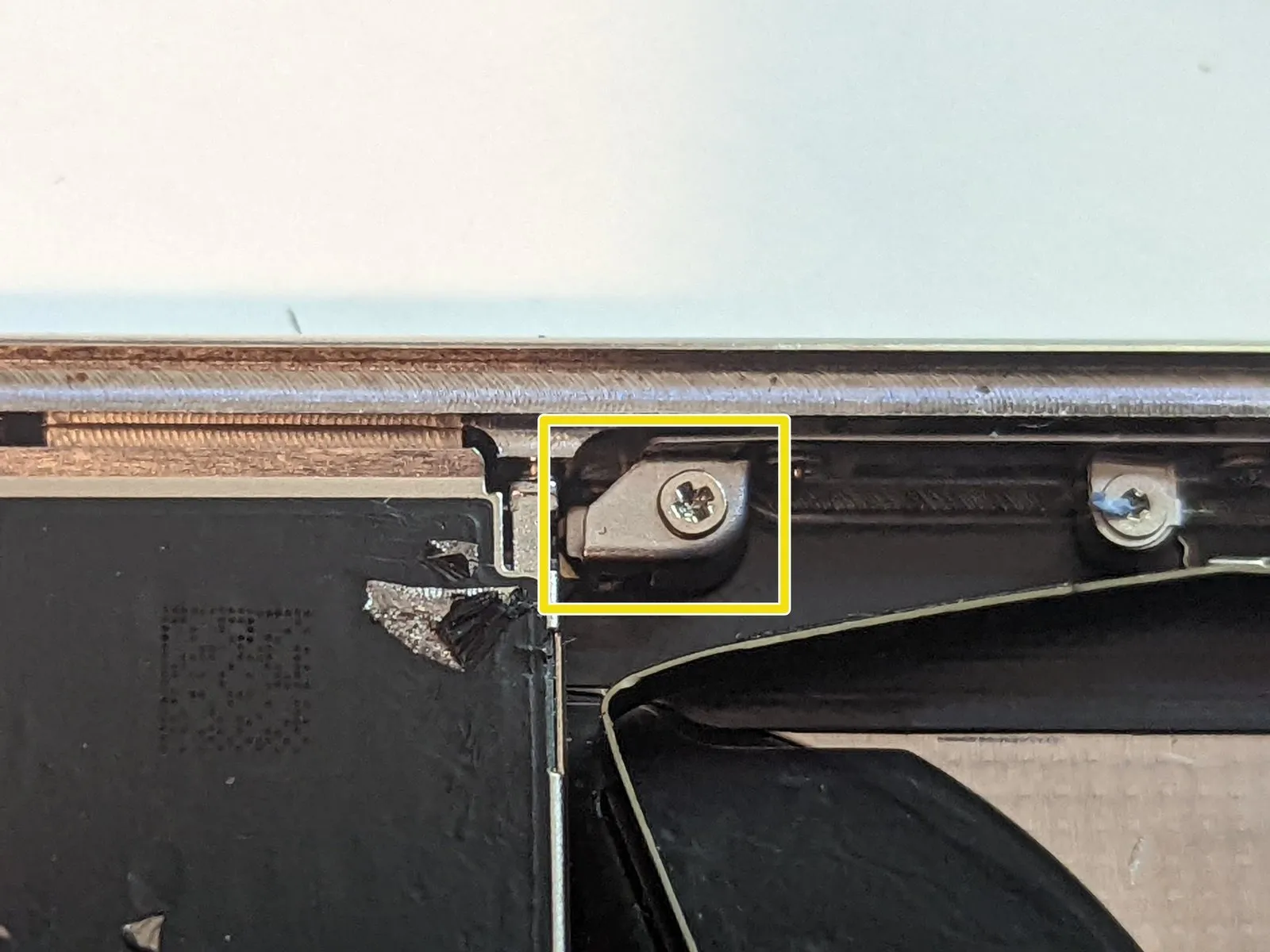
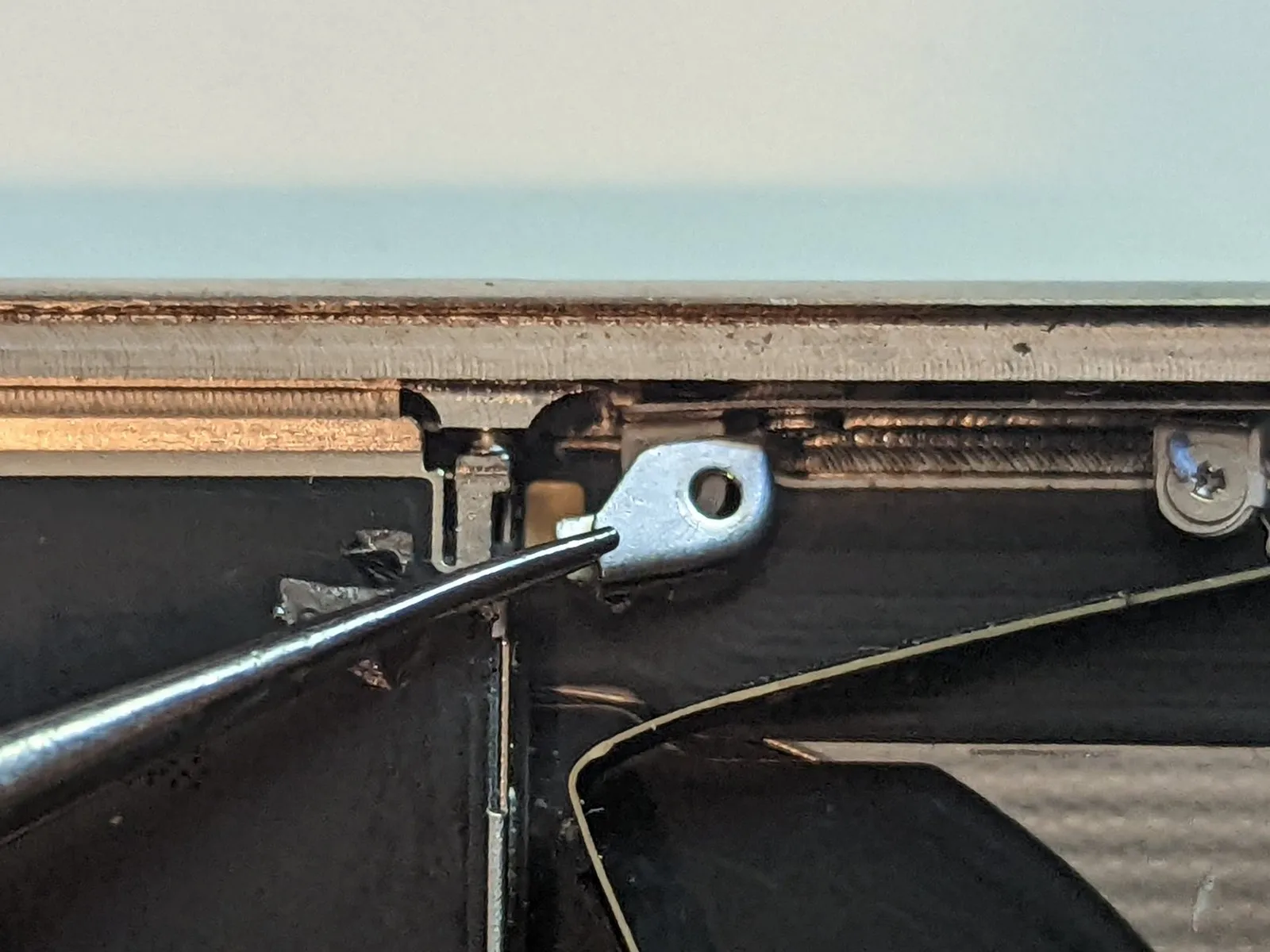
Ensure the SIM card tray is extracted before attempting to detach the logic board, as its presence will obstruct removal. Should you have been unable to do so previously, proceed with its extraction at this time.
Detach the two Phillips screws that secure the component.
A single Phillips screw with a 2.7 mm head is required.
A single Phillips screw with a 2.1 mm head is also necessary.
Extract the 2.0 mm Phillips grounding screw.
Carefully remove the grounding tab.
It is essential to reinstall the metal grounding tab, maintaining its original position and alignment.
Step 64 | Retract the SIM Eject Pin
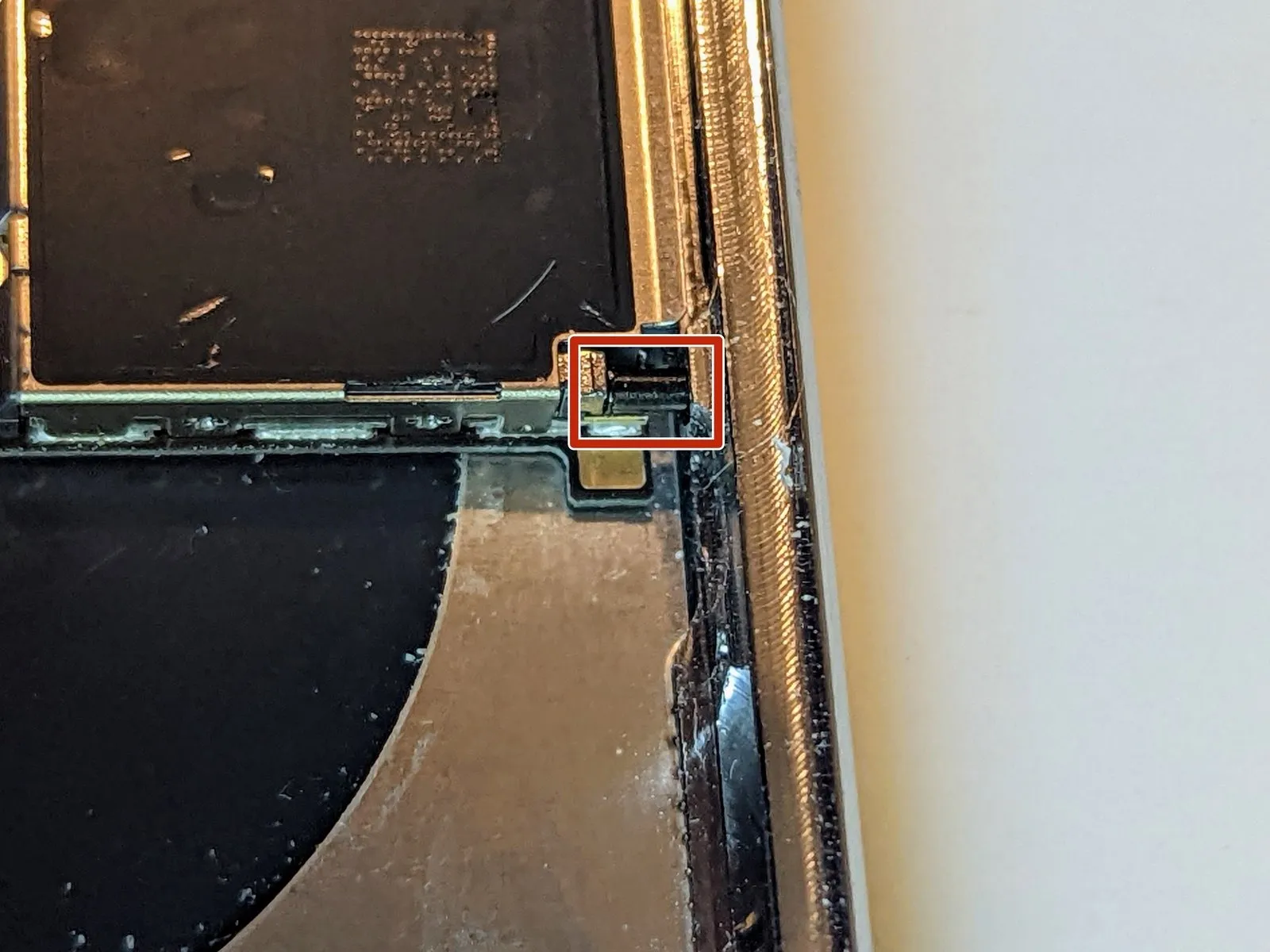
Upon SIM card removal, a retaining pin extends from the device's chassis, engaging the release mechanism within the SIM card holder. To facilitate logic board disassembly, this pin must be manually retracted back into its housing, preventing obstruction.
Step 65
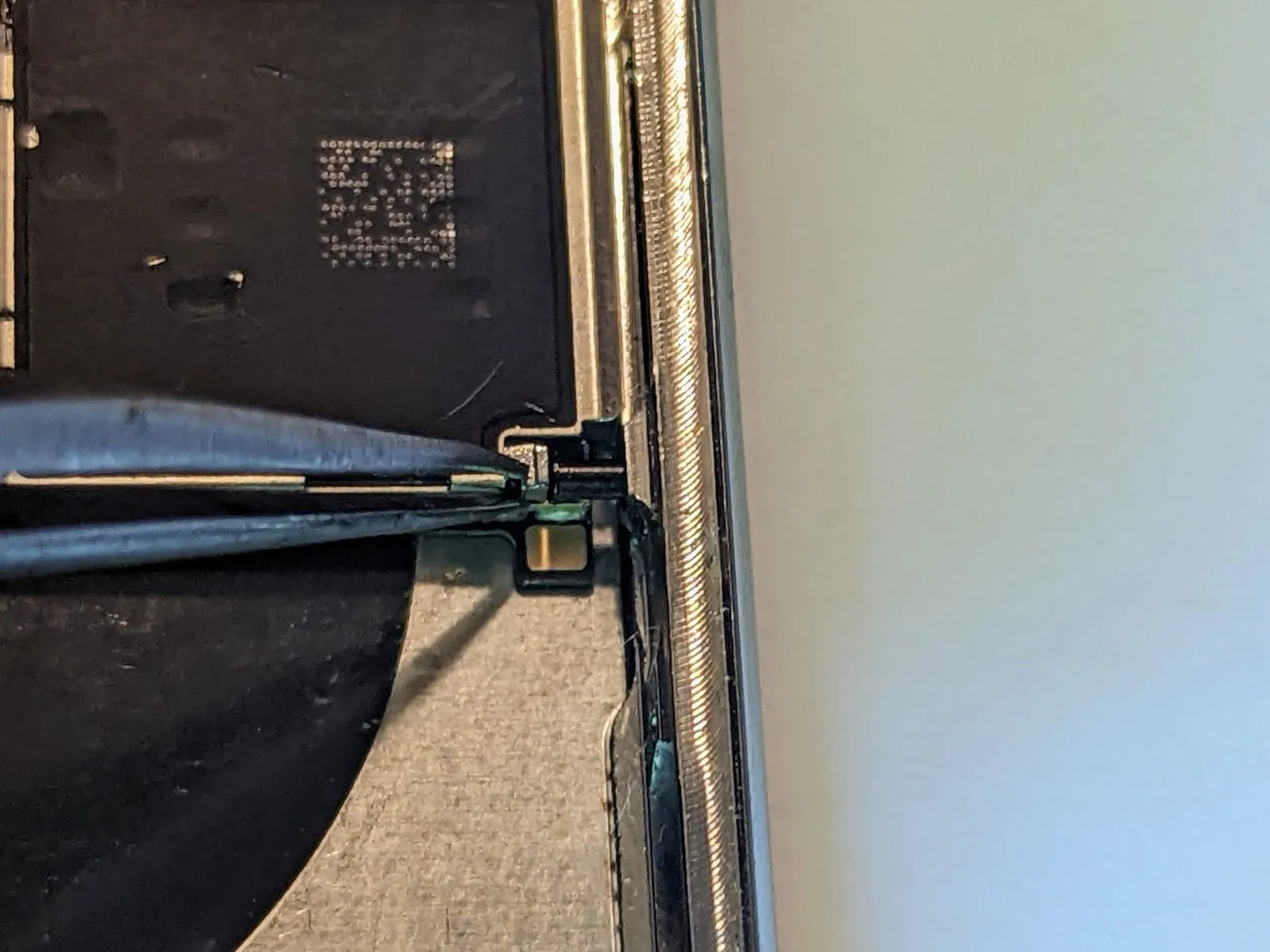


- Employing a set of precision-tipped tweezers is necessary to maneuver the SIM card release lever in a direction parallel to the device's exterior casing.Utilize fine tip tweezers to carefully position the SIM card eject lever, moving it laterally along the case's surface.The eject lever's appearance after activation will resemble the image provided; this indicates the retaining pin is no longer obstructing logic board removal.
- Upon completion, the eject lever should present with a specific configuration, ensuring the securing pin is disengaged and allowing for subsequent logic board detachment.
Step 66

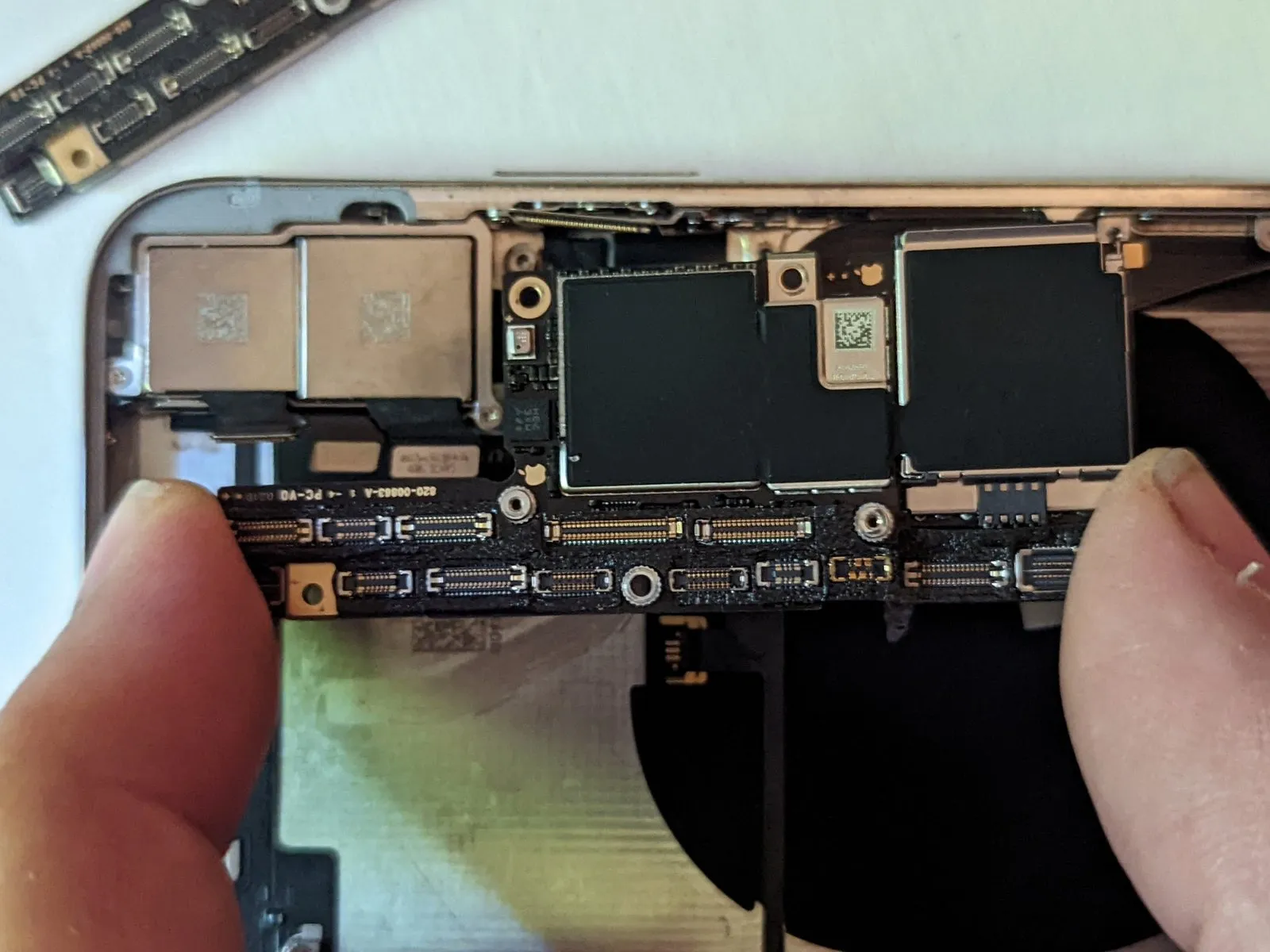
The main circuit board is affixed to the lower chassis using two support pillars that pass through the lower board and are fastened to the upper board; to detach it, elevate the assembly uniformly in a vertical direction to disengage from these support pillars.